The record
By the late 2000s the Police Service of Northern Ireland was still relying on the Tangi armoured Land Rovers designed and built in-house by the Royal Ulster Constabulary from 1986, some of which were around 25 years old. Continuing security concerns meant armoured public-order vehicles could not simply be retired, so the PSNI drew up a requirement for a replacement based on a contemporary Land Rover chassis.
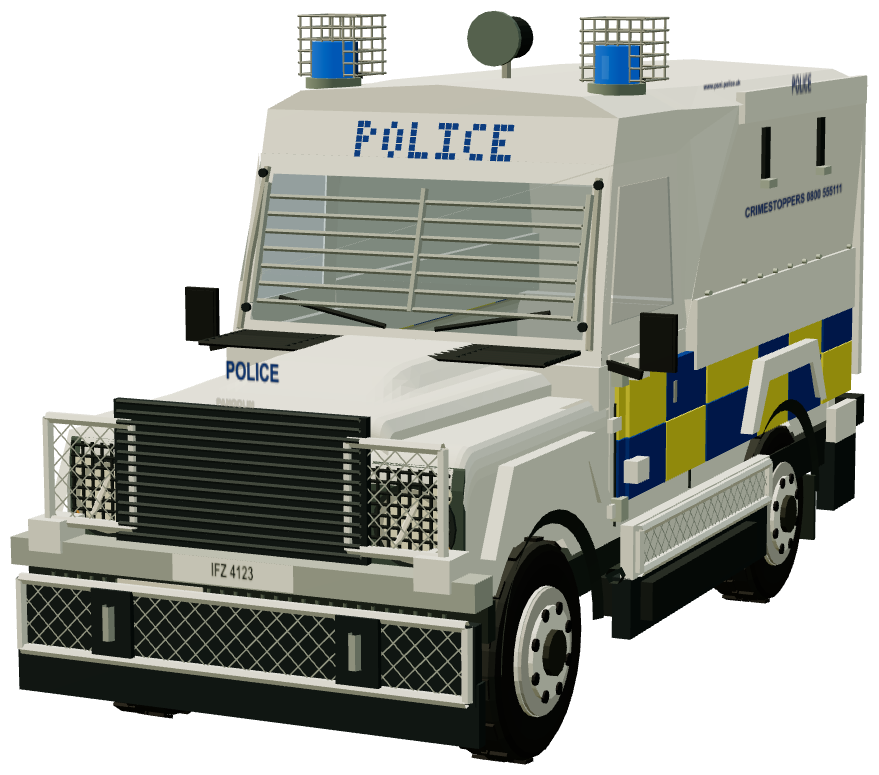
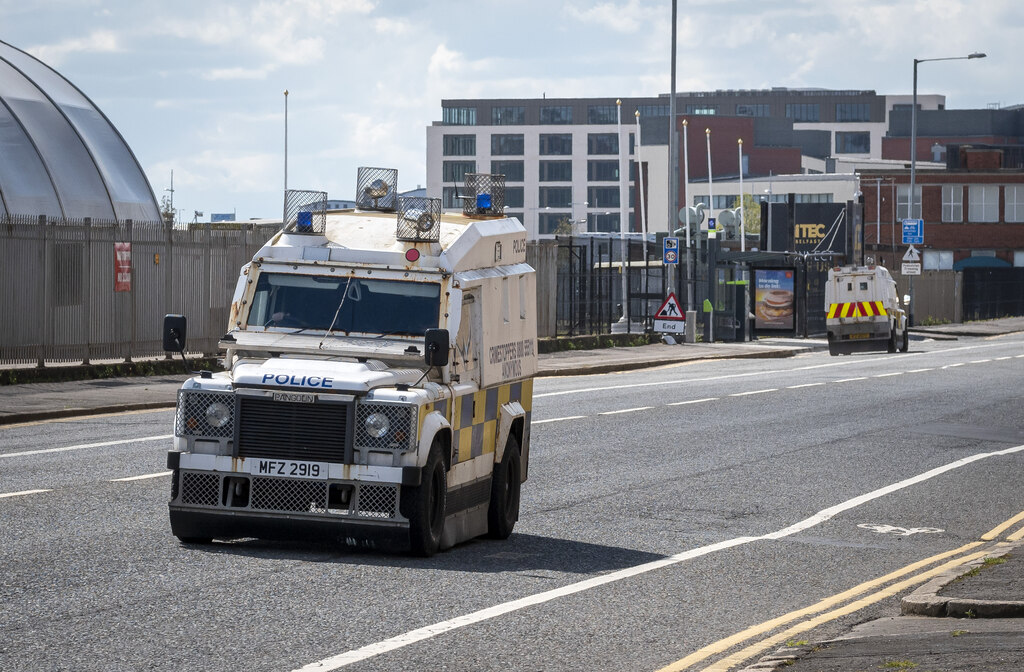
The contract was won by OVIK, a young armoured-vehicle firm founded in 2008 by brothers Jez and Duncan Hermer and based in Dorset, its name taken from the Swedish town of Ornskoldsvik. Working with ABBA Commercials, OVIK designed the Pangolin - named after the armour-scaled anteater - on a heavy-duty derivative of the Defender 110 chassis with the 2.4-litre 'Puma' turbo-diesel engine and six-speed gearbox. The design wrapped the crew compartment in armour cladding with deep skirts, protective mesh and grille work over all lighting, and air conditioning for the crew of six - and, unlike the battleship-grey RUC fleet it replaced, the Pangolin was delivered from the start in the PSNI's white livery with yellow-and-blue Battenburg markings.
An initial batch of 60 Pangolins was delivered from 2011. The follow-on order became contentious: Penman Engineering protested the award and was subsequently authorised to build its own visually similar equivalent, the Penman ALR Mk4, alongside OVIK's upgraded Batch 2 Pangolins (reported variously as 30 or a further 60 vehicles), with a handful of Batch 2 vehicles also supplied to Merseyside Police. OVIK's own material later put the number of Pangolins in service with the PSNI and Merseyside Police at 193.
OVIK entered liquidation in April 2020, but the Pangolin remains a front-line PSNI public-order vehicle, and the company had already proposed a successor - the Pangolin Advanced, based on its STRIVE chassis - before its closure.
.jpg)