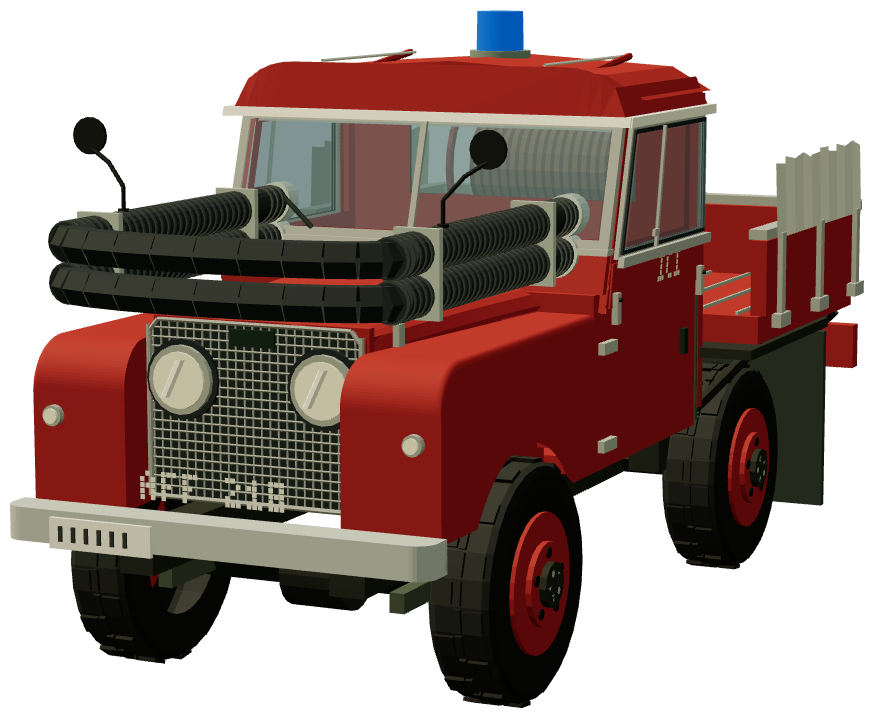
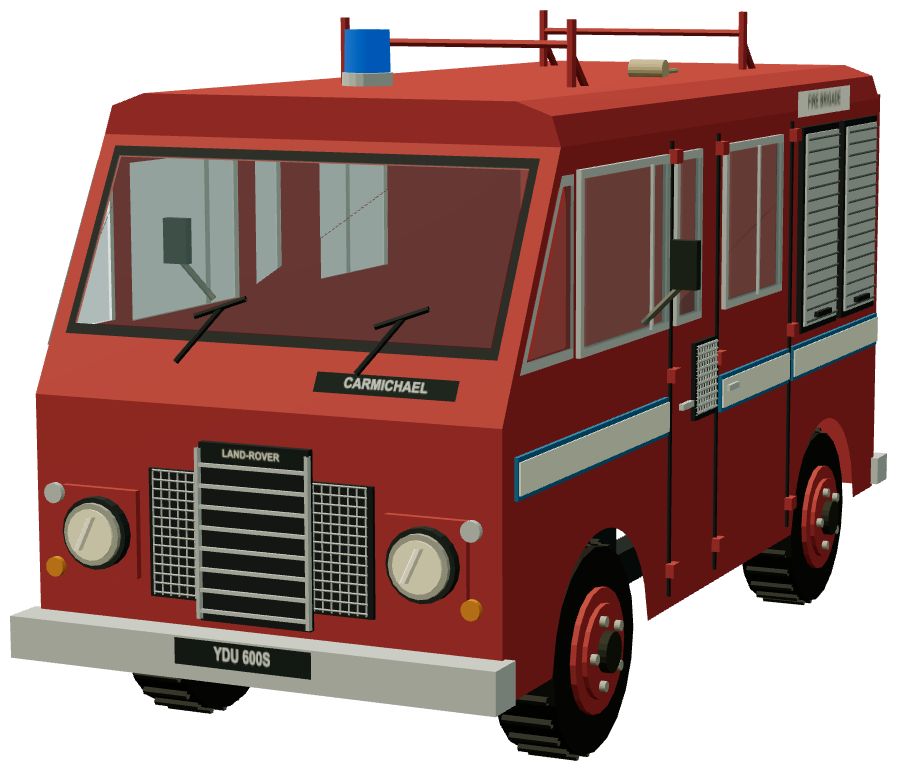
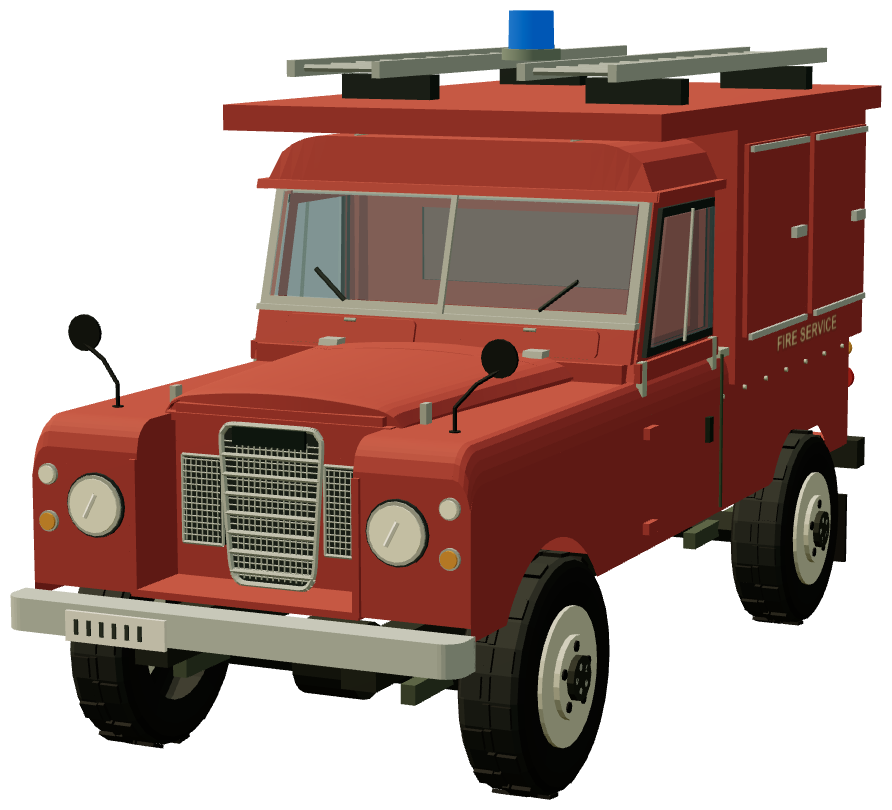
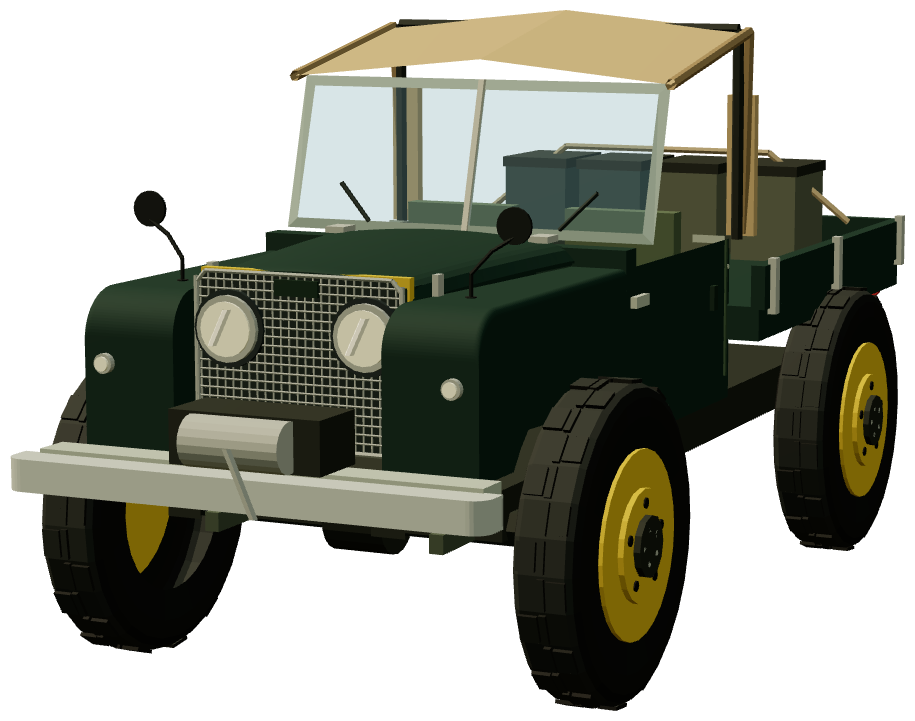
Factory-built fire tender on the Series I Land Rover, sold by Rover from the late 1940s with a power-take-off-driven pump, hoses and equipment lockers for estate, works and rural brigades.
BASE VEHICLESeries I 109″CONVERTERCarmichael & SonsIN SERVICE1949–58OPERATED INUnited KingdomLAYOUT4 wheels
The record
Fire fighting was among the first specialist roles Rover catalogued for the Land Rover. From the late 1940s the company fitted out Series I chassis in-house as complete fire appliances, buying in pumps and equipment from specialist suppliers to offer a standard fire tender - initially on the 80-inch wheelbase and later on the longer 86/88 and 107/109-inch chassis. Typical outfits paired a pump driven from the centre power take-off (with rear pump installations on many vehicles) with hose reels, ladders, extinguishers and, on some vehicles, a 40-gallon first-aid water tank; others were equipped more simply as hose carriers and towing vehicles for trailer pumps.
The customers were rarely city brigades, whose appliances were far larger; Series I fire engines instead went to factories, airfields, estates, and rural county brigades that needed a compact all-wheel-drive appliance able to reach a moorland or farm fire. Surviving examples include vehicles delivered new to works brigades - the printing firm Hazell, Watson & Viney among them - and machines like the 1958 Series I fire engine LCC23 and the 1949 tender JRT 797 now shown at museums and concours events, almost invariably in traditional fire-appliance red.
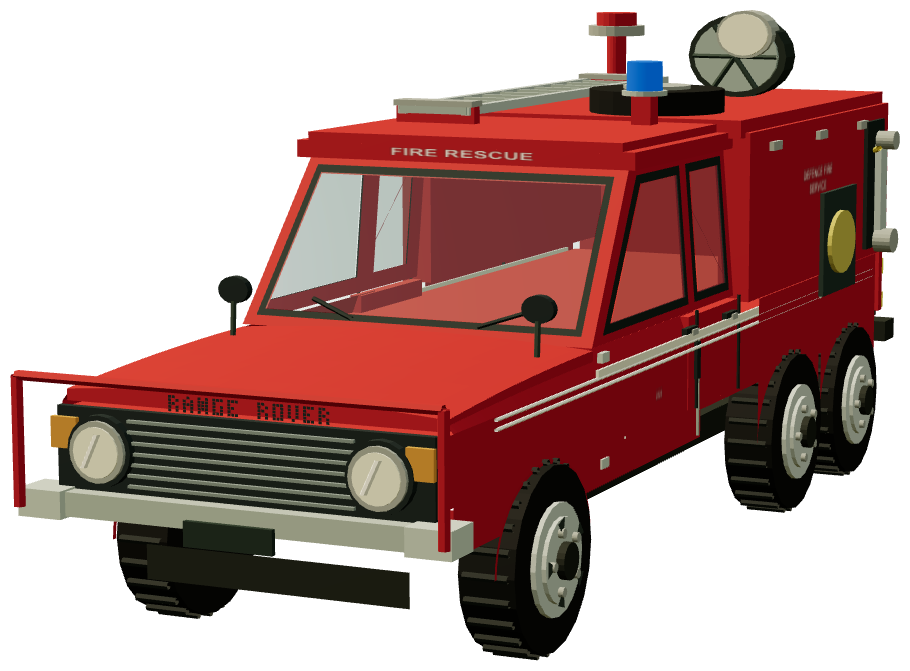
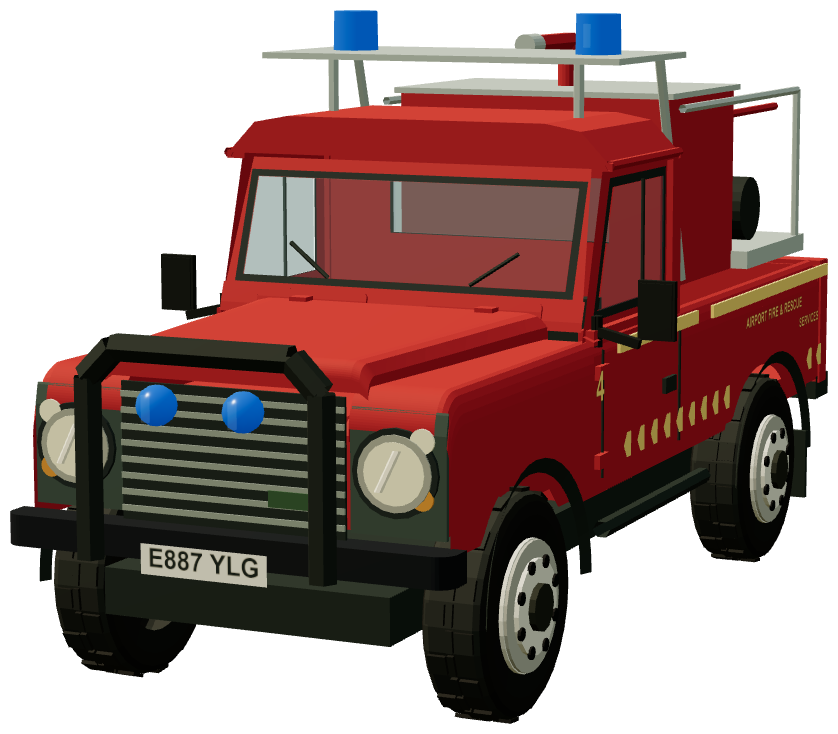
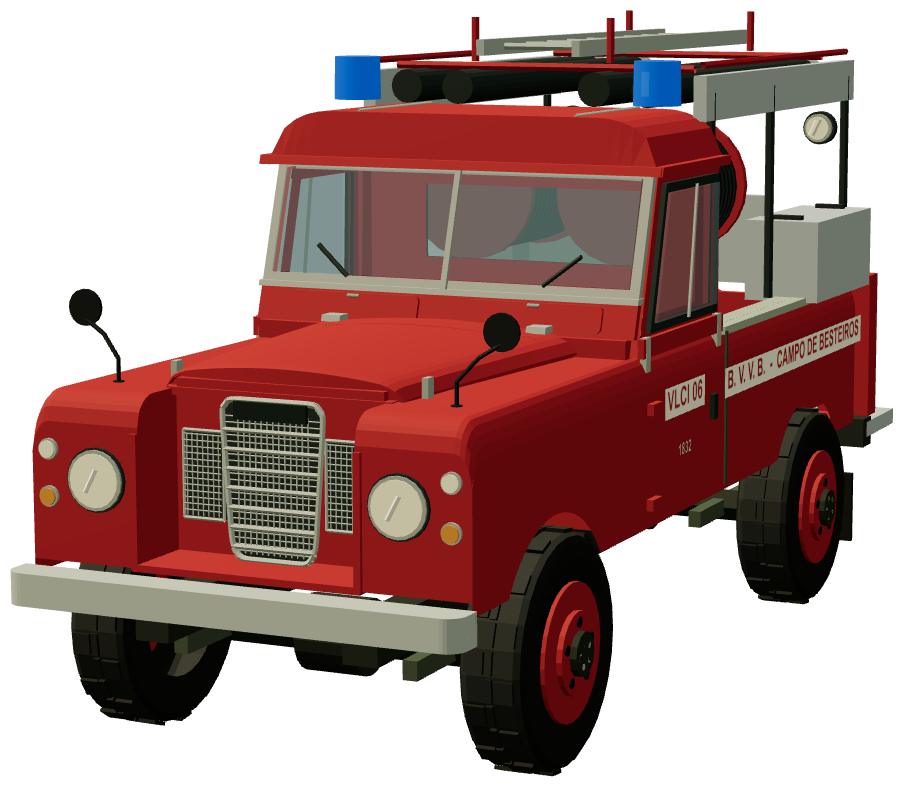
Rover soon found that fire authorities wanted more varied and professional specifications than the factory could economically provide, and in the mid-1950s Carmichael and Sons of Worcester - already an established fire engineering house - was appointed Land Rover's approved fire appliance converter. That relationship carried Land Rover fire engines through the Series II era's Redwing range and ultimately to the six-wheel Carmichael conversions of Range Rover and Defender, but it began with these first factory Series I tenders.
Rover in-house fitting-out; Carmichael & Sons appointed approved fire-appliance converter from the mid-1950s
MANUFACTUREDFactory fire tenders offered through the Series I era, late 1940s to 1958
ENGINE1.6 L and 2.0 L petrol inline-fours (per donor Series I)
COUNTRY OF ORIGINUnited Kingdom
OPERATED INUnited Kingdom
STATUSout of production; preserved examples survive
RECORD KINDNamed model
MODEL LINESeries I
WHEELS4
CATEGORYSpecial · Fire
Catalogue fields describe the vehicle's structure and body as this registry records it. They are not certified factory measurements, and no performance figures are published here.
Variants & colours
Factory colours
Fire Engine Red
Codes on hover. Hex values are representative approximations of period paint unless a source states a measured value.
Renders & references
Front three-quarterRegistry renderThree-quarterRegistry renderSideRegistry renderRearRegistry renderFrontRegistry render1958 Series I fire engine LCC23 at London Concours, 2023MrWalkr · CC BY-SA 4.0 ↗1949 Series I 80-inch fire tender JRT 797 at the Ipswich Transport Museumkitmasterbloke · CC BY 2.0 ↗
Where it was
GB United Kingdom1949–1975
BuiltRover Company, Lode Lane, SolihullUnited Kingdom · 1949–195852.43, -1.78