Trailward · Gen 2 · 1959–1967
Gen 2 Ambo
1963 · Outback Ambo
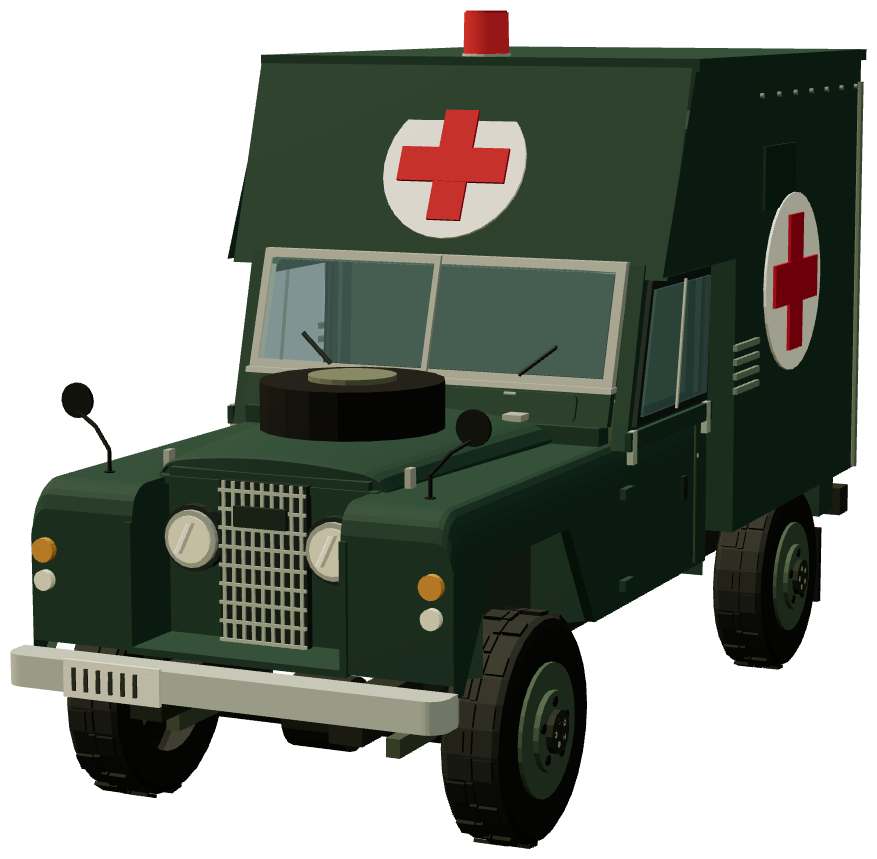
In the game
History
184 were delivered between 1959 and 1967 on Gen 2 and Gen 2A chassis, and the type served from 1961 until the mid-1990s.
Australia's post-war tactical ambulances were wartime Canadian Military Pattern trucks, and by 1956 the fleet was worn out. A new specification drafted late that year called for a lighter 1-ton 4x4 suited to South East Asian deployments. One had a fully insulated, lined aluminium body with 'Coolite' insulation between the skins and full-height rear doors; the other, the "Indian Pattern", had an uninsulated body and a nylon-fabric rear flap. The insulated body was accepted, and an interim order for 31 vehicles on Gen 2 chassis (Contract C107028) was delivered to 2 BOD, Moorebank, by June 1961. Five further orders followed on the improved Gen 2A chassis, the last delivered late in 1967, giving 151 Gen 2A vehicles and a total fleet of 184 including the two pilots and the 31 Series 2s. The registry model is dated 1963, which sits on the boundary between the two chassis lines: REMLR's ARN/chassis data list for census 6362 dates every 1963 delivery to the Gen 2A batches (ARN 108-640 to 108-650 and 112-209 to 112-242), while the Gen 2 cars are all recorded as 1959 or 1961 — so a Bloodbox in service from 1963 is either an early Gen 2A or a 1961-built Gen 2 taken on charge two years later. Both are commonly described simply as "Gen 2 ambulances" in Australia, and the registry's reference vehicle at cars.jo.je is identified by its owner as a 1963 Gen 2 that served until 1993; this record is filed under the Gen 2 line while covering the whole type. Extras included a Smiths cabin heater, demister, heavy-duty alternator, roof skylight and vents, over-cab and side lockers, and a revolving red roof beacon — vulnerable enough that some vehicles gained a wire cage over it. The rear door seals were notoriously poor and let exhaust fumes into the patient compartment, which did nothing for the nickname. Early vehicles wore gloss Deep Bronze Green with red crosses in white discs on the body sides and roof; from April 1967 the fleet followed the Army's change to lustreless Olive Drab.