Trailward · Gen 3 · 1960–1985
Roadhome
Raised camper roof · Camping roof-rack cargo
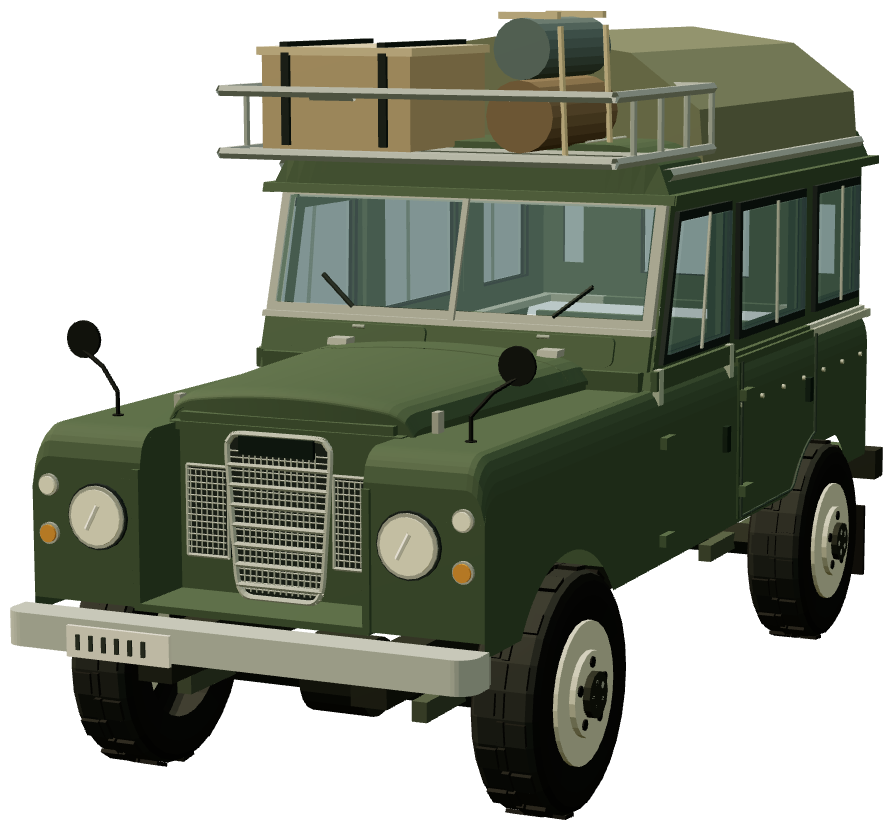
In the game
History
J. About 2,500 4×4s were converted between the early 1960s and the mid-1980s.
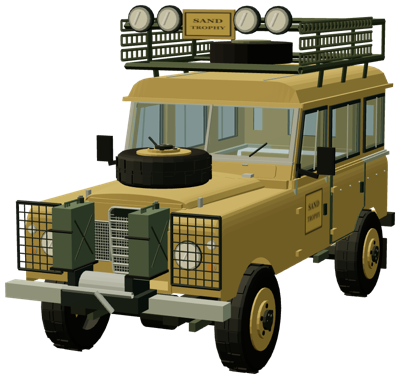
R. J. Raised, it gives 6 ft 2 in of headroom down the whole vehicle — enough to stand and cook in — and a short roof rack usually sits above the cab. Not every Roadhome had it: some were built with a fixed roof and a full-length rack instead. Inside, the standard arrangement was either twin opposing rear benches converting to two beds with a removable table between them, or a single bench on the left facing a cabinet on the right. Both came with a storage cupboard, a sink fed by hand or foot pump from a nine-gallon tank, a two-burner stove and grill usually mounted inside the rear door and folded away for travel, and fluorescent lamps. Folding front seats made another double, and four-berth cars added two roll-out hammock bunks. The options list ran to a dual-fuel refrigerator, dual batteries, a fuel-fired heater, air conditioning, fly screens, a portable toilet, and a rear awning on an extending slide-out frame. Carawagons were bought to be used hard. Most of the survivors have expedition histories, which is the main reason so few remain from a run of roughly 2,500. The Ministry of Defence ordered around 34 as tactical command and control vehicles, which became the separate Military Roadhome: same elevating roof, but with blackout curtains, dark glass, a single side window and a camouflage-net rack over the cab.