Trailward · Runner · 1989–1992
Outback 6×6 Canvas
Three axles · Canvas canopy
In the game
History
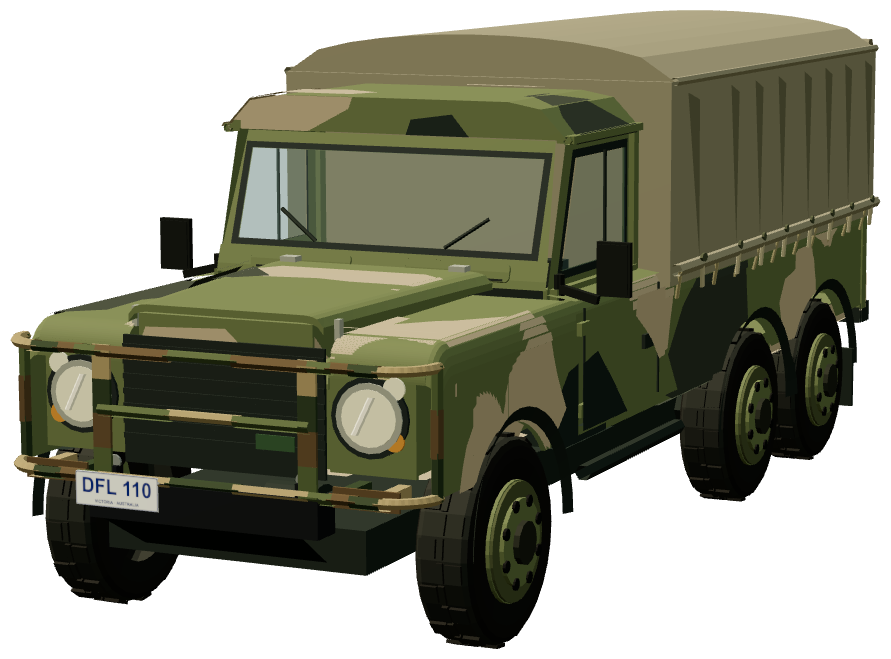
The two-tonne cargo truck of the Outback 6×6 range — 'Truck, Cargo, Light, MC2' — an open tray with hoops and a canvas tilt, outward-facing bench seats for twelve in the back and three in the cab. It was the most numerous 6×6 body and the platform on which every other 6×6 module was mounted.
Where the Outback 4×4 was rated at one tonne, the three-axle version doubled it. The General Service cargo truck, liability code 74800 (74810 with a winch), was designed to move two tonnes of stores or up to fifteen people — three in the cab and twelve in the rear on bench seats fitted facing outwards along the tray sides — over sealed roads, second-class roads and cross-country, with a trailer of up to 900 kg behind and a range of about 600 km on good surfaces. The body itself is deliberately unremarkable: a long steel tray on the extended chassis, hoops, and a canvas tilt. Its significance is structural rather than visual. REMLR notes that the ambulance and general maintenance modules mount on the chassis 'in the same manner as the cargo tray body' — the tray is the baseline fitment, and the enclosed fibreglass modules of the ambulance, workshop and repair variants (see `perentie6-hard` and `perentie6-ambulance`) are alternatives bolted to the same points. Strip a module off a 6×6 and what remains is this vehicle. That interchangeability is also why the cargo chassis turns up under specialist loads it was never catalogued for: satellite terminal assemblies, engineer stores, and unit-improvised fitouts, with the tilt left off entirely. The build numbers are the most contested in the whole Outback programme, and the registry records the disagreement rather than resolving it. Wikipedia's variant table gives 215 cargo trucks plus 32 with winch. REMLR's own page on the type states 'Number Built: 231 and 59 with Winch'. REMLR's ARN register, compiled from Army registration ledgers, lists 235 and 57. The three sources agree only that this was the commonest 6×6 body, somewhere between a third and two-fifths of the 699 (or so) 6×6s built. 4X4 Australia complicates it further by dating Outback production to May 1986 – September 1992 with a further licence-built run by BAeA in 1996–98; the registry records that claim without endorsing it. Deliveries began in March 1989, three months short of two years after the 4×4s, and the Moorebank plant closed on 30 September 1992. Being the plainest and most numerous 6×6, the cargo truck is also the one most often seen in civilian hands, usually with the tray rebuilt into a camper or expedition body.
Details
More Trailward Runner
 Air Force Helicopter Support Vehicle
 Anatolia APV
 Anatolia Gun BuggyRunner Shorty · Recoilless rifle & split screens
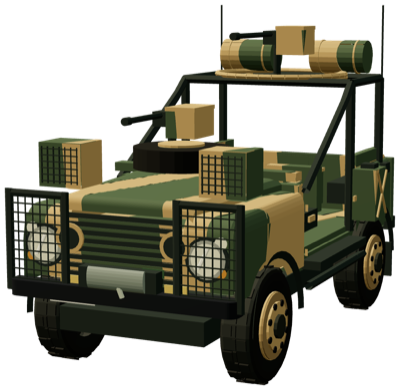 Anatolia PatrolRunner Shorty · Open patrol & mounted guns
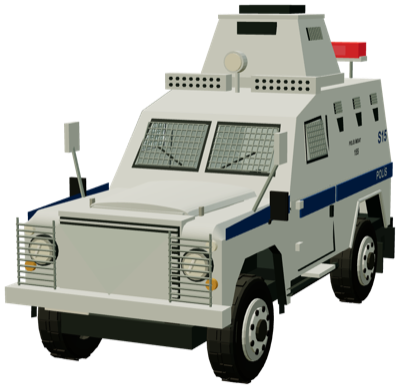 Anatolia Police
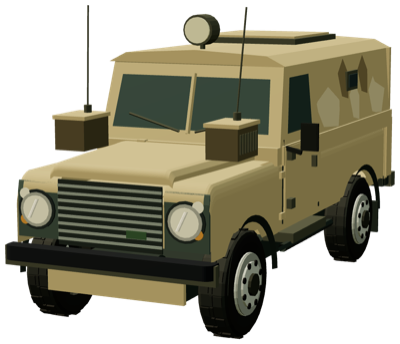 Armoured RunnerArmoured Desert patrol
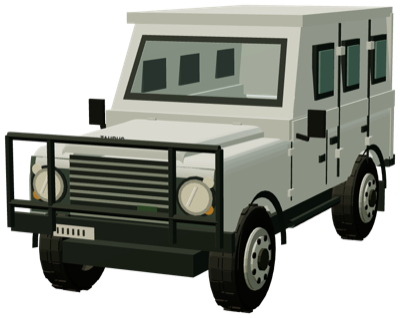 Armoured RunnerArmoured shell; small windows; high, angular body.
 Auto Club Special ResponseRunner Standard · Auto Club special response