The expedition
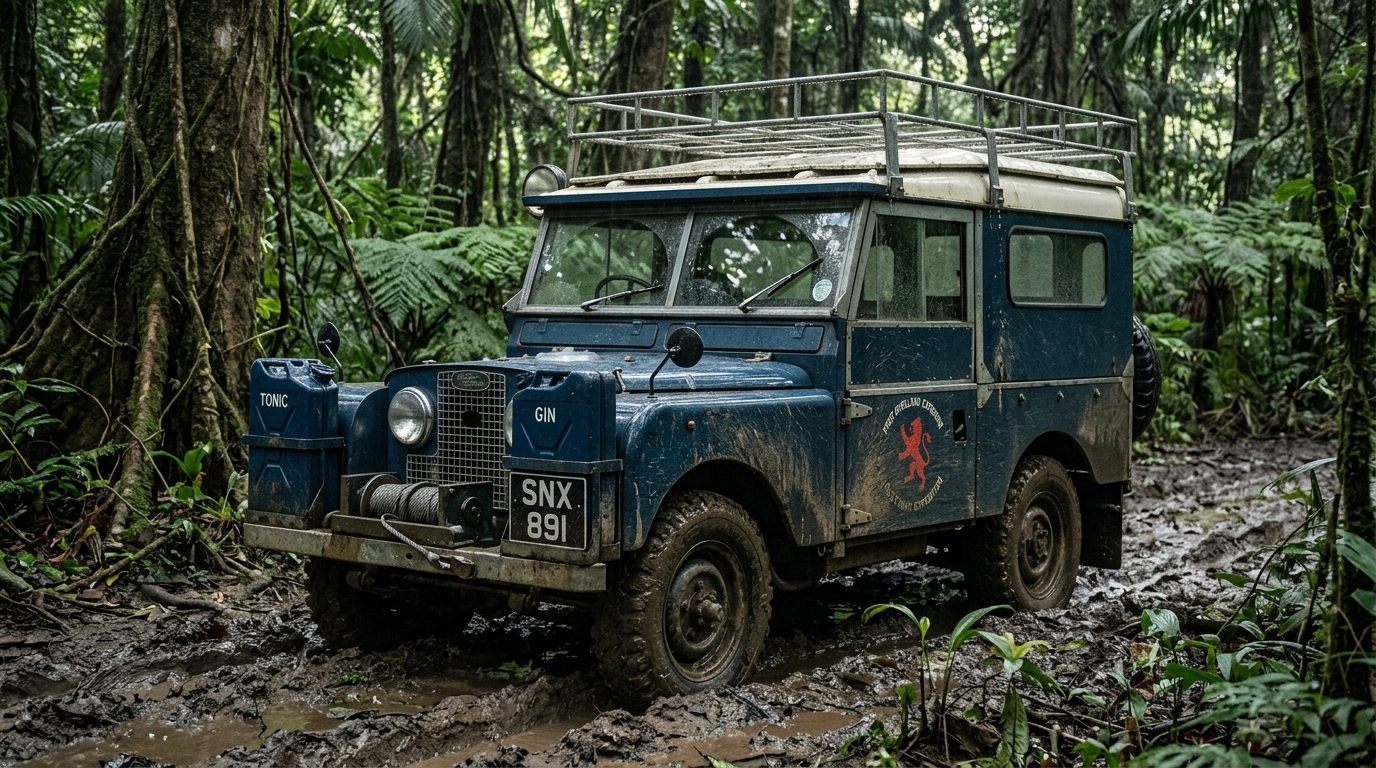
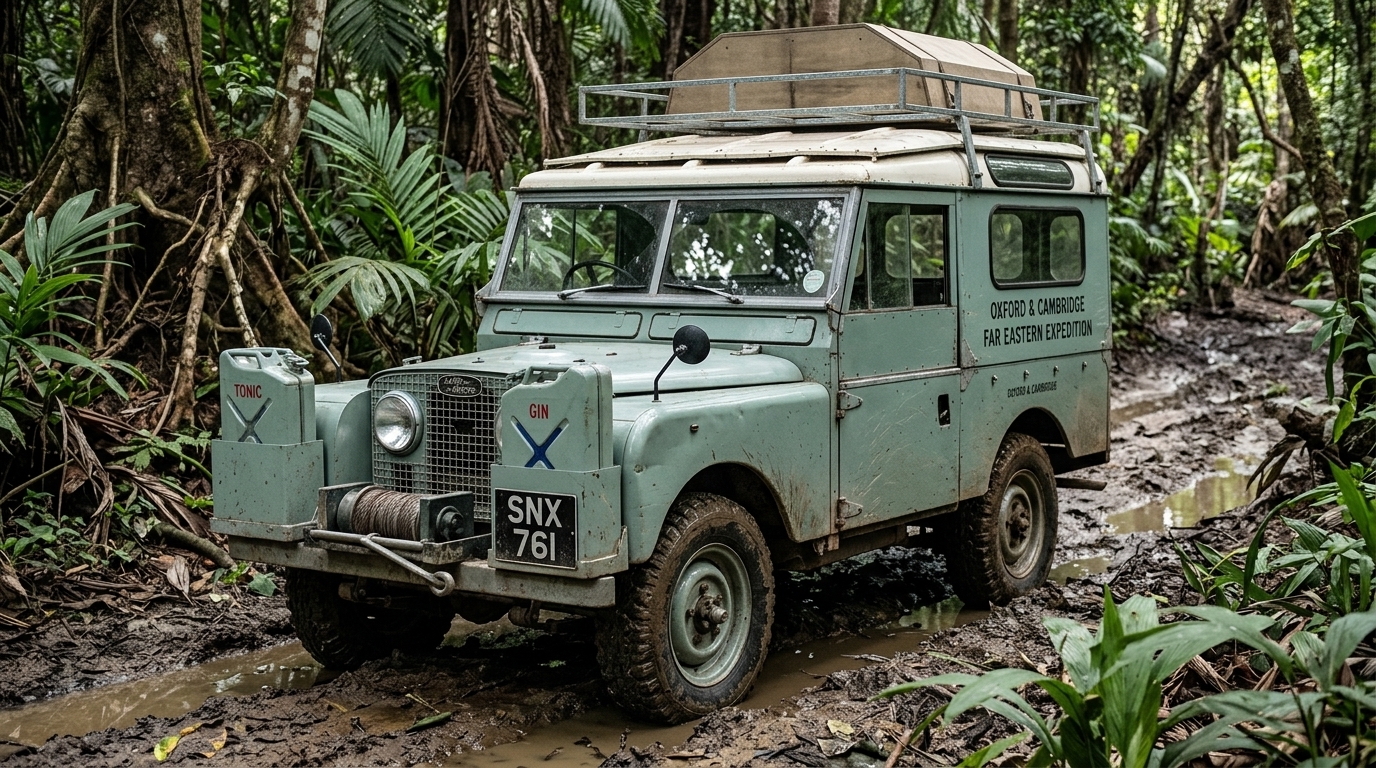
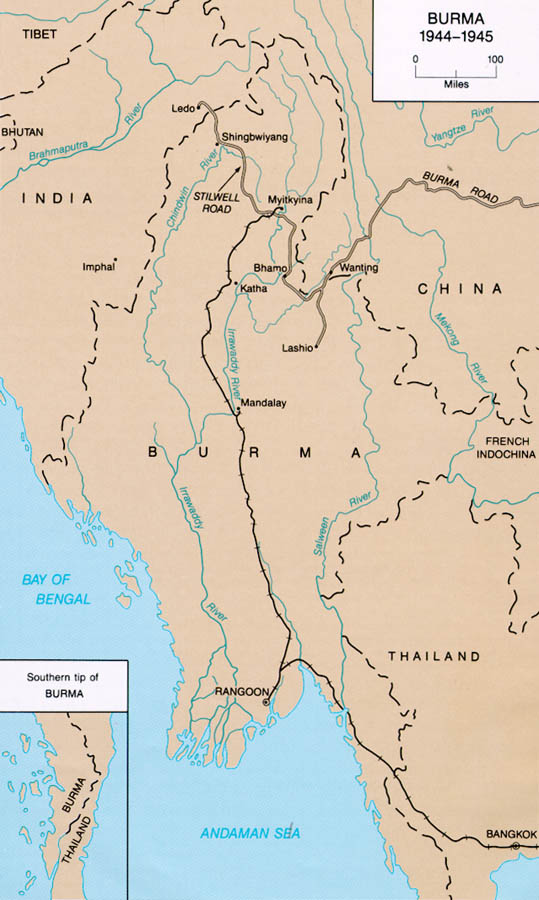
The idea came from Adrian Cowell and Tim Slessor at Cambridge and Oxford in 1954: a drive from London to Singapore, which no motor vehicle had completed because the road through Burma — the wartime Stilwell (Ledo) Road from Assam into Burma — was thought to have gone back to jungle. The two universities' exploration clubs put six students together: Antony 'B.B.' Barrington Brown as cameraman, Adrian Cowell as business manager, Patrick Murphy as navigator and cook, Nigel Newbery as quartermaster and mechanic, Henry Nott as chief engineer and Tim Slessor as writer and assistant cameraman. The Rover Company lent two new Series I 86-inch Station Wagons, registered SNX 761 ('Cambridge', painted in Cambridge blue) and SNX 891 ('Oxford', in Oxford blue), and the BBC commissioned film from the young David Attenborough's department.
They left The Grenadier in Belgravia and Hyde Park on 1 September 1955 and drove through France, Monaco, Germany, Austria, Yugoslavia and Greece to Istanbul, crossed the Bosphorus and went on through Turkey, Syria, Lebanon, Iraq and Persia to Afghanistan, then over the Khyber Pass into West Pakistan and India, with a detour to Kathmandu. From Calcutta they went up into Assam and, in December, took the 228 miles of the Stilwell Road from Ledo into Burma in three days — 'very much easier than we had ever expected', in Slessor's words — and continued through Myitkyina and Mandalay to Rangoon, then across Thailand and down the Federation of Malaya to Singapore, arriving on 6 March 1956, six months and six days and 18,000 miles after leaving London.
The homeward leg could not repeat Burma, so the cars sailed on the MV Sangola from Rangoon to Calcutta and drove home through Pakistan, Afghanistan, Iran, Turkey, Greece, Yugoslavia, Italy and Switzerland, with a detour to Monaco, for a total of 32,300 miles. Slessor's book First Overland appeared in 1957 and the BBC's Traveller's Tales films followed; both cars returned to Rover as demonstrators. Cambridge was sold in July 1957 to Terence Bendixson for a Middle East expedition and was lost that year when it went off the road into a ravine between Tabriz in Iran and Doğubayazıt in Turkey; its wreck has never been found. Oxford went to the British Ornithologists' Union's centenary expedition on Ascension Island, stayed on the island with the water-bowser driver Mervyn Marsh, and ended up on St Helena as a cannibalised shell in the undergrowth, until the historian Peter Galilee traced it and Adam Bennett shipped the remains home on 9 May 2017. Restored by Black Paw 4×4 in East Yorkshire with its original registration reinstated, Oxford drove the route home again on The Last Overland in 2019.