 Land Rover Series I 80-inchROUTE1950–1951MAPPED ROUTE
Barbara Toy: Tangier to Baghdad in Pollyanna
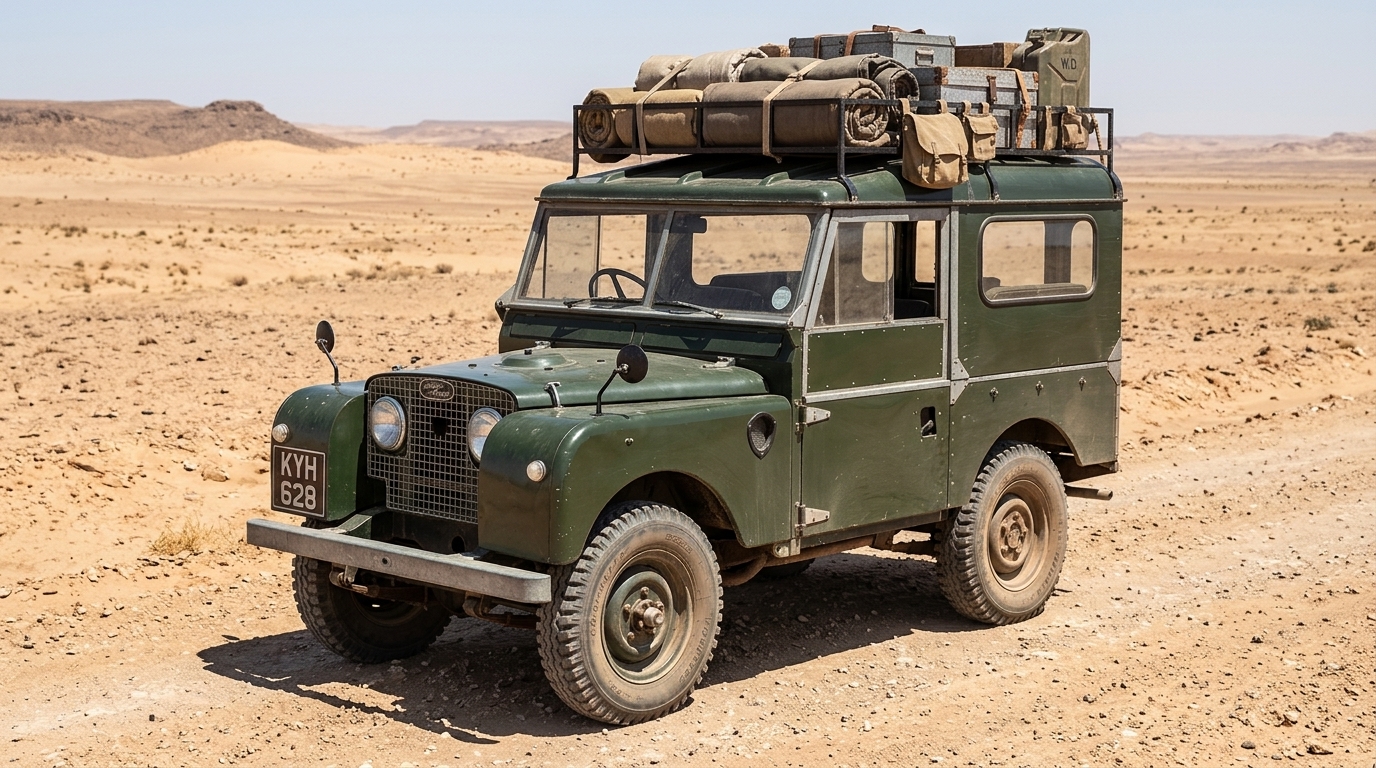
The first solo overland drive by a woman in a Land Rover: the Australian-born playwright Barbara Toy, on a bet made in a London pub, bought a second-hand 1950 Series I 80-inch, named it Pollyanna, and drove alone from Gibraltar and Tangier along the North African coast through French Morocco, Algeria, Tunisia, Libya and Egypt, then by Cyprus, Lebanon, Syria and Jordan to Baghdad, where in May 1951 she visited Max Mallowan's excavations at Nimrud. She drove home to England and wrote it up as A Fool on Wheels (1955), the first of nine travel books; the journey predates the Oxford and Cambridge Far Eastern Expedition by almost five years, and Pollyanna survives.
Gibraltar → Baghdad11 countries1 in the teamDecember 1950Gibraltar1951BaghdadMay 1951Baghdad 195114k km Land Rover Series I 80-inchROUTE1951MAPPED ROUTE
Autocar Calcutta to Calais drive
In April–May 1951 W. P. Mitchell of The Autocar and his co-driver Jimmy Mandle drove a Series I Land Rover lent by a Calcutta garage from Calcutta to Calais in 26 days: up the Grand Trunk Road to Delhi, through Baluchistan and the deserts of eastern Persia to Tehran and Tabriz, across Turkey to Istanbul, and by the rough roads of Greece and Yugoslavia, the Alps and Germany to the Channel — 8,825 miles on a single one-to-five-million US Air Corps map, with one puncture fifty miles from Calais as the only mechanical trouble. Published in The Autocar on 14 September 1951, it was one of the first long overland drives in a Land Rover to be reported in the motoring press, three years after the model's launch.
Calcutta → Calais14,200 km13 countries2 in the team21 April 1951CalcuttaApril 1951BenaresApril 1951AllahabadApril 1951Kanpur17 May 1951Calais 195218k kmLand Rover Series I 80-inch, station wagon bodyROUTE1952MAPPED ROUTEBarbara Toy — A Fool in the Desert
Barbara Toy's second solo journey in Pollyanna, her 1950 Series I 80-inch, now rebodied as a station wagon with a white-painted roof against the sun: six months of 1952 in the Kingdom of Libya, along the Mediterranean coast and twice deep into the interior — to Traghen in the Fezzan and to Al Jawf and El Tag in the Kufra oasis, guided by the man who had taken Rosita Forbes there in 1921. Some 11,000 miles, home by ship to Dundee in October 1952, and the book A Fool in the Desert (1956).
Tripoli → Dundee (by ship from Libya)17,700 km2 countries1 in the team1952Tripoli17 October 1952Dundee (by ship from Libya) 1953Land Rover Series I 80-inchROUTE1953MAPPED ROUTEBarbara Toy: Across Saudi Arabia in Pollyanna
Barbara Toy's third Land Rover journey: having written to King Abdulaziz of Saudi Arabia for permission to visit, and got it, she drove Pollyanna, her 1950 Series I 80-inch, alone from Kuwait across the kingdom from north-east to south-west to the Red Sea port of Jeddah, was received by the King and shown his harem — one of the first Western women to travel the country — and, with the roads home cut by bandits, spent months in a rented house in the Hadhramaut writing and learning Arabic. The book was A Fool Strikes Oil: Across Saudi Arabia (1957).
Kuwait → Jeddah3 countries1 in the team1953Kuwait1953Jeddah 195440k km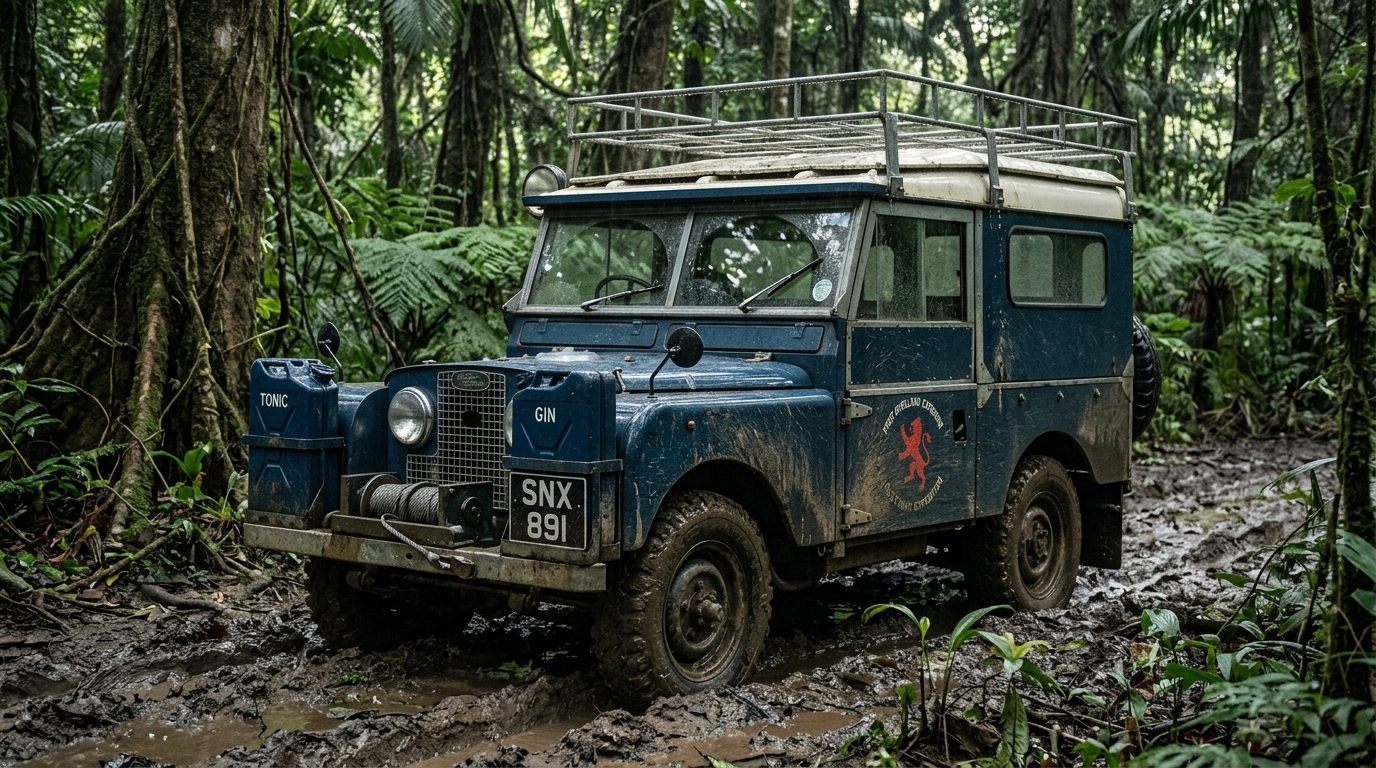 Land Rover Series I 86-inch Station Wagon, Land Rover Series I 86-inch Station WagonROUTE1954MAPPED ROUTE
Oxford & Cambridge Trans-Africa Expedition
A race between three Oxford and three Cambridge undergraduates, each team in its own Series I 86-inch Station Wagon, from London to Cape Town and back in the summer of 1954 — announced as a 25,000-mile circuit over the Sahara and through the Belgian Congo, returning by the Nile Valley, the Middle East and Turkey; Adrian Cowell's own account has it through Tunisia, the Sahara, Egypt and Ethiopia. Won by Oxford, two months late, and the direct precursor of the 1955 Far Eastern Expedition to Singapore.
London → Cape Town40,000 km6 countries7 in the teamJune 1954London1954Cape Town 1955 Land Rover Series IFILM1955MAPPED ROUTE
The Lost World of the Kalahari expedition
Laurens van der Post's BBC-commissioned search for the Kalahari Bushmen, made in 1955 with a party of Series I Land Rovers through the Okavango and Chobe swamps, the Tsodilo Hills and the Ghanzi district of the Bechuanaland Protectorate. It became a six-part BBC television series in 1956 and the 1958 book The Lost World of the Kalahari, made van der Post a television celebrity and helped bring about the Central Kalahari Game Reserve — and its 'discoveries' were later shown to be exaggerated.
Kalahari perimeter base → Ghanzi district1 countries2 in the team1955Kalahari perimeter base, Bechuanaland1955Ghanzi district, Kalahari 195529k kmLand Rover Series I 86-inch Station Wagon, Land Rover Series I 86-inch Station WagonROUTE1955–1956MAPPED ROUTEOxford & Cambridge Far Eastern Expedition
The first overland drive from London to Singapore: six Oxford and Cambridge students in two new Series I 86-inch Station Wagons, 'Oxford' and 'Cambridge', who left Hyde Park on 1 September 1955 and reached Singapore on 6 March 1956 after more than 18,000 miles through Europe, the Middle East, Afghanistan, India, Nepal, Burma and Malaya — the Stilwell Road through northern Burma being the passage nobody thought possible.
The Grenadier → Singapore29,000 km23 countries6 in the team1 September 1955The Grenadier, Belgravia, and Hyde Park, London1 December 1955Ledo — start of the Stilwell Road6 March 1956Singapore 19551.3k km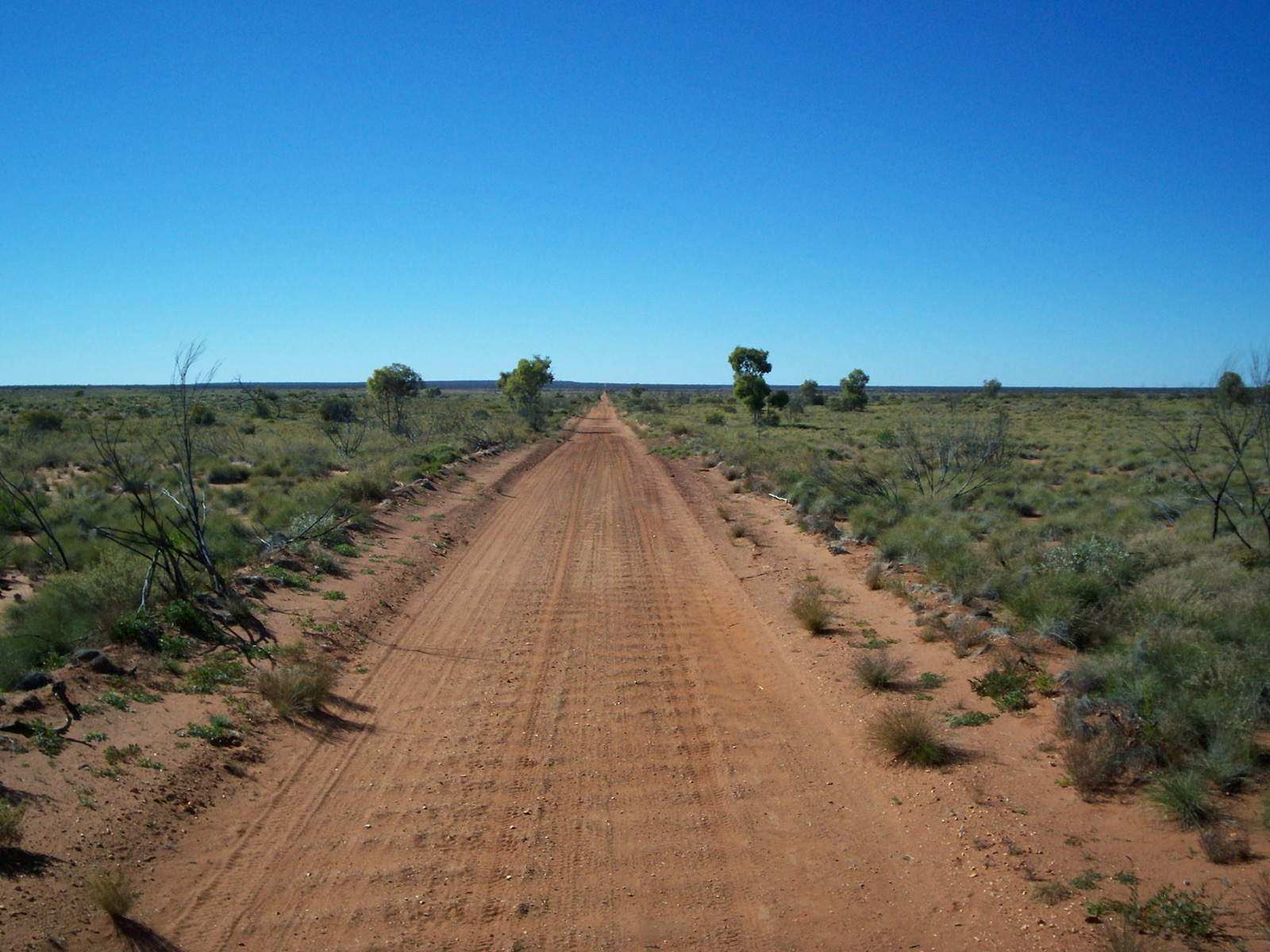 Land Rover Series I (model and wheelbase not stated in the sources)SCIENTIFIC1955–1958MAPPED ROUTE
Len Beadell and the Gunbarrel Road Construction Party
Between November 1955 and November 1958 the surveyor Len Beadell and his hand-picked Gunbarrel Road Construction Party built the first east–west road across the centre of Australia: 1,347 km from Victory Downs, just inside the Northern Territory, west past the Musgrave, Mann and Tomkinson ranges to the Rawlinson Range, where they founded the Giles weather station, on to the Warburton mission and across the edge of the Gibson Desert to Carnegie Station in Western Australia. Beadell found the line alone in a Land Rover, bush-bashing ahead with a compass, the odometer and a theodolite for star fixes, and a D8 bulldozer and a Caterpillar grader followed the flash of his mirror. The road served Woomera's rocket range and the atomic tests; the grader survives in a cage at Giles.
Victory Downs homestead → Carnegie Station1,347 km1 countries10 in the team13 November 1955Victory Downs homesteadNovember 1955Coober Pedy — party assembles2 December 1955Mulga Park7 December 1955Mount Davies airstrip15 November 1958Carnegie Station 1956Land Rover Series I 80-inchROUTE1956–1957MAPPED ROUTEBarbara Toy: Round the World in Pollyanna
The first circumnavigation of the globe in a Land Rover, and made alone: in 1956–57 Barbara Toy drove her 1950 Series I 80-inch Pollyanna from England through Europe and Turkey to Pakistan and India, on through Thailand and Malaya to Singapore, which she reached by March 1957, shipped to Perth and drove across Australia to Sydney — her first time home since 1935 — then shipped across the Pacific and drove from San Francisco to New York. She told the story in Columbus was Right!: Rover around the world (1958).
London → New York9 countries1 in the team1956LondonMarch 1957SingaporeMay 1957Sydney1957New York 19568.2k km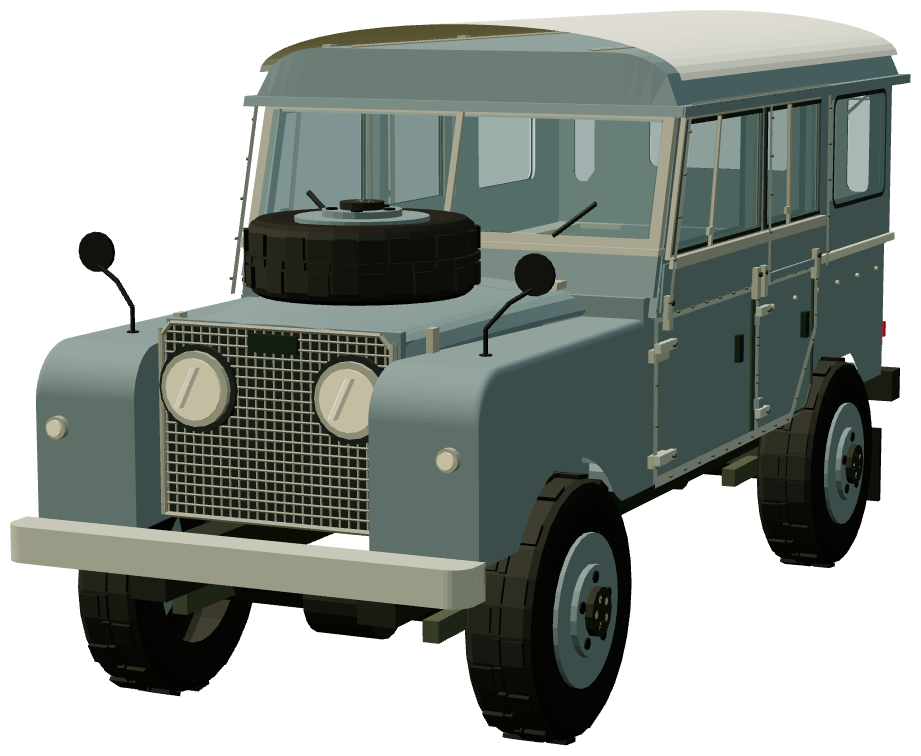 Land Rover Series I 107-inch five-door Station WagonROUTE1956MAPPED ROUTE
The Rudolphs' Land Rover to India
In the summer of 1956 two newly minted Harvard PhDs, Lloyd and Susanne Hoeber Rudolph, drove a new blue-grey Land Rover 107-inch five-door station wagon from London through Europe, Turkey, Iran and Afghanistan to Peshawar — Salzburg to Peshawar in 25 days and 5,114 miles for about $300 — and on by the Khyber Pass to Lahore, Delhi and Jaipur, to begin the fieldwork that made them the leading American political scientists of India. They slept in the car, cooked on a two-burner stove at its tailgate, were arrested in Greece for a horse a Volkswagen had killed, and camped outside a NATO radar station above Trabzon during the Suez mobilisation. Their diary appeared in the University of Chicago Magazine in 2013 and as the book Destination India (2014).
Salzburg → Jaipur8,230 km12 countries2 in the team26 July 1956SalzburgJuly 1956London27 July 1956Graz27 July 1956VaraždinSeptember 1956Jaipur 195692k km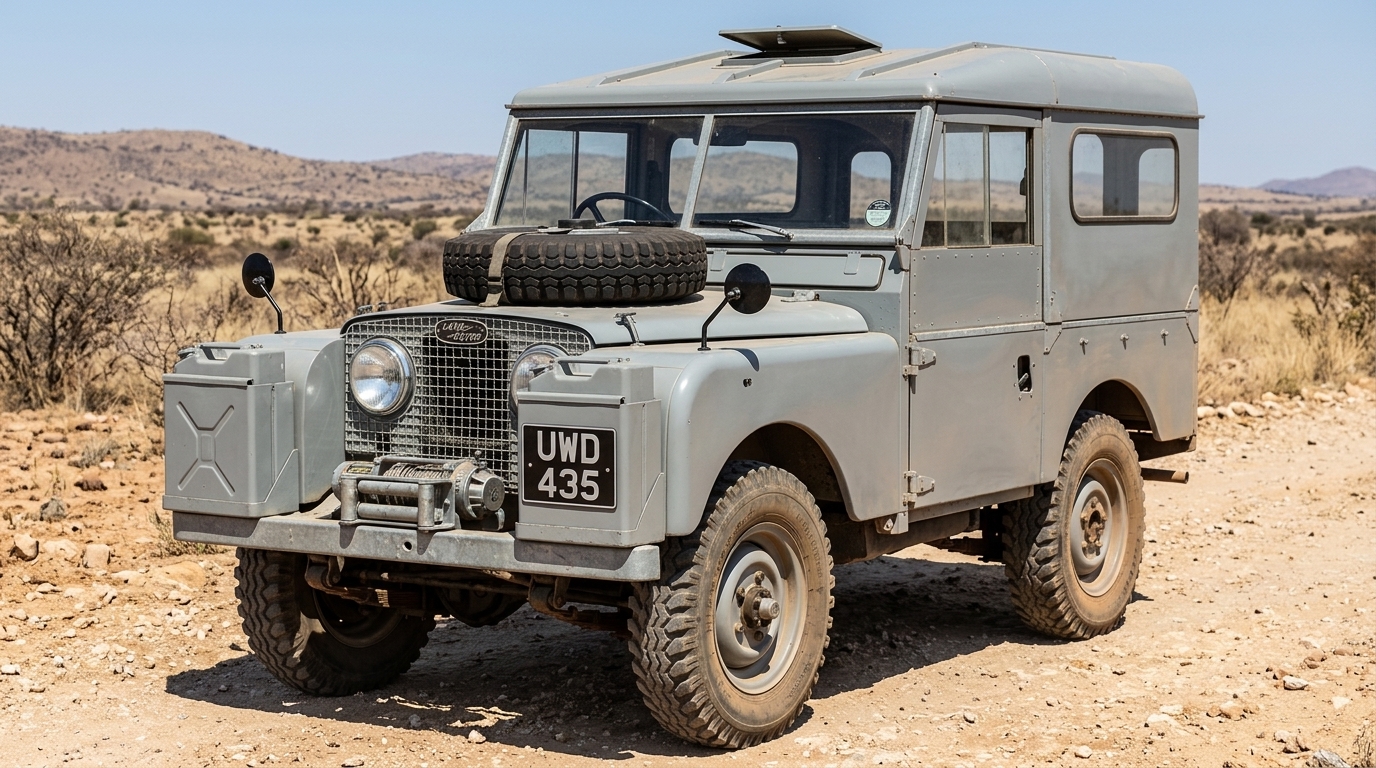 Land Rover Series I 88-inch hard topROUTE1956–1958MAPPED ROUTE
Peter Townsend: Earth, My Friend
Group Captain Peter Townsend, the Battle of Britain ace and former royal equerry whose romance with Princess Margaret had just been ended, drove east out of Brussels on 21 October 1956 alone in a Series I Land Rover and came back eighteen months and 57,000 miles later, having circumnavigated the world by road and ship: Greece, the Middle East, Pakistan and India, Burma, Singapore, Australia and New Zealand, Japan, the United States from Montana down through Mexico and Central America to Venezuela, Peru, Brazil and Uruguay, then Africa from South Africa to Albert Schweitzer's hospital at Lambaréné and north across the Sahara by the Hoggar, In Salah and El Goléa. He told it in Earth, My Friend (1959).
Brussels → Brussels91,700 km21 countries1 in the team21 October 1956Brussels1 April 1957Wellington1958BrusselsApril 1958Brussels 19576.4k km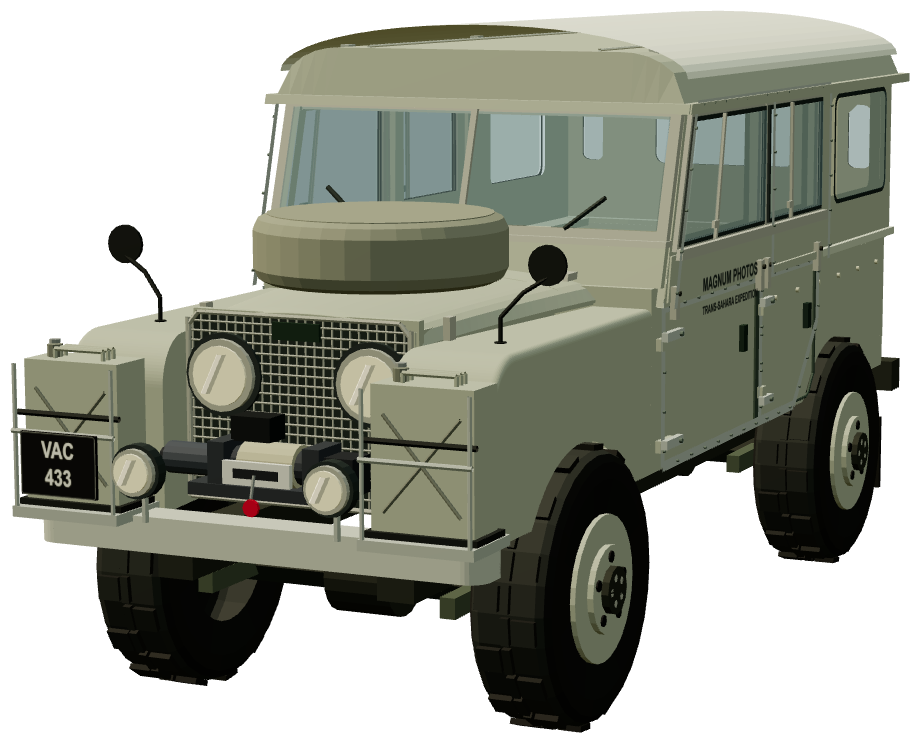 Land Rover Series I 107-inch Station Wagon, 1957FILM1957MAPPED ROUTE
George and Jinx Rodger's Trans-Sahara Expedition in Mzuri
In February 1957 the Magnum co-founder George Rodger and his wife Jinx drove a new Land Rover Series I 107-inch station wagon, VAC 433, christened 'Mzuri' — Swahili for 'very good' — from Tangier through Morocco and, under escort of eight armoured cars, into the Algerian Sahara at the height of the war, then spent three months and some 4,000 miles zig-zagging between the Tanezrouft and Hoggar pistes to Tamanrasset and the Tuareg for National Geographic. A mine destroyed a vehicle of their convoy on the way out. Jinx's 'Sand in My Eyes' ran in the magazine in 1958; Mzuri went on to East Africa in 1958, was sold, vanished for decades and was found in 2016 under a woodpile at Mount Beauty, Victoria, by the Land Rover collector David D'Arcy.
Tangier → Tangier6,400 km2 countries2 in the teamFebruary 1957Tangier9 May 1957Timimoun1957Adrar — Touat8 May 1957El Goléa (El Menia)May 1957Tangier 195760k km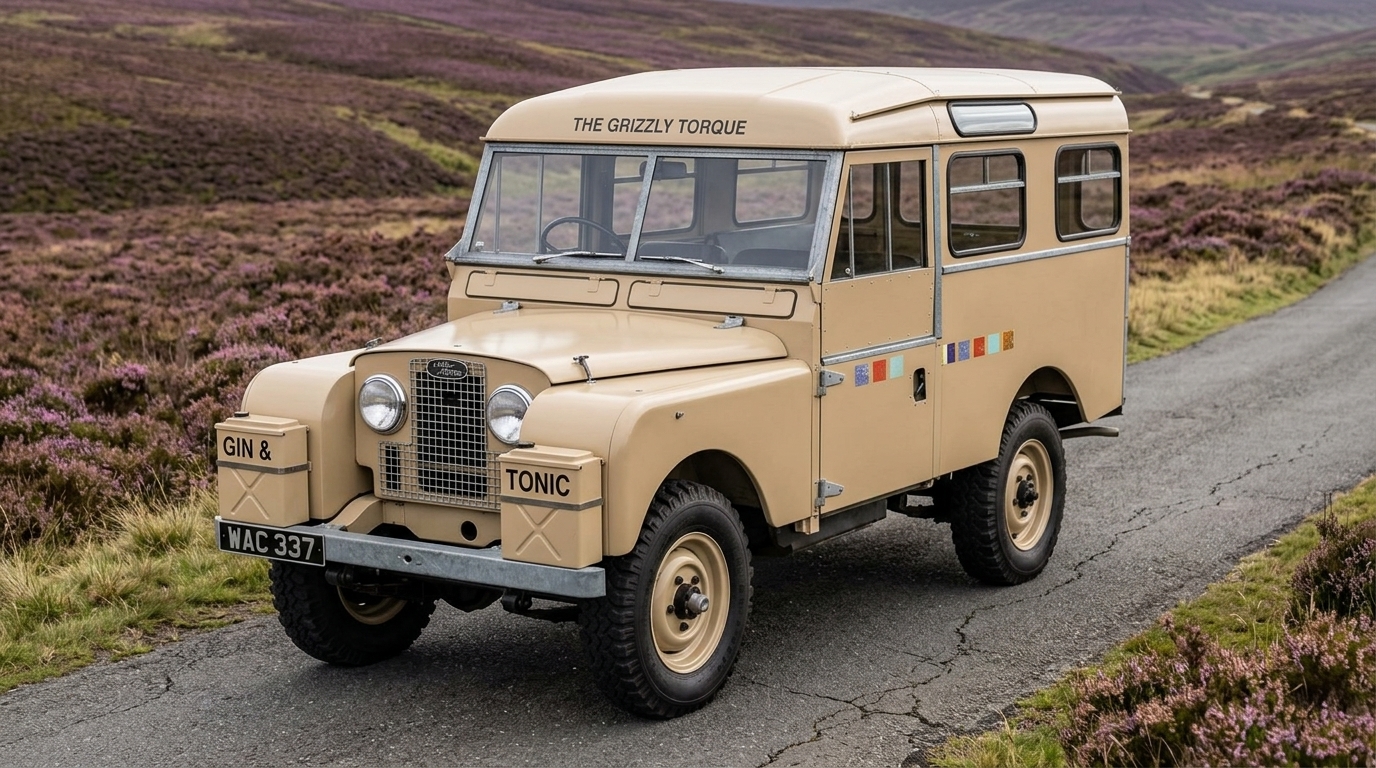 Land Rover Series I 107-inch Station Wagon, custom body by Pilchers of WimbledonROUTE1957–1958MAPPED ROUTE
The Grizzly Torque: Foster and Bateman Round the World
Between July 1957 and September 1958 the Canadian biologist Bristol Foster and his boyhood friend the artist Robert Bateman drove a one-off Pilchers-bodied Series I 107-inch station wagon, 'The Grizzly Torque', some 60,000 km through 19 countries on four continents: a shakedown in Scotland, then West, Central and East Africa from Ghana to Kenya, by ship to India, on through Nepal, Burma, Thailand, Malaya and Singapore, and finally Australia, painting, filming and collecting as they went. Their illustrated dispatches to the Toronto Telegram earned them the name 'the Rover Boys'. The car was lost for decades, found derelict in British Columbia, restored, and sold at Monterey in 2023.
Solihull → Australia60,000 km16 countries2 in the teamJuly 1957SolihullMay 1957SolihullJune 1957Scottish Highlands1958IndiaSeptember 1958Australia 195826k km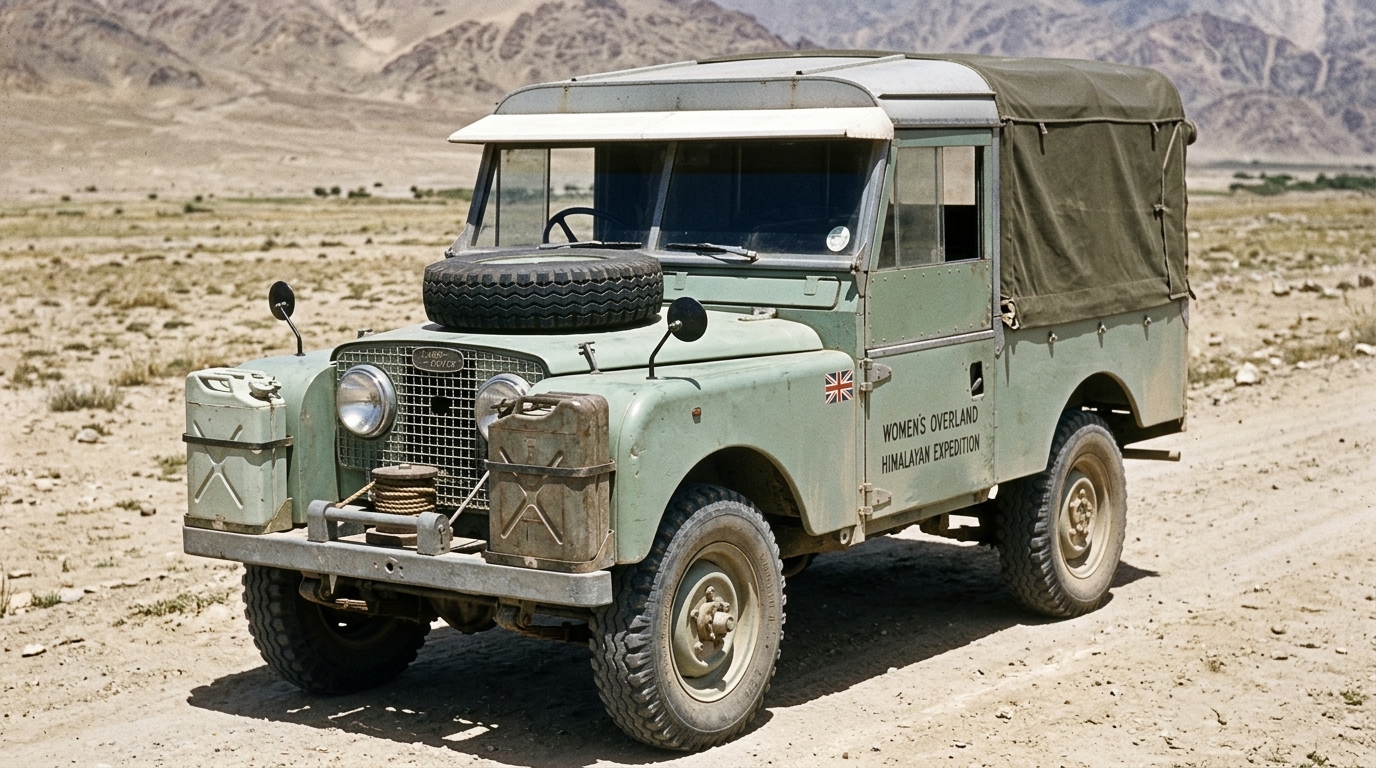 Land Rover Series I 109-inch long-wheelbase pick-up, canvas tilt (a 1958 Solihull demonstrator with 6,000 miles)ROUTE1958MAPPED ROUTE
Women's Overland Himalayan Expedition
In 1958 three service wives — Antonia Deacock, Anne Davies and Eve Sims — refused to be left 'chained to the kitchen sink' while their husbands went climbing, and drove a long-wheelbase Land Rover pick-up sold to them at half price by the Rover Company from Ullswater to Delhi in 42 days, then on to Manali, from where they trekked 300 miles over the Rohtang, Bara Lacha and Shingo passes into Zanskar, becoming the first European women to reach Padam and making the first ascent of an 18,700 ft peak they named Biwi Giri, 'Wives' Peak'. They drove home through the Khyber Pass, Afghanistan and Iran, unescorted, and reached Harwich on 9 October 1958 with more than 16,000 miles on the clock. Deacock's book No Purdah in Padam (1960) tells the story.
Ullswater → Harwich25,750 km13 countries5 in the team5 May 1958UllswaterMay 1958Lydd — air ferry to Le TouquetMay 1958StrasbourgMay 1958Munich9 October 1958Harwich 1959 Land Rover Series II 109-inch, Land Rover Series I 80-inch, station wagon bodyROUTE1959MAPPED ROUTE
Barbara Toy — In Search of Sheba
Barbara Toy's fifth solo Land Rover journey and the one on which she felt she became a real explorer: in 1959, alone in the new long-wheelbase Series II that Rover had made her take in place of Pollyanna, she drove from Libya across the Sahara to the Central African Republic, south to the Congo, east to Lake Victoria, north down the Nile to Khartoum and into Haile Selassie's Ethiopia, where she went from Addis Ababa to Aksum and to the top of Mount Wehni on the trail of the Queen of Sheba, before entering Kenya at Moyale. Published as In Search of Sheba: Across the Sahara to Ethiopia (1961).
Libya → Moyale7 countries1 in the team1959Libya1959Moyale 1959500 km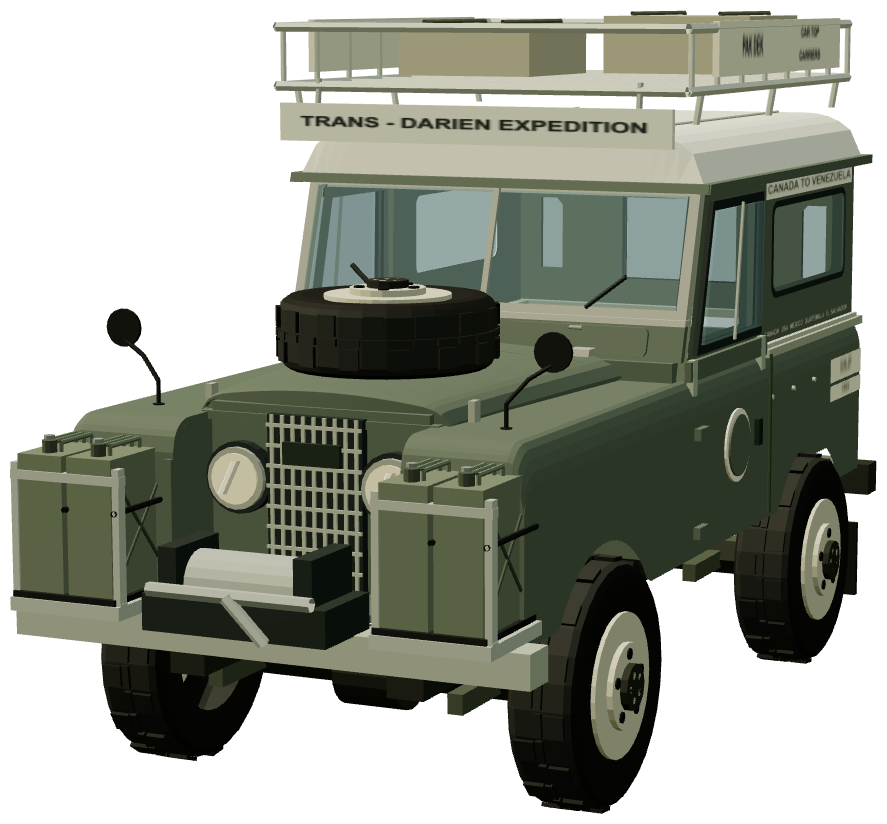 Land Rover Series II 88-inch Station WagonROUTE1959–1960MAPPED ROUTE
Trans-Darién Expedition
The first motor-vehicle crossing of the Darién Gap. Richard Bevir, a former SAS territorial from London, and Terence Whitfield, an Australian electrical contractor, left Toronto on 16 October 1959 in a Land Rover 88-inch Station Wagon they named La Cucaracha Cariñosa, drove the Pan-American Highway to Panama, and from Chepo on 2–3 February 1960 cut, bridged and winched their way with a Willys Jeep pickup driven by the Panamanian cartographer Amado Araúz and the anthropologist Reina Torres de Araúz through 310 miles of jungle to the Colombian border at Palo de las Letras on 13 May 1960 and, by raft down the Atrato, to Quibdó on 17 June 1960 — 134 days for 500 km.
Toronto → Bogotá500 km10 countries9 in the team16 October 1959TorontoDecember 1959San JoséDecember 1959The 'Costa Rica gap' — 135 roadless miles south of San José24 December 1959Panama City24 June 1960Bogotá 195910k km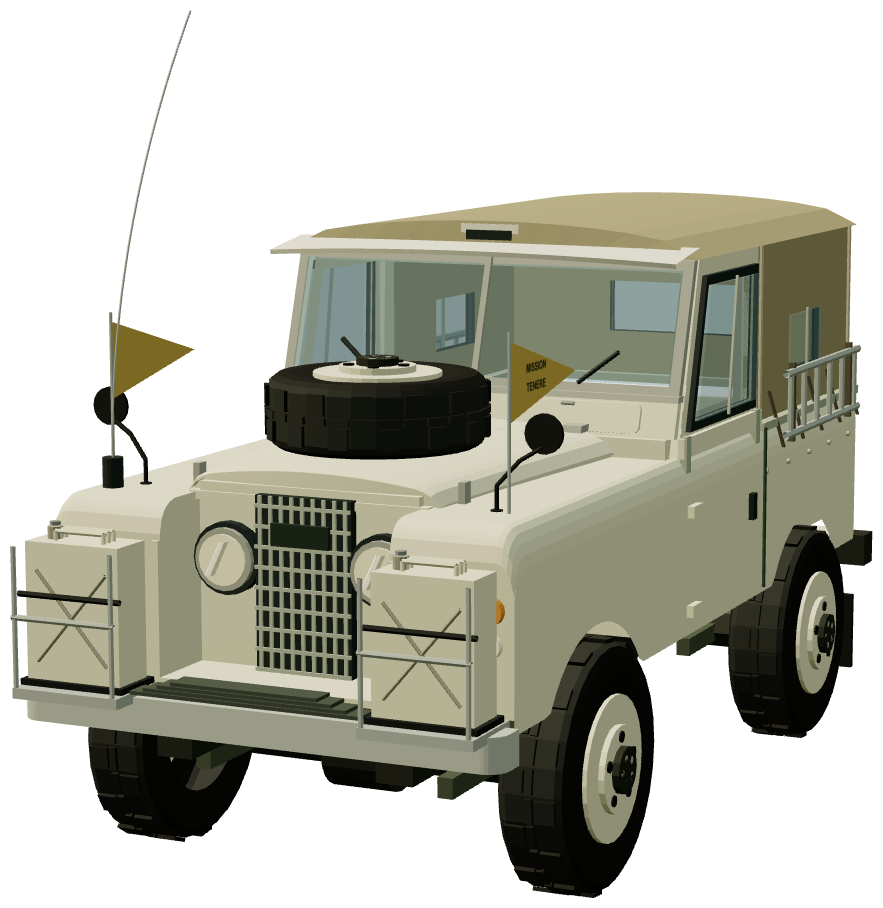 Series II 88-inch soft-top, Series II 109-inch pickupSCIENTIFIC1959–1960MAPPED ROUTE
Mission Berliet-Ténéré
Between November 1959 and January 1960 the Lyon truck maker Berliet sent nine six-wheel-drive GBC 8 'Gazelle' trucks, a Bell helicopter and a handful of Series II Land Rovers from Ouargla in Algeria across the Ténéré to Fort-Lamy (N'Djamena) in Chad and back: 10,000 km in about 50 days, with sixty-odd drivers, scientists, film-makers and journalists. The Land Rovers ran ahead of the column as 'éclaireurs' — the navigator Commandant Armand led from a 109 with a sun compass, and Maurice Berliet drove an 88. The mission opened a direct Algeria–Chad lorry route, came home with prehistoric finds from the Ténéré, and made the Gazelle famous.
Ouargla → Djanet10,000 km3 countries7 in the team8 November 1959OuarglaNovember 1959Algiers — Berliet branch, Hussein-Dey17 November 1959Djanet17 November 1959Erg d'Admer7 January 1960Djanet 1960 Land Rover Series IIROUTE1960–1961MAPPED ROUTE
Cambridge Trans-American Expedition
Four Cambridge graduates — the vets Martin Hugh-Jones and Andrew Bacon, with Michael Andrews and Ben Mackworth-Praed — shipped a single 1960 Series II in Cambridge blue to Argentina and drove it with a trailer from Ushuaia on the Beagle Channel up the length of the Americas, shipping round the Darién Gap, to Fairbanks, Alaska, in 1960–61, where winter and money ran out a few hundred miles short of the Arctic Ocean. Their book Year with Three Summers records what is probably the first drive from Tierra del Fuego to Alaska; the Land Rover, found in a Wasilla back yard in 2010, finished the job in August 2015 with three of the original crew aboard.
Ushuaia → Fairbanks13 countries6 in the team1960Ushuaia, Beagle Channel, Tierra del Fuego1961Fairbanks, Alaska 196050k km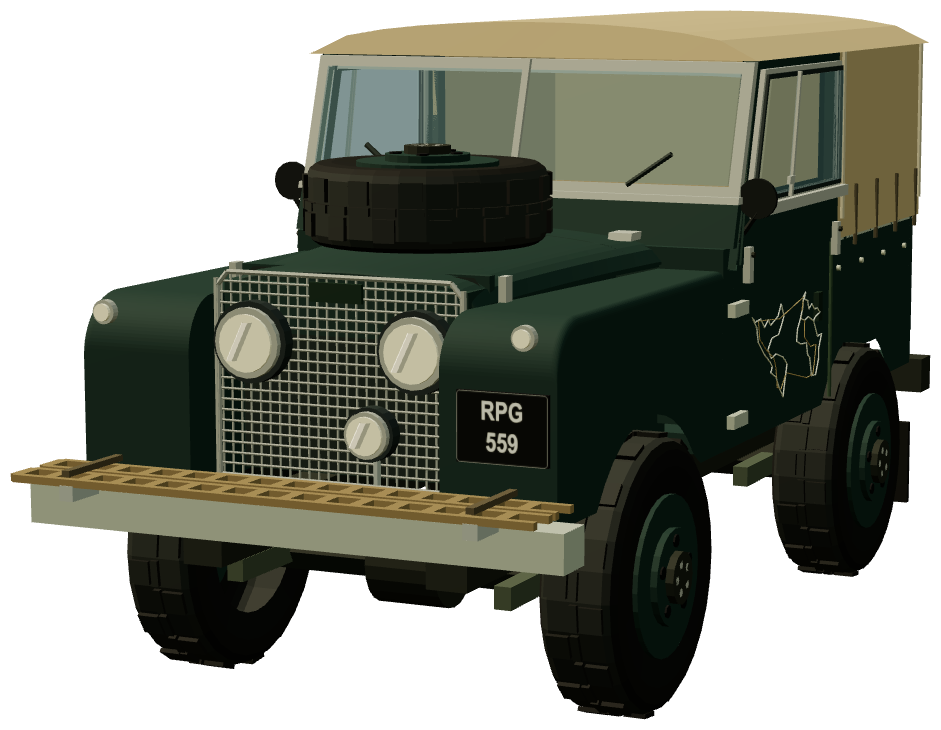 Land Rover Series I 80-inch, 1952SCIENTIFIC1960MAPPED ROUTE
Imperial College Africa and Americas Expedition
Three aeronautics postgraduates from Imperial College — D. Hyde, I. S. Gartshore and W. H. Melbourne — left London on 16 March 1960 in a reconditioned 1952 Land Rover 80-inch with 90,000 miles already on it, to survey civil light-aircraft operations in the remote parts of two continents. They crossed the Sahara by the Tanezrouft in an army-escorted convoy, drove through Nigeria, Chad and the Congo on the eve of independence to Uganda, Kenya, the Rhodesias and Cape Town, shipped to Buenos Aires, crossed the Andes on a railway flat-car, climbed to 14,000 feet in Bolivia and Peru and ran up through Colombia, Central America, Mexico and the United States to Canada and New York in November: 31,300 road miles, with thirteen broken rear-spring leaves the only serious trouble. Their report, published in December 1960, is a mile-by-mile guide to the roads of the day.
London → New York50,370 km34 countries3 in the team16 March 1960London23 March 1960Gibraltar25 March 1960Tangier29 March 1960Colomb-BécharNovember 1960New York 19604.8k km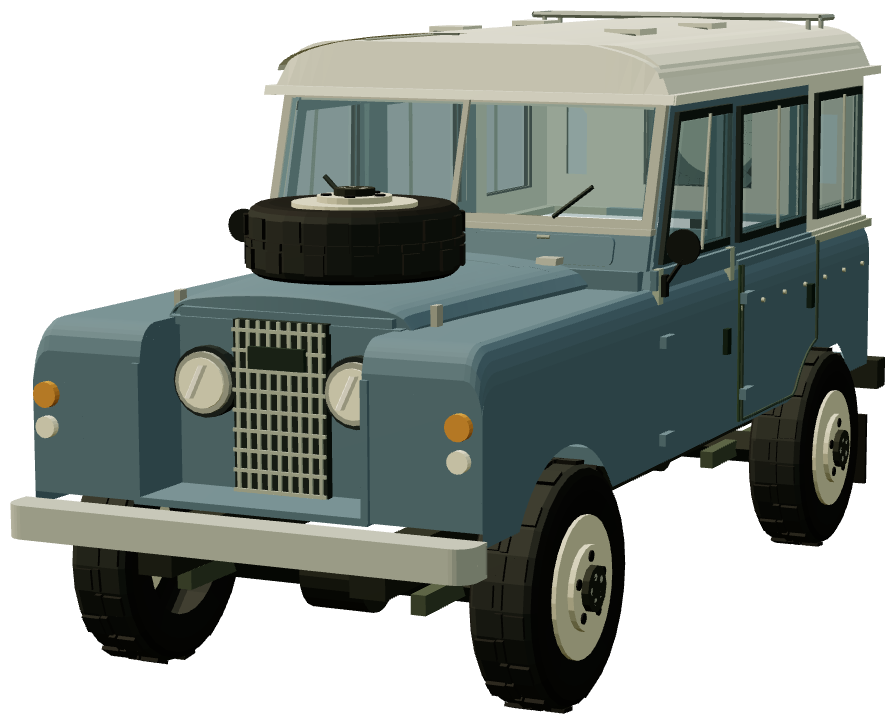 Series II 88-inch soft-top, Series II 109-inch pickup, Series II 109 station wagonSCIENTIFIC1960MAPPED ROUTE
Mission Berliet-Tchad
Nine months after the Mission Berliet-Ténéré, Maurice Berliet led a second Saharan crossing from Ouargla to Fort-Lamy (N'Djamena) in October–December 1960, this time by a new, more easterly line through Séguedine, the western Tibesti and Faya-Largeau that ordinary two-wheel-drive lorries could use. Seven of the 1959 Gazelles, four 11-tonne GLM lorries, a Bell helicopter and three Land Rover reconnaissance cars made the 4,840 km round trip; on the way home the party planted the 22 'balises Berliet' marker posts across the Ténéré that still appear on the Michelin map, and crossed the desert east–west from Séguedine to the Djebel Gréboun.
Ouargla → Djanet4,840 km3 countries8 in the team23 October 1960OuarglaOctober 1960Fort Flatters (Bordj Omar Driss)October 1960Amguid28 October 1960Djanet7 December 1960Djanet 1961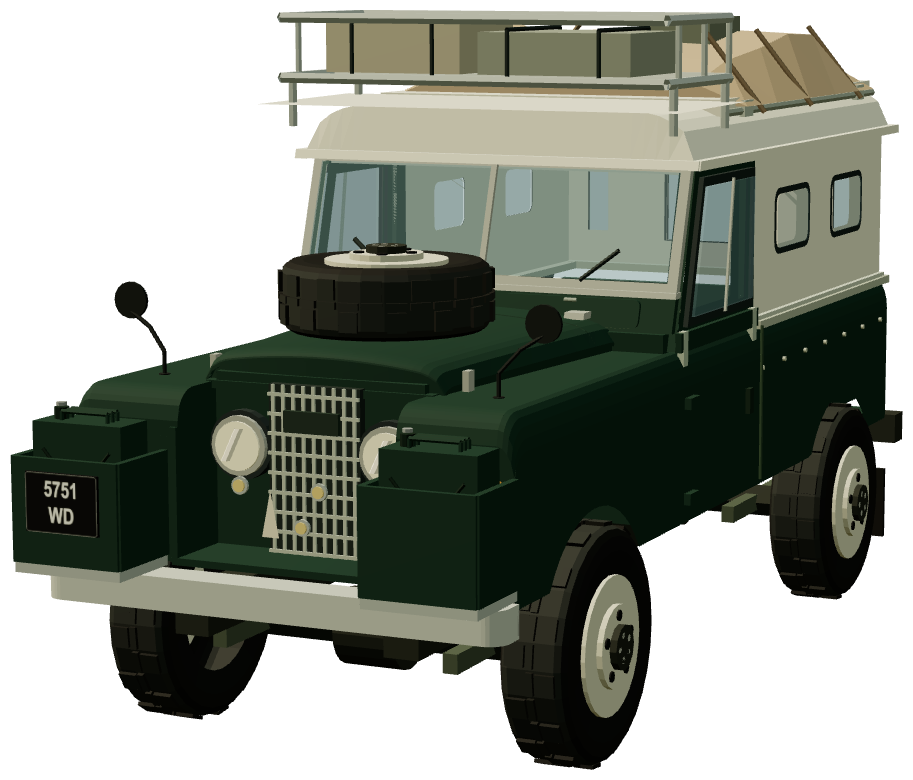 Land Rover Series IIA 109-inch, three-door Dormobile conversionROUTE1961MAPPED ROUTE
Barbara Toy — The Way of the Chariots
Barbara Toy's sixth solo Land Rover journey, made in 1961 in her third car, a Series IIA 109-inch Dormobile registered 5751 WD: from Timbuktu on the Niger north across the Sahara, by way of the Tassili n'Ajjer mountains of southern Algeria and their prehistoric rock paintings, to Tripoli in Libya. She went to look at the rock art found in 1933 and to test the idea of a prehistoric chariot road from the Mediterranean to the Niger. Published as The Way of the Chariots (1964).
Timbuktu → Tripoli3 countries1 in the team1961Timbuktu1961Tripoli 1961Land Rover long-wheelbase 109-inch (Series II by date; the article says only 'long-wheeled base Land Rover')SCIENTIFIC1961MAPPED ROUTECambridge Expedition to Nagir, Karakoram
In the summer of 1961 eight Cambridge undergraduates led by W. P. Gamble drove two long-wheelbase Land Rovers overland from England through Istanbul and eastern Turkey to Rawalpindi, then argued their way past the Pakistani authorities to take them over the 4,173 m Babusar Pass — a road built only for jeeps — to Gilgit, which Gamble called the only pioneering aspect of the trip. From Gilgit they went on by hired transport, donkey and porter up the Hunza valley to Minapin in the state of Nagir and spent a month to the end of August on glaciological and botanical work on the avalanche-fed Minapin Glacier under Rakaposhi, before driving home by Lahore, Isfahan and Istanbul.
Cambridge → England4 countries2 in the teamJune 1961CambridgeJuly 1961Istanbul — Bosphorus crossingJuly 1961Eastern TurkeyJuly 1961TehranSeptember 1961England 1962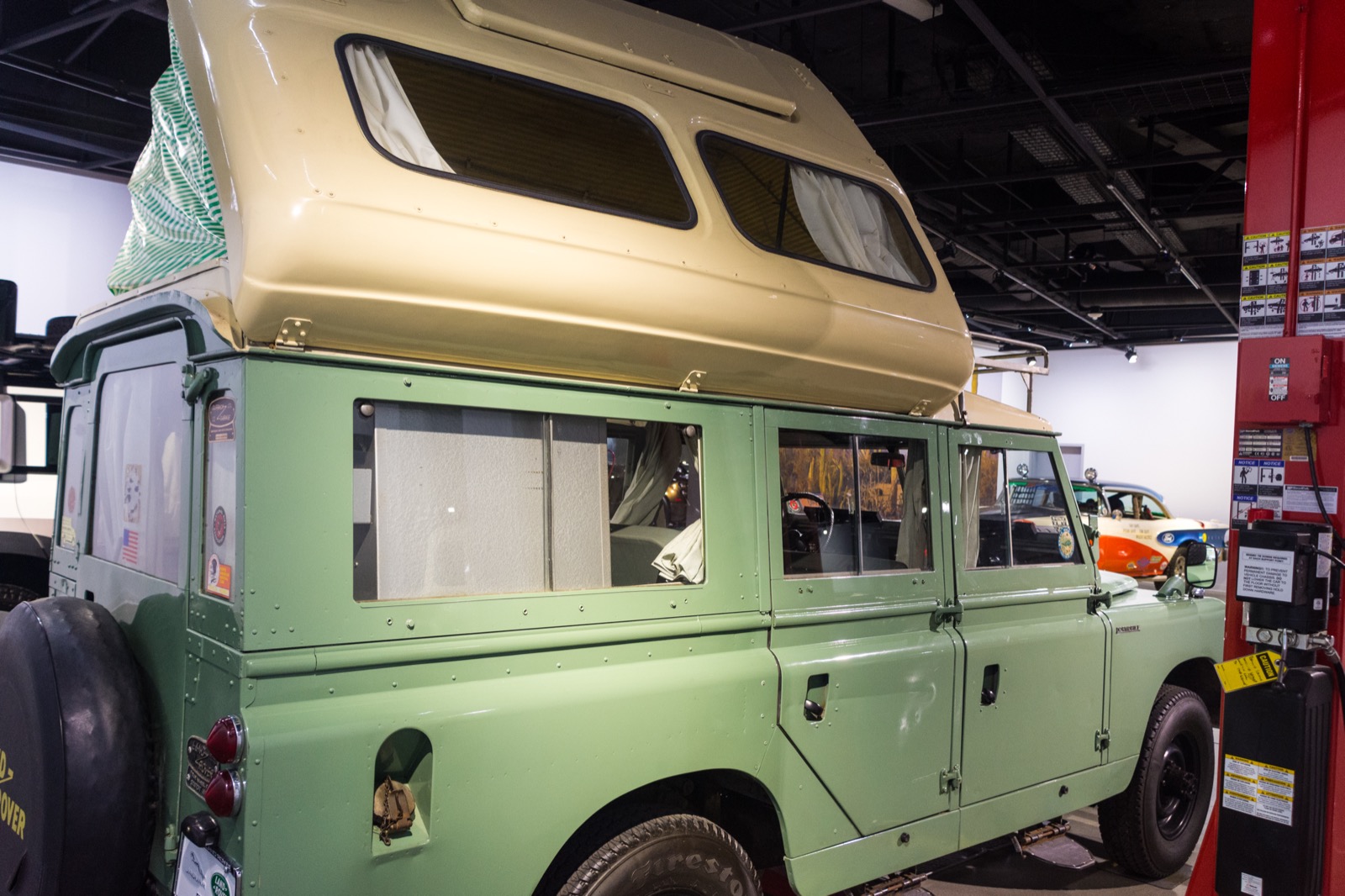 Land Rover long-wheelbase (109-inch; Series model not stated), two with Martin Walter Dormobile roofsSCIENTIFIC1962–1968MAPPED ROUTE
Harold Hall Australian Expeditions
Five six-month ornithological collecting expeditions mounted by the Bird Room of the British Museum (Natural History) between November 1962 and November 1968, paid for by a £25,000 gift from the Australian-born philanthropist Major Harold Wesley Hall. Each party of about six travelled in the same three long-wheelbase Land Rovers, fitted out in London with two Dormobile roofs, which were landed at Perth in November 1962 and stored between expeditions; over six years they covered the south-east, tropical Queensland, the central deserts, the south-west and the Kimberley and Arnhem Land. The expeditions brought back 4,709 skins, discovered Hall's babbler, and were the last systematic collecting of Australian birds by an overseas museum.
Perth → Perth1 countries17 in the team12 November 1962PerthDecember 1962Eucla19 December 1962Nelson, Glenelg estuary18 January 1963Coleraine25 November 1968Perth 1964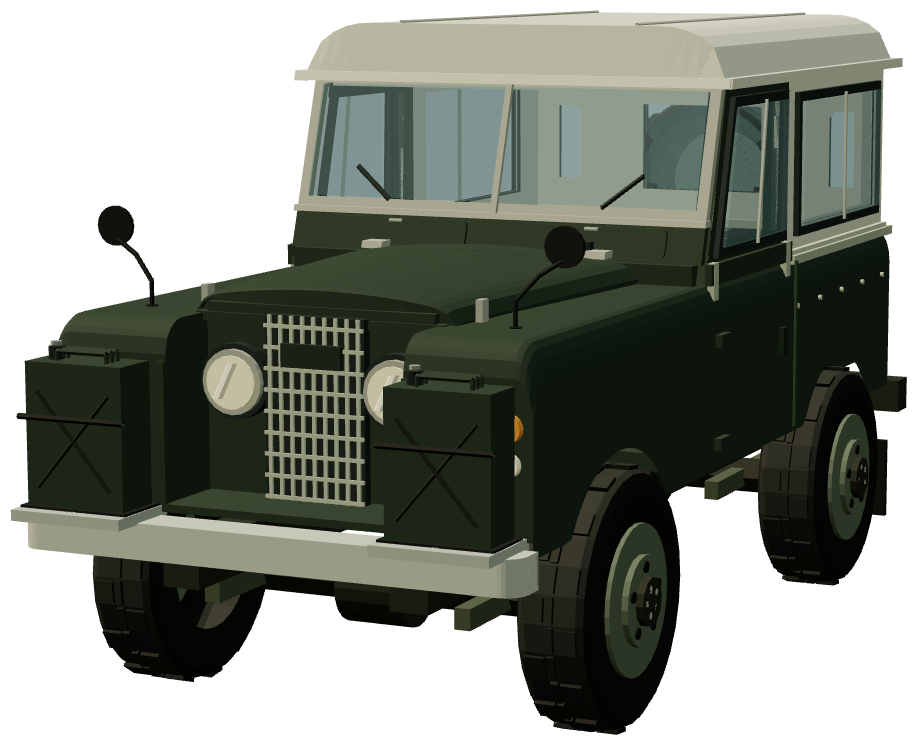 Schreider Great Rift Land RoverROUTE1964–1965MAPPED ROUTE
Helen and Frank Schreider: Journey into the Great Rift
Newly hired as full-time National Geographic foreign staff after their amphibious-jeep journeys, Helen and Frank Schreider were sent to follow the Great Rift Valley by Land Rover from the Bible lands to the fossil beds of East Africa. Their account of the northern half — Lebanon, Jordan and the Dead Sea, the Nile and the Red Sea coast of Egypt, and a compass crossing of the Nubian Desert to the Sudan frontier that nearly ran them out of fuel — appeared as 'Journey into the Great Rift: the Northern Half' in the August 1965 magazine; months later and 5,000 miles upstream they reached the Nile again at Uganda's Murchison Falls.
Beirut → Murchison Falls6 countries2 in the team1964Beirut1965Murchison Falls 1964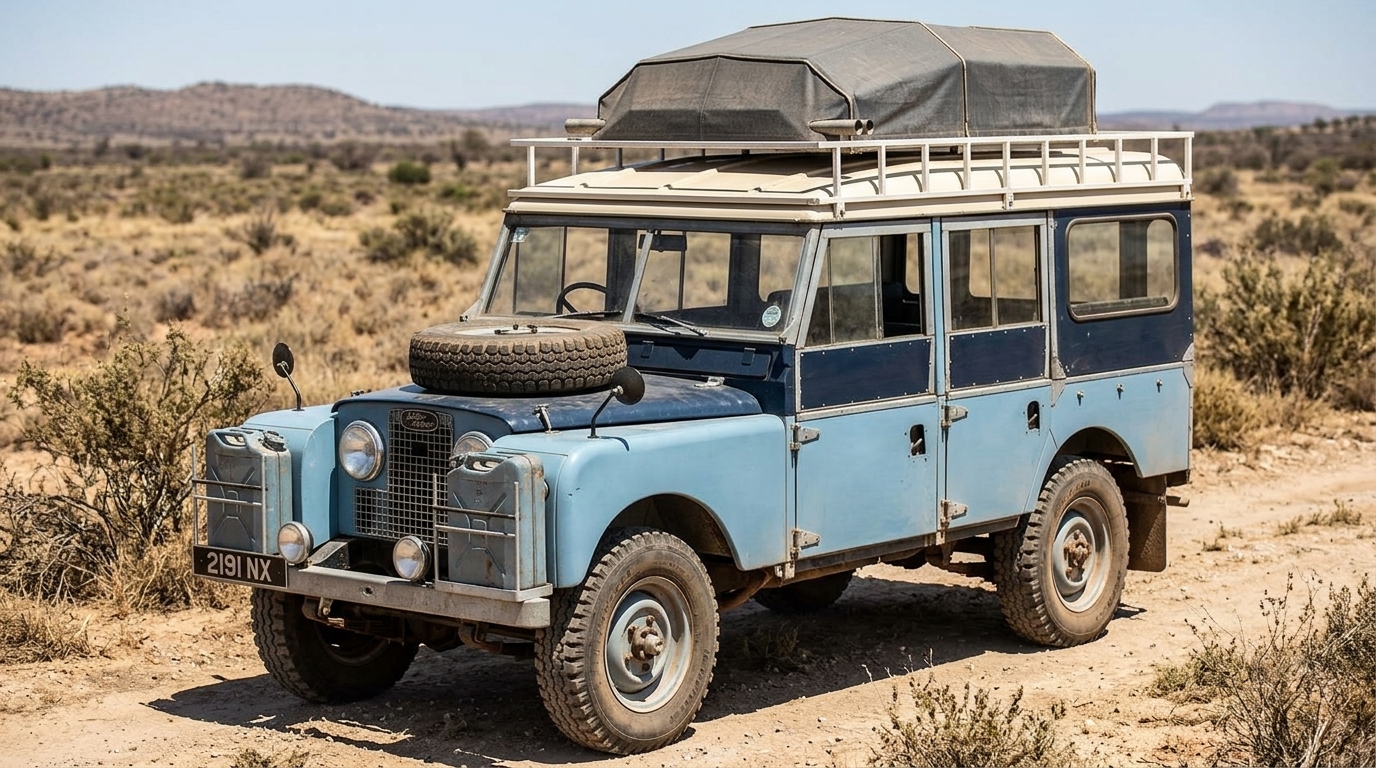 Series I 107-inch station wagonROUTE1964–1965MAPPED ROUTE
First Encounter Overland Expedition, London to Kathmandu
On 5 October 1964 Tony Jones and Harry Marsh left England with six paying passengers — three Australians and three English girls recruited through an advertisement in The Times — packed into one long-wheelbase Land Rover painted Oxford and Cambridge blue, registration 2191 NX, and drove it through Europe, Turkey, the Levant, Iraq, Iran, Afghanistan and the Khyber Pass to Delhi and on to Kathmandu, which they reached on 24 January 1965 after 16 weeks. It was the first journey to carry the name Encounter Overland, the company Jones founded in 1967 that ran Bedford trucks on the hippie trail for the next three decades; Marsh's diary of the trip survives on the company archive site.
England → Kathmandu17 countries8 in the team5 October 1964England6 October 1964Koblenz8 October 1964Freiburg9 October 1964Innsbruck and the Brenner Pass24 January 1965Kathmandu 1965 Land Rover, long- and short-wheelbase; models not stated in the sources fetchedFILM1965MAPPED ROUTE
Gerald Durrell's Sierra Leone Collecting Expedition
In January 1965 Gerald Durrell sailed for Sierra Leone with a BBC Natural History Unit film crew to collect animals for his Jersey zoo and make a television series about how it was done. From Freetown the party drove two Land Rovers some 200 miles inland to a disused chrome mine at Bambawo, above Kenema, and spent the following months catching leopards and — with great difficulty — the black-and-white and red colobus monkeys that were the expedition's main object. Durrell crushed his ribs and damaged his spine in an accident with one of the Land Rovers and was in pain for the rest of the trip. The six-part BBC series 'Catch Me a Colobus' was broadcast in early 1966, and his 1972 book of the same name tells the story.
Freetown → Freetown1 countries4 in the teamJanuary 1965Freetown1965Freetown 19666.8k km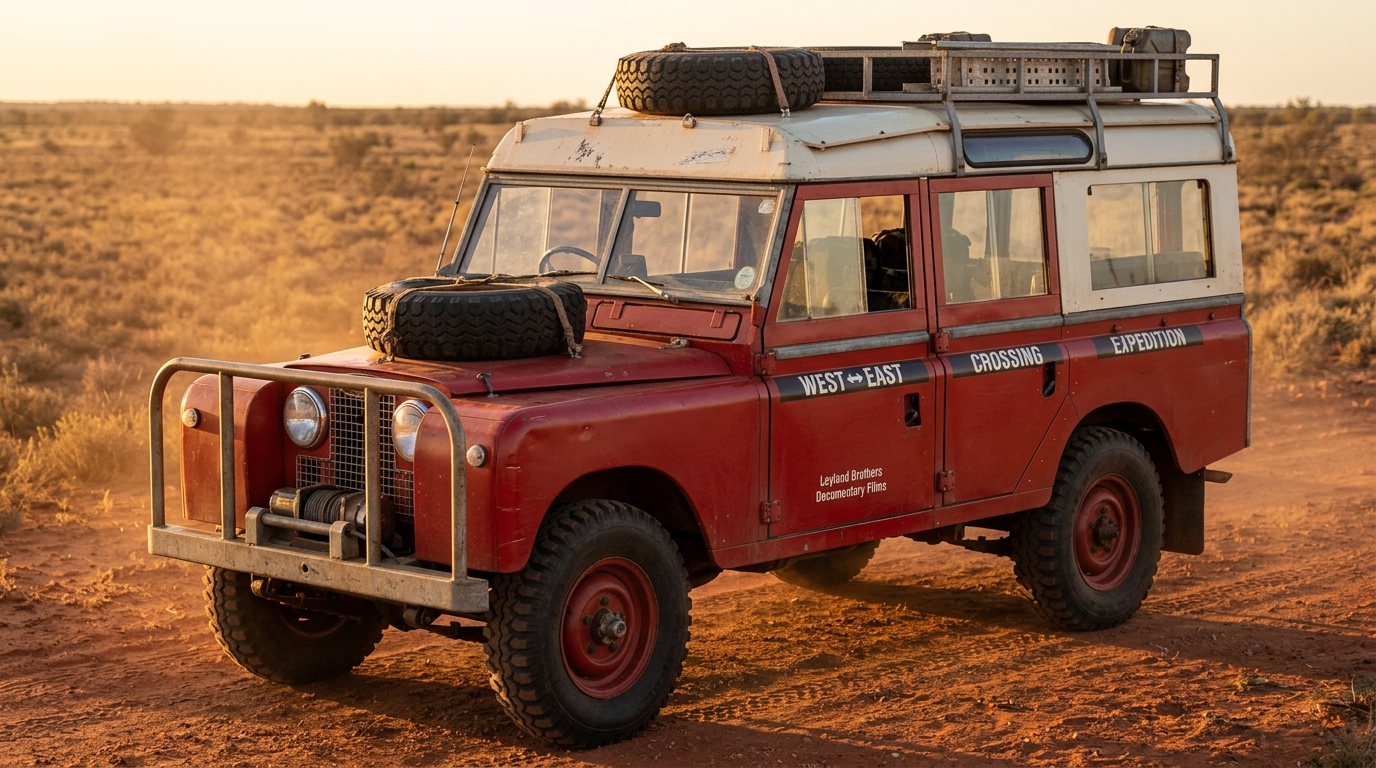 Land Rover Series I 107-inch Station Wagon, lengthened and re-engined, Land Rover 88-inch petrol hard top (1963)FILM1966MAPPED ROUTE
Wheels Across a Wilderness: the Leyland Brothers' West–East Crossing
From 3 May to 20 August 1966 Mike and Mal Leyland, with Pat Leyland as cook and the Newcastle mechanic Ted Hayes, drove two red Land Rovers — a 1956 Series I 107-inch station wagon rebuilt with a three-litre six-cylinder Rover engine, and a 1963 88-inch hard top — with a home-built four-wheel trailer from Steep Point, the westernmost point of the Australian mainland, straight through the Gibson and Simpson deserts to Cape Byron, the easternmost, carrying a bottle of Indian Ocean water to the Pacific. It was the first west–east crossing of the continent by car; the 16 mm film Wheels Across a Wilderness made the brothers household names, and the station wagon is in the National Motor Museum at Birdwood.
Steep Point → Cape Byron6,836 km1 countries4 in the team3 May 1966Steep Point20 August 1966Cape Byron 1966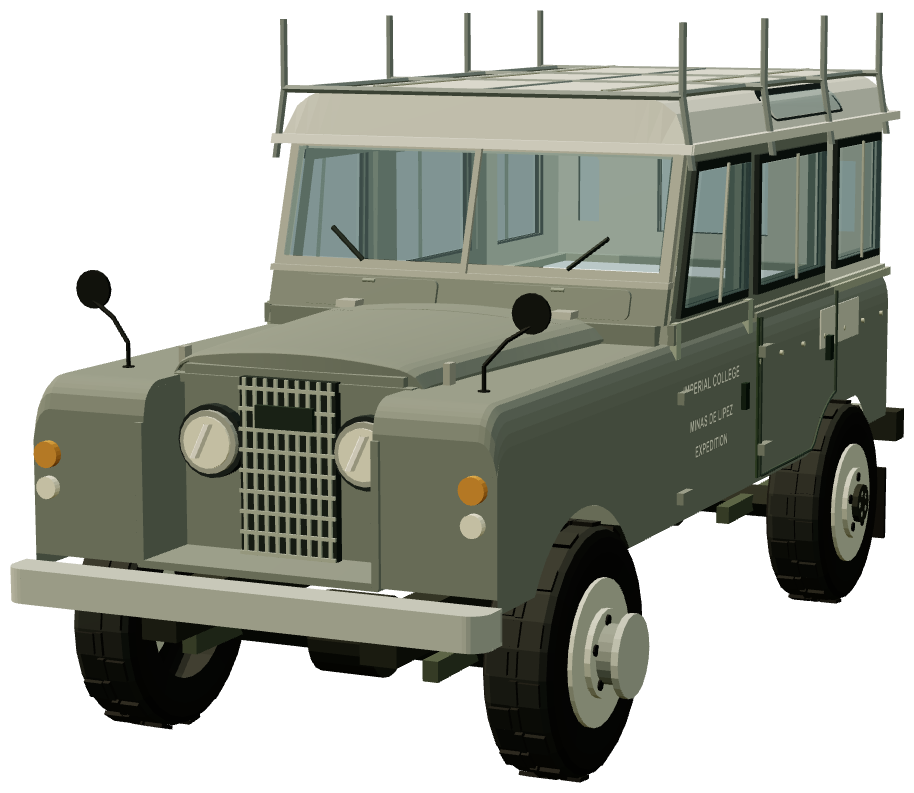 Land Rover Series II 109-inch twelve-seater station wagon, petrolSCIENTIFIC1966MAPPED ROUTE
Imperial College Minas de Lípez Expedition
Four Imperial College students — Alan Cope, Tony Read, Jeff O'Leary and Peter Francis — sailed from Birkenhead on the Lobitos oil tanker El Lobo on 12 July 1966 and drove a 1961 Series II 109 twelve-seater, bought for £550 in Ickenham, from Talara on the Peruvian coast down the Pan-American Highway, over a 15,000 ft pass to Lake Titicaca and La Paz, and south across the altiplano through Uyuni to the abandoned Spanish silver-mining town of San Antonio de Lípez at 15,200 ft, 39 days out of London. Three months of geological, archaeological, botanical and meteorological work in the Sud Lípez mines followed, with a Bolivian Geological Survey Chevrolet in support; the Land Rover was driven out through Potosí, Sucre, Cochabamba and Santa Cruz and shipped home from Lima in October 1966 when Bolivian bureaucracy defeated an attempt to sell it.
Birkenhead — Cammell Laird's yard → Lima — Land Rover shipped home4 countries5 in the team12 July 1966Birkenhead — Cammell Laird's yard, M.V. El Lobo22 July 1966Sombrero Island — into the Caribbean30 July 1966La Libertad — tanker loading; bus to Guayaquil3 August 1966Talara — ashore; Land Rover cleared 5 August10 October 1966Lima — Land Rover shipped home 19682.6k km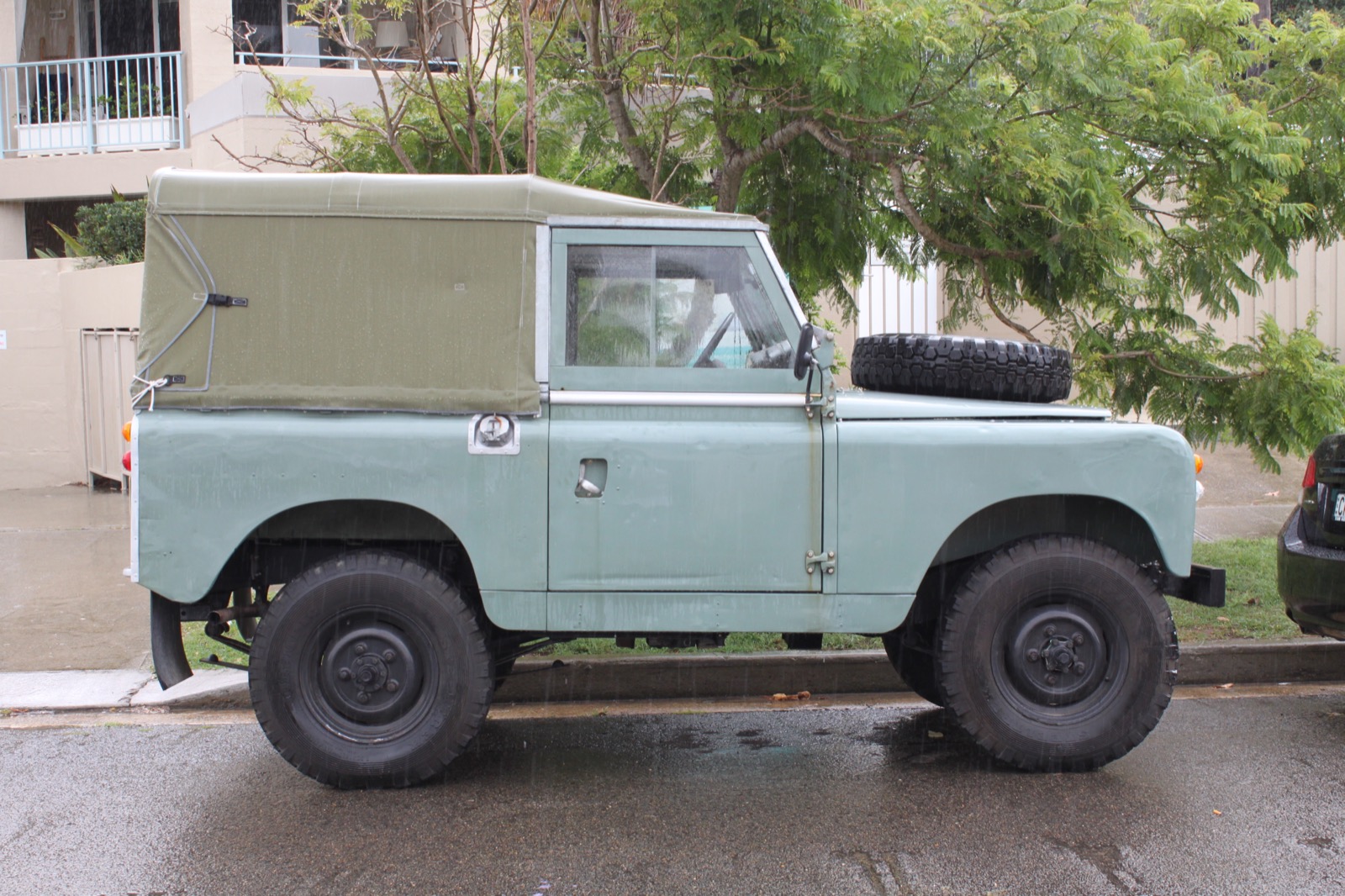 Land Rover 88-inch short wheelbase (Series IIA by date; Chudleigh says only 'short wheel base Landrovers')RECORD1968MAPPED ROUTE
First vehicle traverse of the Canning Stock Route
On 10 July 1968 three surveyors — Dave Chudleigh and Rus Wenholz of the Australian Survey Office in Canberra and Noel Kealley of Perth — left Wiluna in two short-wheelbase Land Rovers on annual leave and drove the whole 1,000-mile Canning Stock Route to Halls Creek, the first recorded vehicle traverse of the route in one concerted effort. Navigating by 1:250,000 maps, aerial photographs and star fixes with a Wild T2 theodolite, they found every one of Canning's wells, relocated the Calvert Expedition's Separation Well and Carnegie's Helena Spring, and reached Halls Creek 34 days and 1,600 miles later with nothing broken but springs.
Wiluna → Halls Creek2,575 km1 countries3 in the team10 July 1968WilunaJuly 1968Lake NabberuJuly 1968Windich Spring, Well 4AJuly 1968Weld Spring, Well 9 (Glen Ayle Station)13 August 1968Halls Creek 196817k km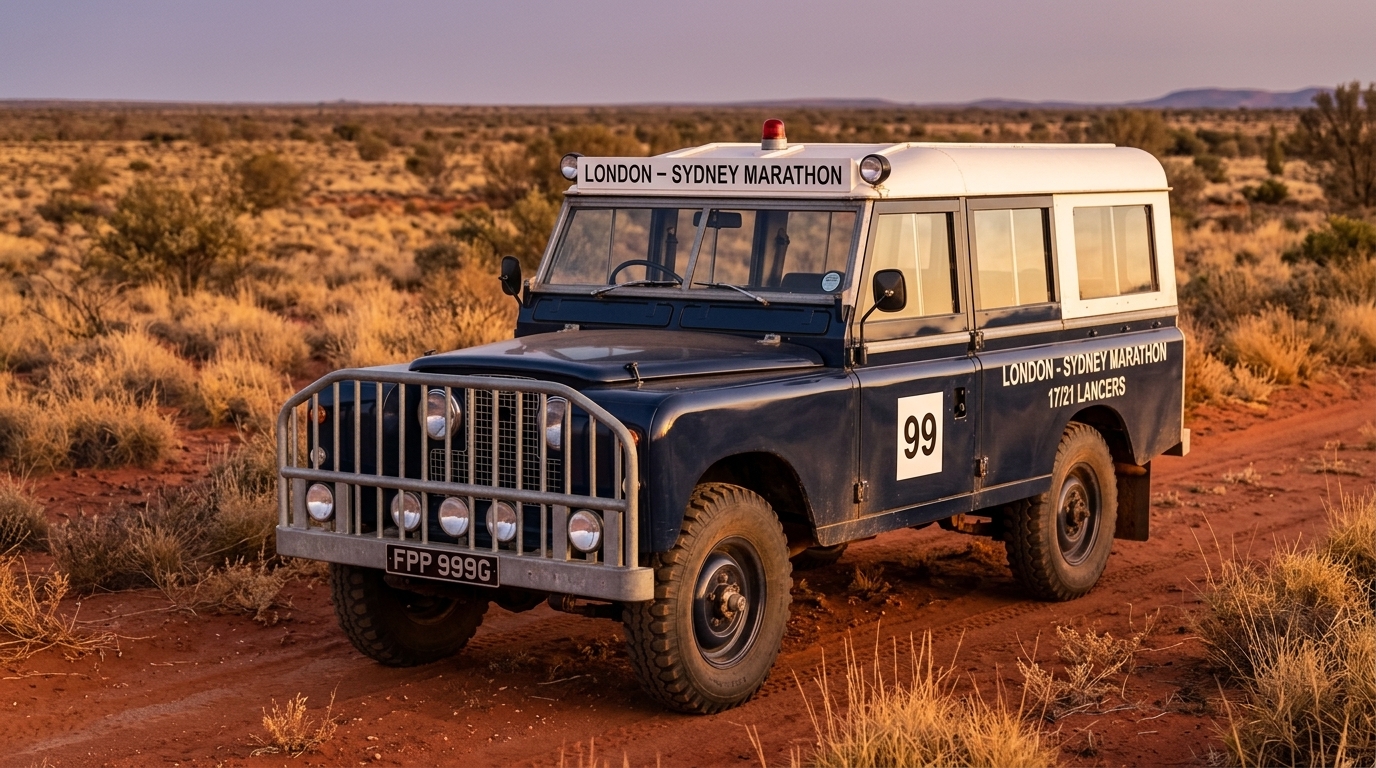 Land Rover Series IIA 109-inch Station WagonTRIAL1968MAPPED ROUTE
17th/21st Lancers Land Rover in the London–Sydney Marathon
In the first London–Sydney Marathon of November–December 1968 — 10,373 miles from Crystal Palace to Sydney through eleven countries and across Australia, with the P&O liner Chusan carrying the cars from Bombay to Fremantle — a four-man army crew from the 17th/21st Lancers, Lieutenants Gavin Thompson and Christopher Marriott with Corporal Charles Skelton and Trooper Melvin Lewis, drove the only Land Rover in the field, car 99, listed as a 'Land Rover 2WD'. Of 98 starters 56 finished; the Lancers were 49th, on 6,787 penalty points.
Crystal Palace → Warwick Farm16,694 km11 countries4 in the team24 November 1968Crystal Palace, London25 November 1968Dover — 4 a.m. ferry25 November 1968Le Bourget, Paris26 November 1968Turin — via the Mont Blanc Tunnel17 December 1968Warwick Farm, Sydney 1974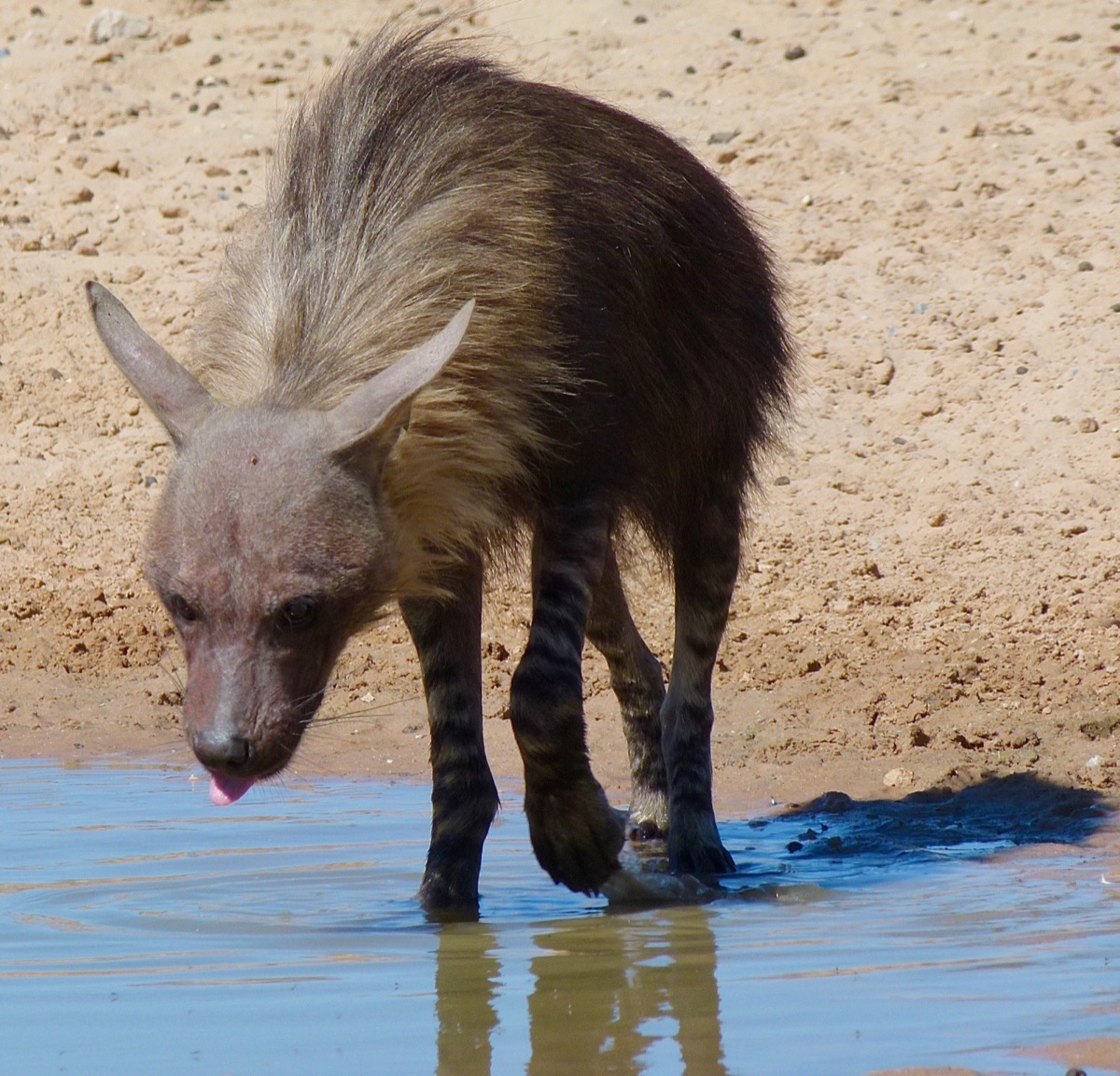 Land Rover, model not stated in the sources fetchedSCIENTIFIC1974–1981MAPPED ROUTE
Mark and Delia Owens' Central Kalahari Research Project
On 4 January 1974 two American graduate zoologists, Mark and Delia Owens, flew to Africa with the proceeds of everything they owned, bought a third-hand Land Rover and in late April 1974 drove north from Maun into the Central Kalahari Game Reserve in search of a fossil riverbed a pilot had seen from the air: Deception Valley. They lived and worked there for seven years, alone in country with no roads, no people and no surface water, producing the first field studies of the brown hyena and of Kalahari lions, and left only when Botswana expelled them after they campaigned against the veterinary cattle fences that were killing the wildebeest migration. Their 1984 book 'Cry of the Kalahari' became an international bestseller.
Gaborone → Deception Valley1 countries2 in the team4 January 1974GaboroneJanuary 1974GaboroneApril 1974MaunApril 1974Central Kalahari Game Reserve1981Deception Valley 197512k km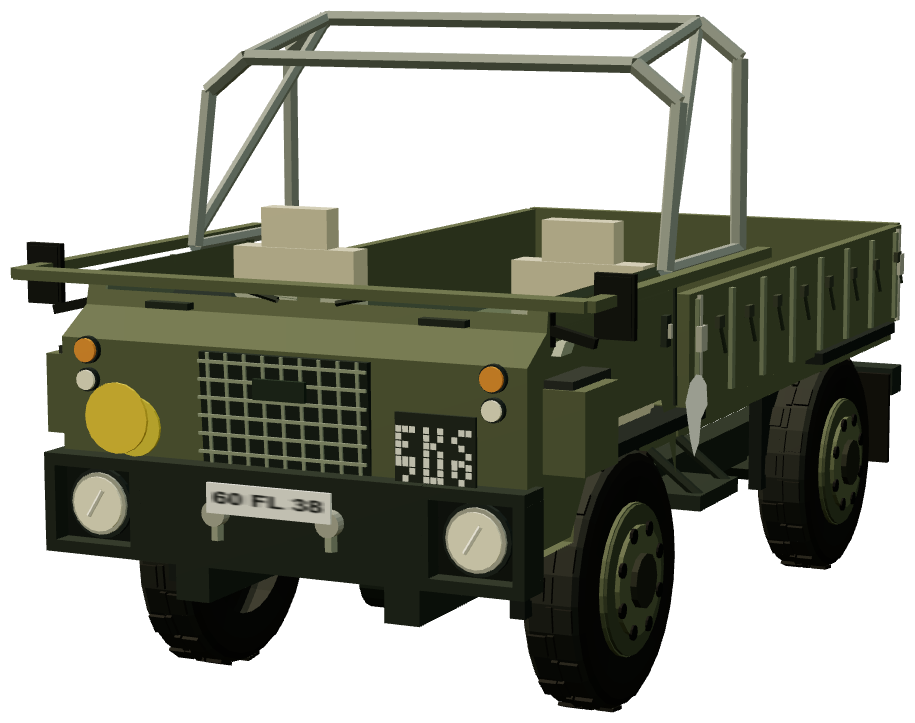 Land Rover 101 Forward Control, pre-production, Land Rover 101 Forward Control, 3.5-litre V8, Land Rover 101 Forward Control with Rubery Owen powered trailerMILITARY1975MAPPED ROUTE
Joint Services West–East Sahara Expedition
The first crossing of the Sahara from the Atlantic to the Red Sea, led by Squadron Leader Tom Sheppard MBE with a British services team in four pre-production Land Rover 101 Forward Controls, three of them towing Rubery Owen powered-axle trailers. They left the Mauritanian coast on 25 January 1975, crossed the Mauritania–Mali 'Empty Quarter' where no tracks existed, and reached Cairo on 3 May after 12,054 km and 81 days coast to coast, carrying a gravity survey the whole way.
Atlantic coast → Cairo12,054 km7 countries4 in the team25 January 1975Atlantic coast, MauritaniaFebruary 1975Atar6 February 1975Ouadane oasisFebruary 1975Tadhak rocks3 May 1975Cairo 1979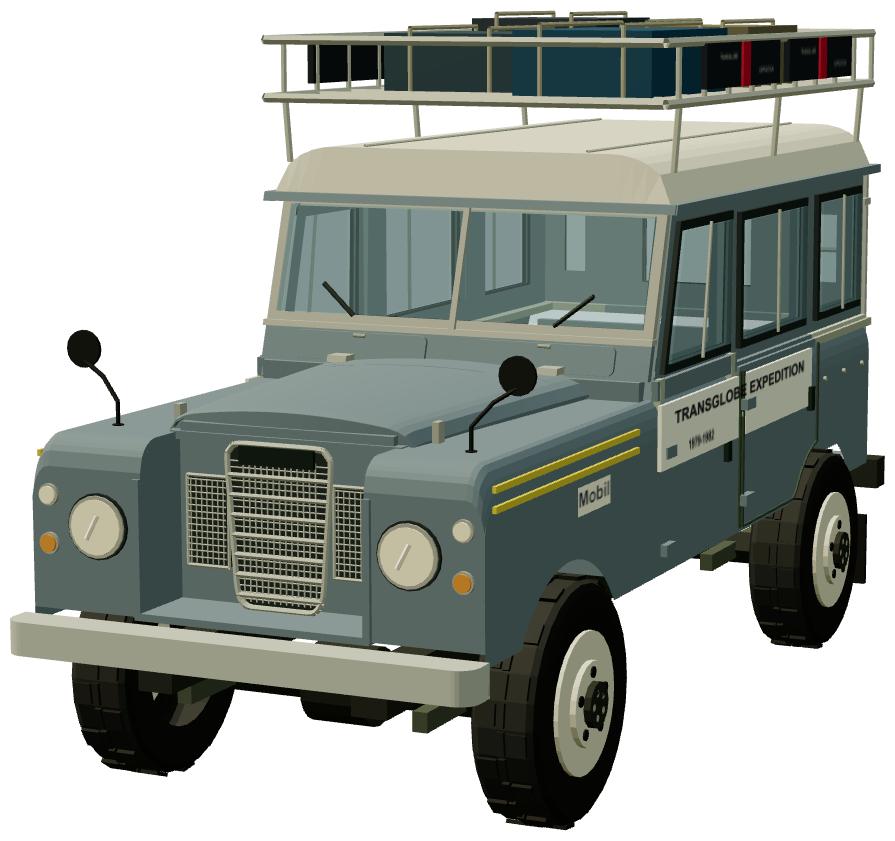 Land Rover (model not stated in the sources fetched), Land Rover (model not stated in the sources fetched)RECORD1979MAPPED ROUTE
Transglobe Expedition — the Sahara crossing
The overland opening of Sir Ranulph Fiennes' Transglobe Expedition, the first surface circumnavigation of the Earth through both Poles: in September 1979 the five-strong land party — Ran and Ginny Fiennes, Charlie Burton, Oliver Shepard and Simon Grimes — drove two Land Rovers and a Range Rover from Greenwich through France and Spain, shipped from Barcelona to Algiers in the expedition ship Benjamin Bowring, and spent eight weeks crossing the Sahara and the Niger basin by way of El Goléa and Timbuktu to rejoin the ship at Abidjan, collecting specimens for the Natural History Museum on the way, before sailing for Cape Town and Antarctica.
Greenwich → Abidjan — rejoining the Benjamin Bowring6 countries5 in the team2 September 1979Greenwich, LondonSeptember 1979Paris — sponsors' trade exhibitionSeptember 1979Barcelona — vehicles loaded into the shipOctober 1979Algiers — landed from the Benjamin BowringDecember 1979Abidjan — rejoining the Benjamin Bowring 1980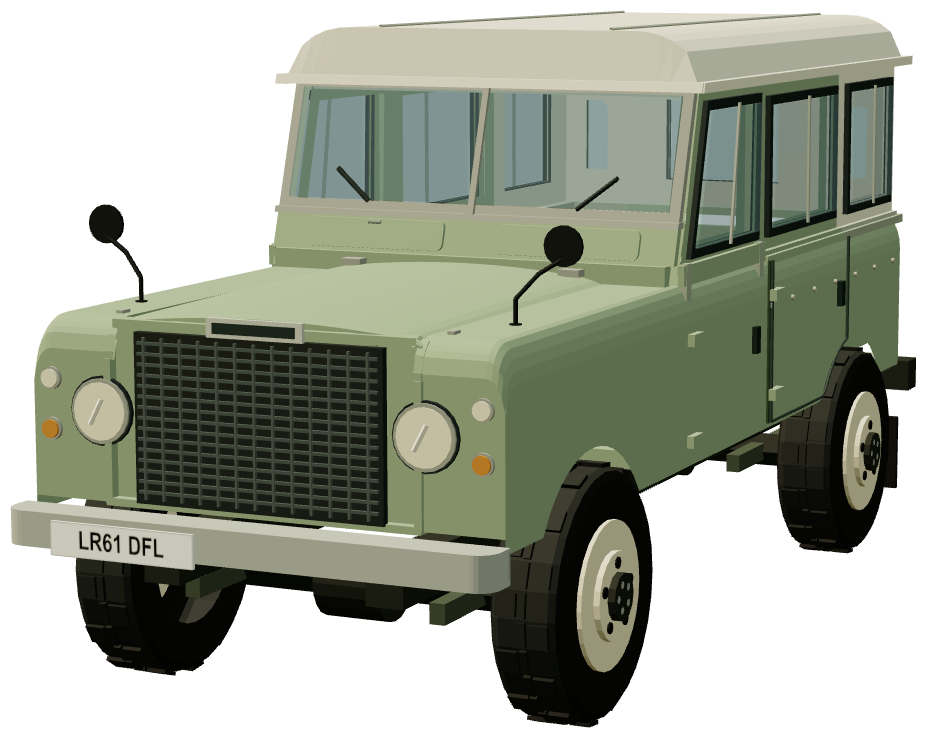 Land Rover Series III Stage 1 V8SCIENTIFIC1980MAPPED ROUTE
International Karakoram Project
The Royal Geographical Society marked its 150th anniversary in 1980 with the International Karakoram Project: 73 scientists from Britain, Pakistan and China, led by Professor Keith Miller of Sheffield with Nigel Winser as field director, who spent June to September 1980 in the Hunza valley of northern Pakistan running six linked programmes — survey, geomorphology, seismology, glaciology, radio-echo ice sounding and housing — from a base camp at Aliabad, moving along the newly completed Karakoram Highway and its side tracks in a fleet of new Series III Stage 1 V8 Land Rovers. The surveyor Jim Bishop was killed placing a beacon. The results filled two Cambridge University Press volumes and Miller's book Continents in Collision.
Islamabad → Aliabad1 countries10 in the teamJune 1980IslamabadSeptember 1980Aliabad, Hunza 19831.6k km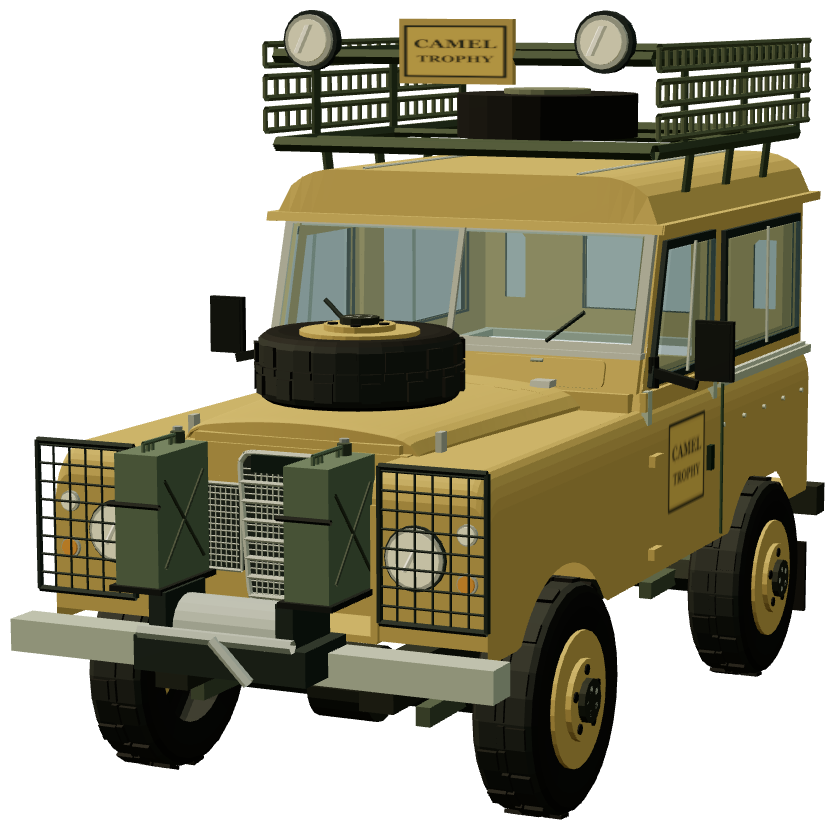 Land Rover Series III 88-inch Station Wagon, 2.25 diesel, Land Rover Series III 109-inch Station Wagon, 2.25 dieselROUTE1983MAPPED ROUTE
Camel Trophy 1983 — Zaire
The fourth Camel Trophy and the first in Africa: seven two-man national teams in diesel Land Rover Series III 88-inch station wagons, with Series III 109s in support, from Kinshasa to Kisangani across Zaire in April 1983. About 1,600 km in sixteen days of mud, sand, 48 °C heat and 95 per cent humidity; won by Henk Bont and Franz Heij of the Netherlands. It was the only Camel Trophy run in Series Land Rovers.
Kinshasa → Kisangani1,640 km1 countries7 in the team6 April 1983Kinshasa8 April 1983Bandundu16 April 1983Mai-Ndombe jungle22 April 1983Kisangani 1984900 km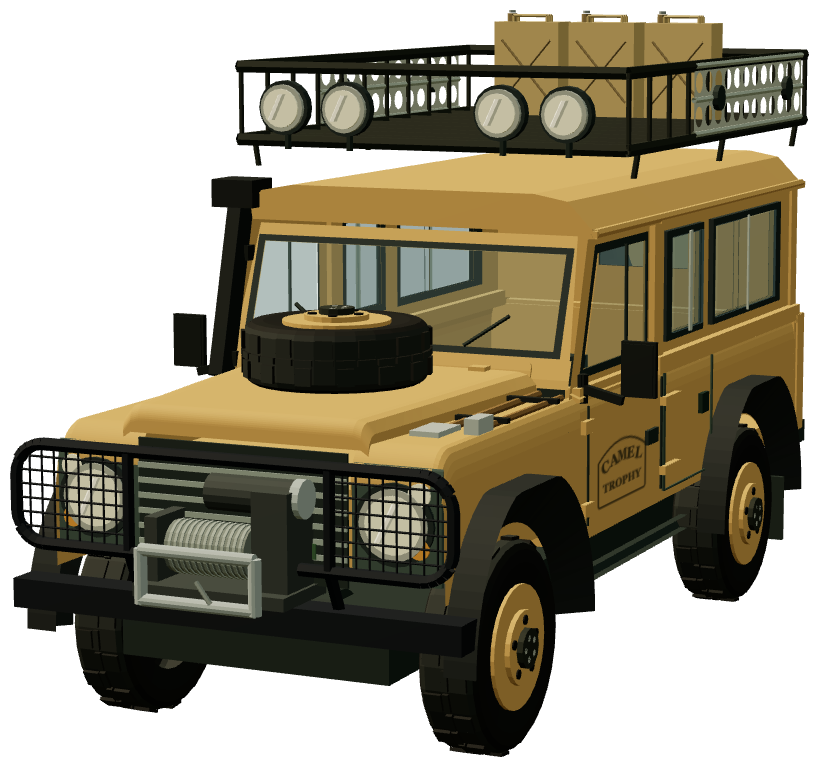 Land Rover One Ten Station Wagon, Land Rover One TenROUTE1984MAPPED ROUTE
Camel Trophy 1984 — Brazil
The fifth Camel Trophy and the first to use the new Land Rover One Ten: twelve two-man teams from Belgium, West Germany, the Netherlands, Italy, Spain and Switzerland drove the Transamazônica from Santarém, where the 1980 Jeeps had finished, to Manaus between 4 and 21 April 1984, in the worst wet season the event had met. The planned route went under water, three bridges with gaps of more than twelve metres had to be rebuilt, and every team got through. Italy's Maurizio Levi and Alfredo Redaelli won.
Santarém → Manaus900 km1 countries3 in the team4 April 1984SantarémApril 1984Rurópolis — Transamazônica junctionApril 1984Itaituba21 April 1984Manaus 19851.5k km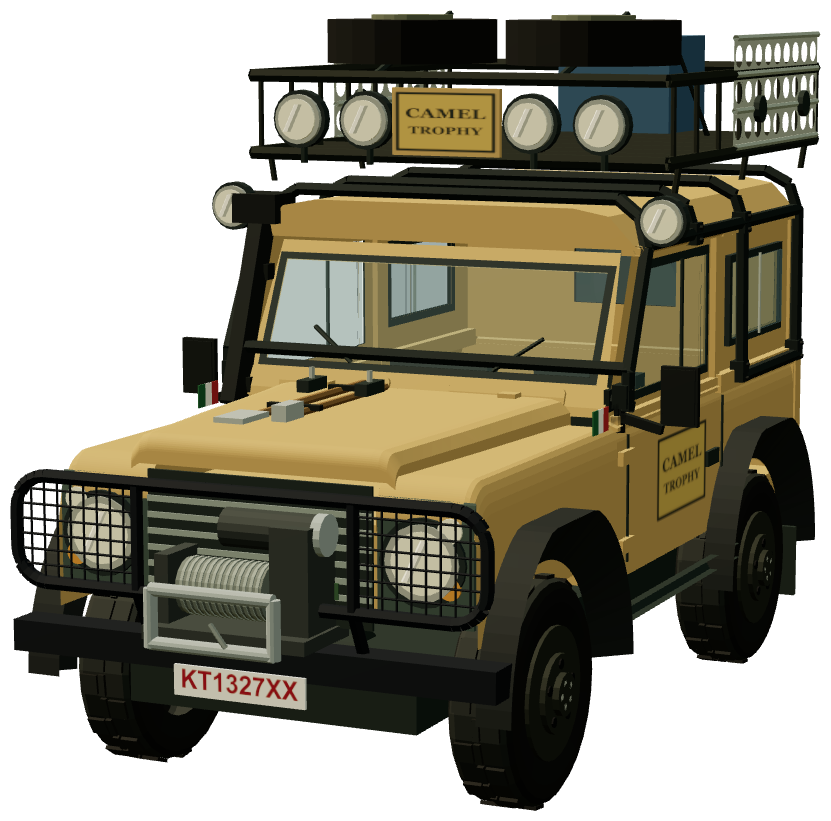 Land Rover Ninety, Land Rover One TenROUTE1985MAPPED ROUTE
Camel Trophy 1985 Borneo
The sixth Camel Trophy, run in April 1985 across East Kalimantan, Indonesian Borneo, from Samarinda to the oil port of Balikpapan: sixteen two-man teams from eight countries in the new Land Rover Ninety, with One Tens in support, over about 1,500 km of rain-season jungle track. It is remembered for the helicopter airlift of 23–25 April, when an Airfast Sikorsky S-58ET lifted the marooned convoy out of flooded forest to a drop point near Kampung Rampang on the Jembayan river. West Germany's Heinz Kallin and Bernd Strohdach won; the first Team Spirit Award went to Brazil's Carlos Probst and Tito Rosenberg.
Samarinda → Balikpapan1,500 km1 countries13 in the teamApril 1985Samarinda25 April 1985Kampung Rampang, Sungai JembayanApril 1985Balikpapan 19863.2k km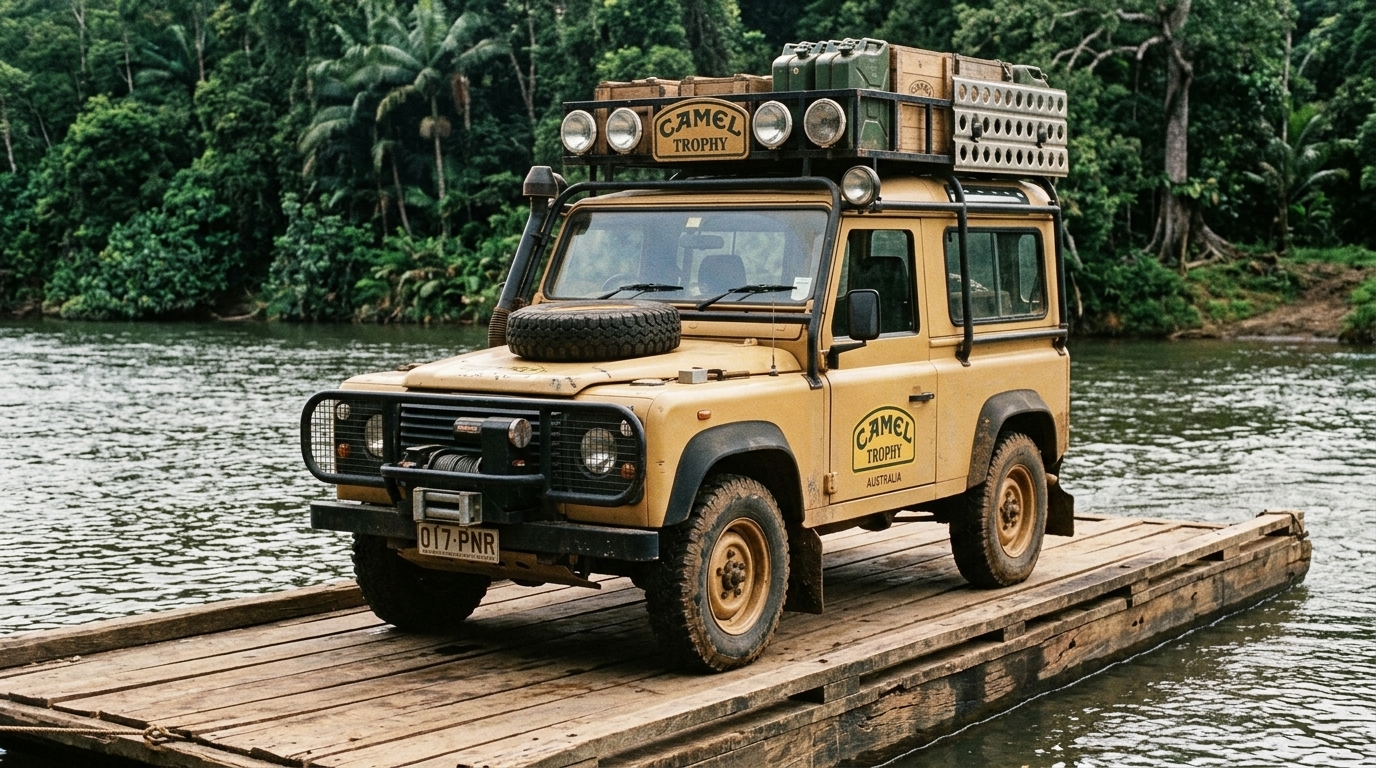 Land Rover Ninety, Land Rover One TenROUTE1986MAPPED ROUTE
Camel Trophy 1986 Australia
The seventh Camel Trophy and the first in a developed country: in March 1986 fourteen national teams in Land Rover Ninetys, with One Tens in support, drove 3,218 km across the wet-season north of Australia from Cooktown on the Queensland coast to Darwin in thirteen days — at about 250 km a day the longest and fastest event yet. France's Jacques Mambre and Michel Courvallet won; the Australians Glenn Jones and Ron Begg took the Team Spirit Award. It was the first Camel Trophy for teams from the United Kingdom, Australia, the United States, France and Malaysia.
Cooktown → Darwin3,218 km1 countries9 in the teamMarch 1986CooktownMarch 1986Darwin 19882.1k km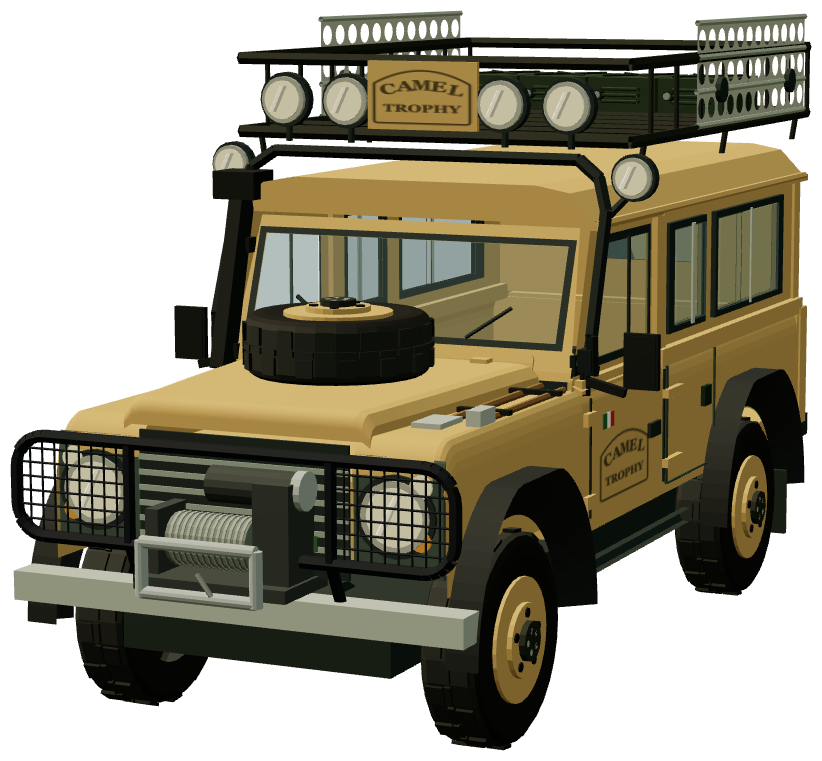 Land Rover One Ten, Land Rover One TenROUTE1988MAPPED ROUTE
Camel Trophy 1988 Sulawesi
The ninth Camel Trophy, run in early 1988 on the Indonesian island of Sulawesi: twelve two-man teams in turbo-diesel Land Rover One Tens drove 2,092 km from Manado in the north, round the island's curved northern arm and down through the mountains of Torajaland to Ujung Pandang in the south-west, in a twelve-day event with two days of special tasks at each end and eight days of driving between. Turkey's Galip Gurel and Ali Deveci won at their country's first attempt; Britain's Jim Benson and Marc Day took the Team Spirit Award.
Manado → Ujung Pandang (Makassar)2,092 km1 countries4 in the team1988Manado1988Ujung Pandang (Makassar) 19891.4k km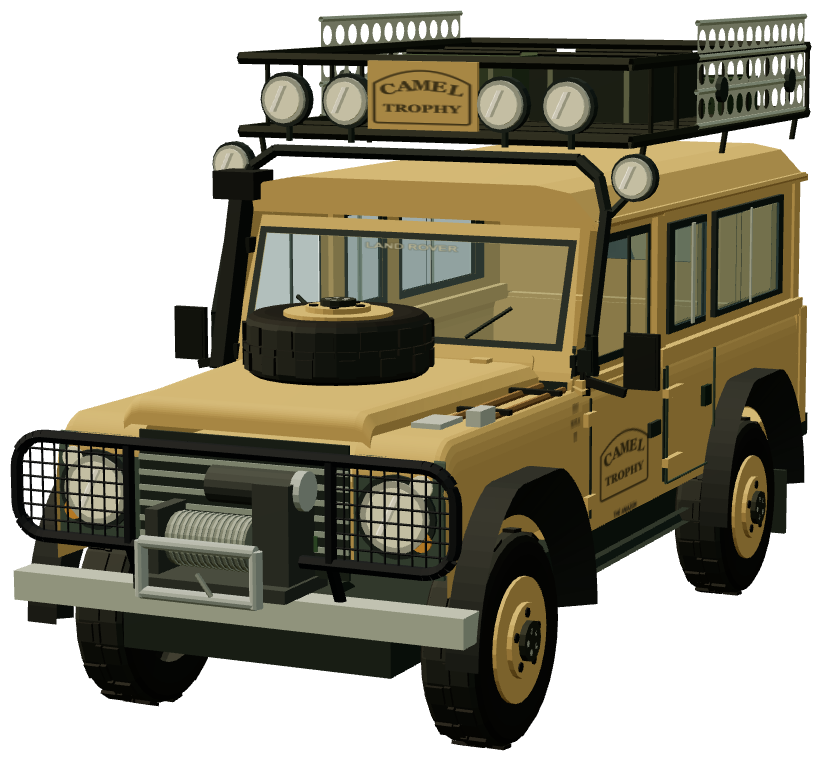 Land Rover One Ten Station Wagon, 2.5 turbo diesel, Land Rover One Ten Station Wagon, 2.5 turbo diesel, Land Rover One TenROUTE1989MAPPED ROUTE
Camel Trophy 1989: The Amazon
The tenth Camel Trophy went back to the Amazon for its anniversary, and deliberately in the rainy season: fourteen two-man teams in turbo-diesel Land Rover One Tens left Alta Floresta in Mato Grosso on 29 March 1989 and fought up the BR-163 through bottomless 'duropox' mud to the Transamazônica, Santarém and a barge across the Amazon to Manaus, finishing on 14 April after some 1,400 km by road and 500 km by river. Whole days yielded two or three kilometres, one just 800 metres. Brothers Bob and Joe Ives won Britain's first and only Camel Trophy, five points ahead of the Brazilians, and received the RAC's Segrave Trophy; the Belgians Frank Dewitte and Peter Denys took the Team Spirit Award. It is remembered as the toughest event of the series, and the Ives car survives at Beaulieu.
Alta Floresta → Manaus1,410 km1 countries10 in the team29 March 1989Alta Floresta1 April 1989BR-163 — the duropox8 April 1989Transamazônica junction — Rurópolis10 April 1989Santarém14 April 1989Manaus 1997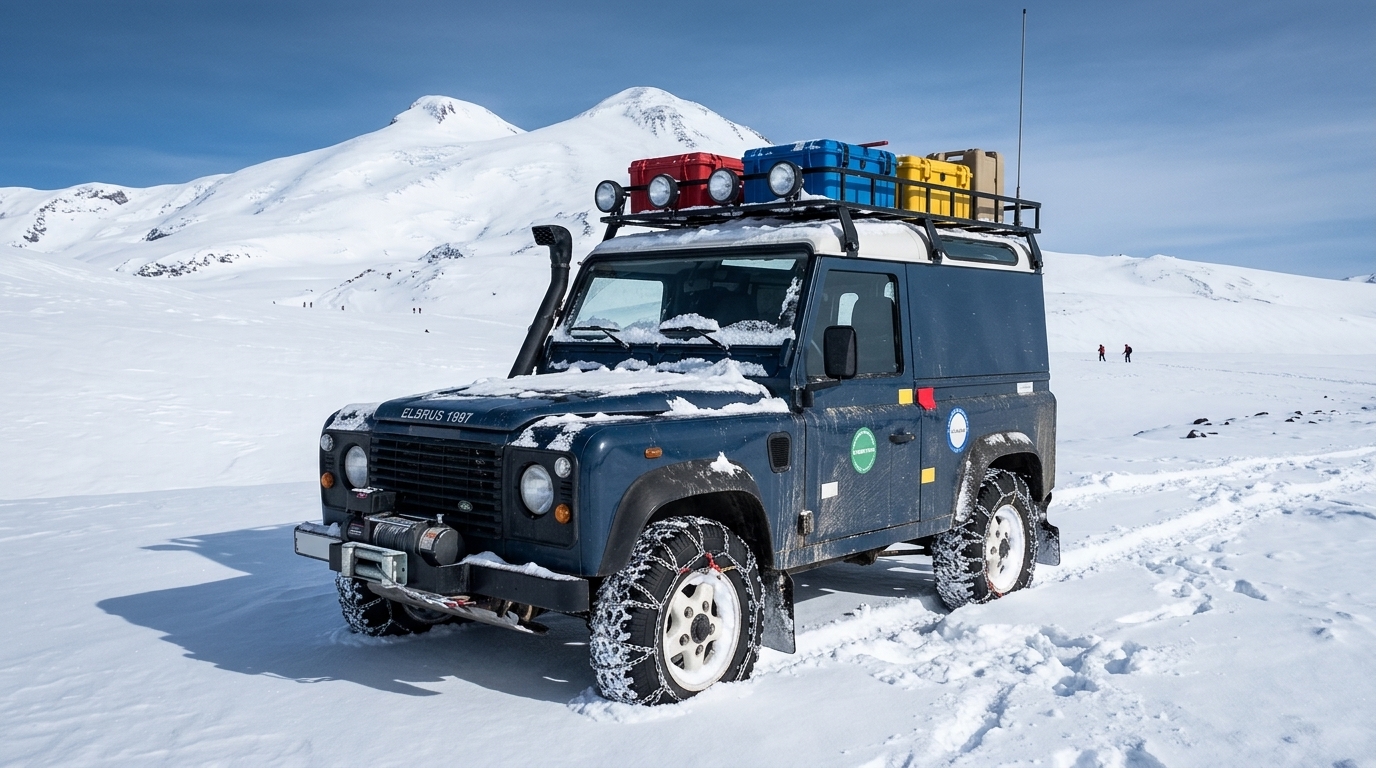 Land Rover Defender 90 hard top, turbodieselRECORD1997MAPPED ROUTE
Land Rover Defender on Elbrus
In August–September 1997 a Moscow team led by the mountaineer Alexander Abramov and the driver Oleg Bogdanov drove, winched and hauled a Mantec-prepared Land Rover Defender 90 from the end of the tarmac at 2,300 m in the Baksan valley to the 5,621 m eastern summit of Elbrus, the highest mountain in Europe. It took 44 days from 1 August to the evening of 13 September and entered the Guinness Book of Records as the highest ascent by a motor vehicle; on the descent in October the car broke away, fell several hundred metres and still lies on the mountain.
Azau → Elbrus1 countries10 in the team1 August 1997Azau, Baksan valley — end of the asphalt at 2,300 mJune 1996Moscow — Avtodom, where the project was planned3 August 1997The Barrels (Bochki) huts, 3,800 mAugust 1997Priyut 11 (4,200 m)13 September 1997Elbrus, eastern summit (5,621 m) 199852k km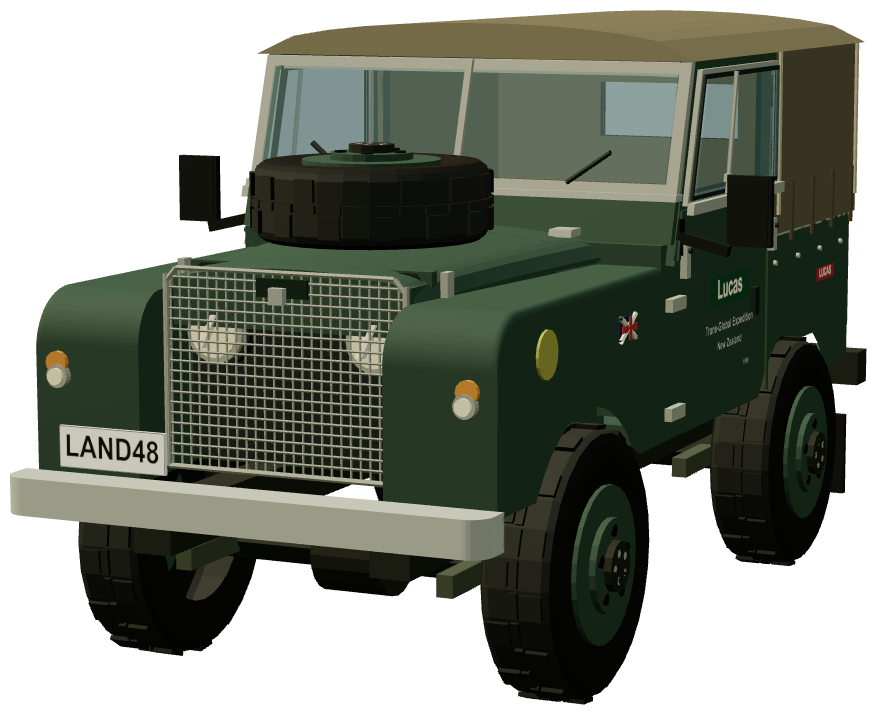 Land Rover Series I 80-inch, 1,595 cc, Land Rover Series IIA 88-inchROUTE1998–1999MAPPED ROUTE
Lucas Trans-Global Expedition
To mark Land Rover's fiftieth year, New Zealander Philip Avery drove his family's 1948 80-inch Series I, chassis R860778 and registered LAND48, around the world in 1998–99 with his girlfriend Gillian: across the United States to New York, through Britain and Ireland to the 50th-anniversary events at Eastnor and Shugborough, on the Swiss anniversary tour with Barbara Toy's Pollyanna, then east alone through eastern Europe, Turkey, Iran, Pakistan, Nepal and India, by ship to Perth and across Australia to Sydney, and home to Auckland a year after leaving — 32,311 road miles in a canvas-topped, near-standard 1.6-litre car on its original-pattern tyres, without a puncture.
Auckland — shipped to the United States → Auckland — home a year later52,000 km13 countries3 in the team1998Auckland — shipped to the United StatesApril 1998Oklahoma City — Route 66; broken valve spring at 4,400 milesApril 1998Pigeon Forge, Smoky Mountains — cylinder head off in a campground4 May 1998New York — 4 May deadline met, 7,468 miles1999Auckland — home a year later 2000 Land Rover Defender 90RECORD2000MAPPED ROUTE
Gobba di Rollin European altitude record
On 2 August 2000 three Land Rover Defender 90s of the Aosta Valley Land Rover Club, crewed by Nicola Corradi, Vincenzo Marcheselli, Fabio Bich, Marco Corradi, Andrea Bryer and Lucia Montrosset, climbed from Breuil-Cervinia up the summer ski slopes to the Plateau Rosa and Testa Grigia and on to the top station of the Gobba di Rollin ski lift on the Italian–Swiss frontier, 3,911 m by the club's reckoning, claimed as the European altitude record for standard off-road 4x4 vehicles.
Breuil-Cervinia → Gobba di Rollin ski-lift top station (32 countries6 in the team2 August 2000Breuil-Cervinia2 August 2000Gobba di Rollin ski-lift top station (3,911 m) 2001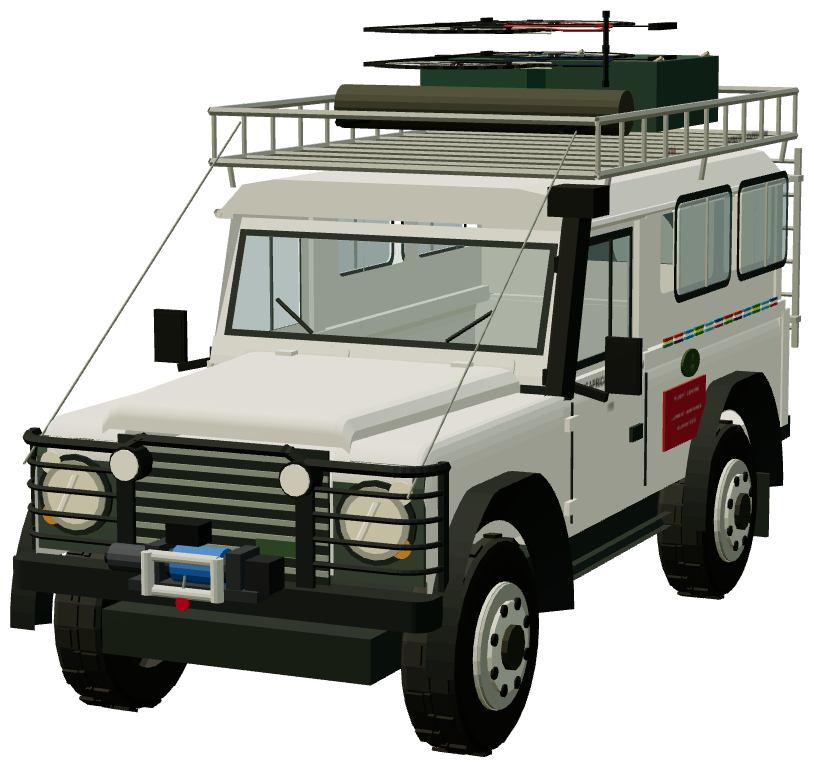 Defender 110 windowed hardtop, Defender 110 station wagonROUTE2001–2002MAPPED ROUTE
Kingsley Holgate's Capricorn Expedition — Following the Invisible Line
Kingsley Holgate, his wife Gill ('Mashozi'), their son Ross and a changing cast of companions followed the Tropic of Capricorn — 23°27' south — right round the world, heading always west from the Mozambique coast near Inhambane and back to the same beach eighteen months later, through Mozambique, South Africa, Botswana, Namibia, Brazil, Paraguay, Argentina, Chile, Uruguay, Australia and Madagascar. Two Land Rover Defenders named Chuma and Susi did the driving on three continents, with the Namib, the Andes, the Atacama and the sand ridges of Australia's Simpson and Gibson deserts among the obstacles; southern Madagascar was crossed on foot, by bullock cart and dugout. The Foundation calls it a world first, and the 2003 book 'Capricorn: Following the Invisible Line' is the record.
Inhambane coast → Inhambane coast11 countries3 in the team2001Inhambane coast2002Inhambane coast 20036.4k km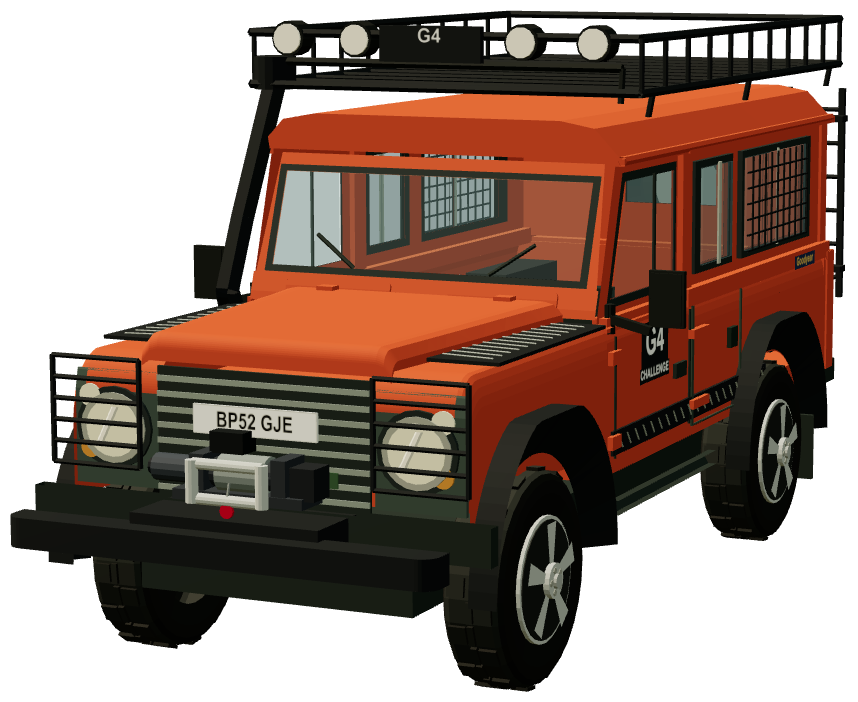 Land Rover Defender 110 Td5 County Station WagonROUTE2003MAPPED ROUTE
Land Rover G4 Challenge 2003
Land Rover's successor to the Camel Trophy: sixteen competitors from sixteen nations, one per country, raced through four week-long stages in four time zones between 30 March and 26 April 2003 — the north-eastern United States in Freelanders, South Africa's Western Cape in Defender 110 Td5 station wagons, the Pilbara and Sydney in the new L322 Range Rover, and Nevada–Utah in Discovery 2s — combining off-road driving with kayaking, mountain biking, climbing, abseiling and orienteering 'Hunters'. The Belgian F-16 pilot Rudi Thoelen won in Moab; the Defenders competed on the South African stage and served as logistics, communications and medical vehicles everywhere.
Broadway → Moab6,400 km3 countries19 in the team30 March 2003Broadway, Manhattan, New York19 January 2003Eastnor Castle — International Selections1 April 2003Lake Placid, Adirondacks2 April 2003Equinox, Vermont — driving slalom26 April 2003Moab, Utah — the Separator final on the Colorado River 2006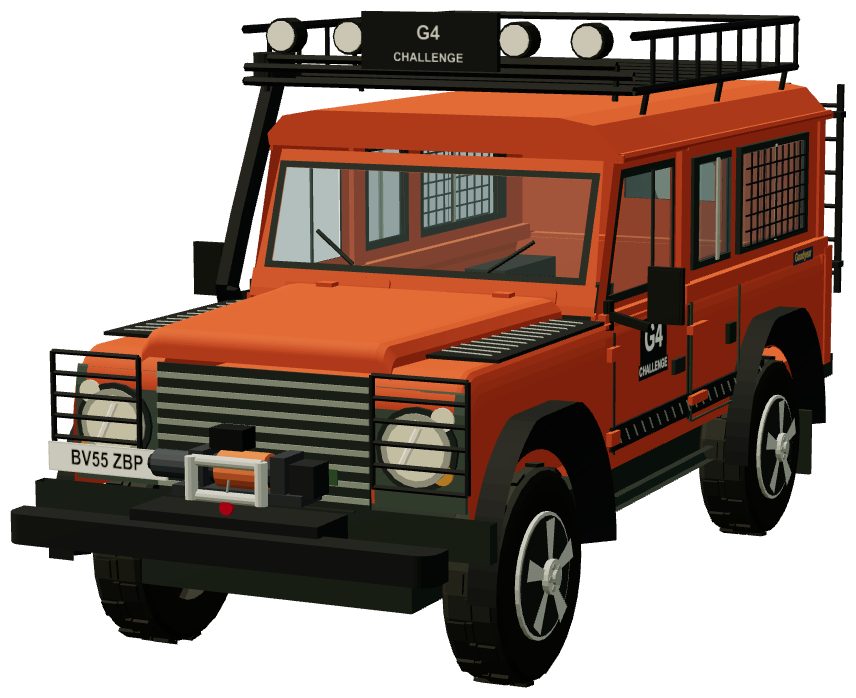 Land Rover Defender 110 Td5 County Station WagonROUTE2006MAPPED ROUTE
Land Rover G4 Challenge 2006
The second and last Land Rover G4 Challenge: eighteen competitors from eighteen nations, 28 days from Bangkok's Sanam Luang on 23 April 2006 across the Mekong into Laos, then 10,000 miles by charter flight to Copacabana Beach in Rio and on to the Bolivian Andes, finishing in a river bed near Tarija on the Argentine border on 20 May, where the South African adventure racer Martin Dreyer won a Range Rover. The competitors drove Range Rover Sports, Freelanders and Discovery 3s; the 29 Tangiers Orange Defender 110 Td5 station wagons in the 134-vehicle fleet were the support, communications, recce, film and medical vehicles on every stage.
Sanam Luang → Challenge Final in a river bed near Tarija4 countries23 in the team23 April 2006Sanam Luang, BangkokJanuary 2006Eastnor Castle — International Selections24 April 2006Nakhon Phanom — Mekong ferry crossing into Laos25 April 2006Thakhek — Sikhottabong stupa blessing20 May 2006Challenge Final in a river bed near Tarija, on the Argentine border; awards in Tarija 200758k km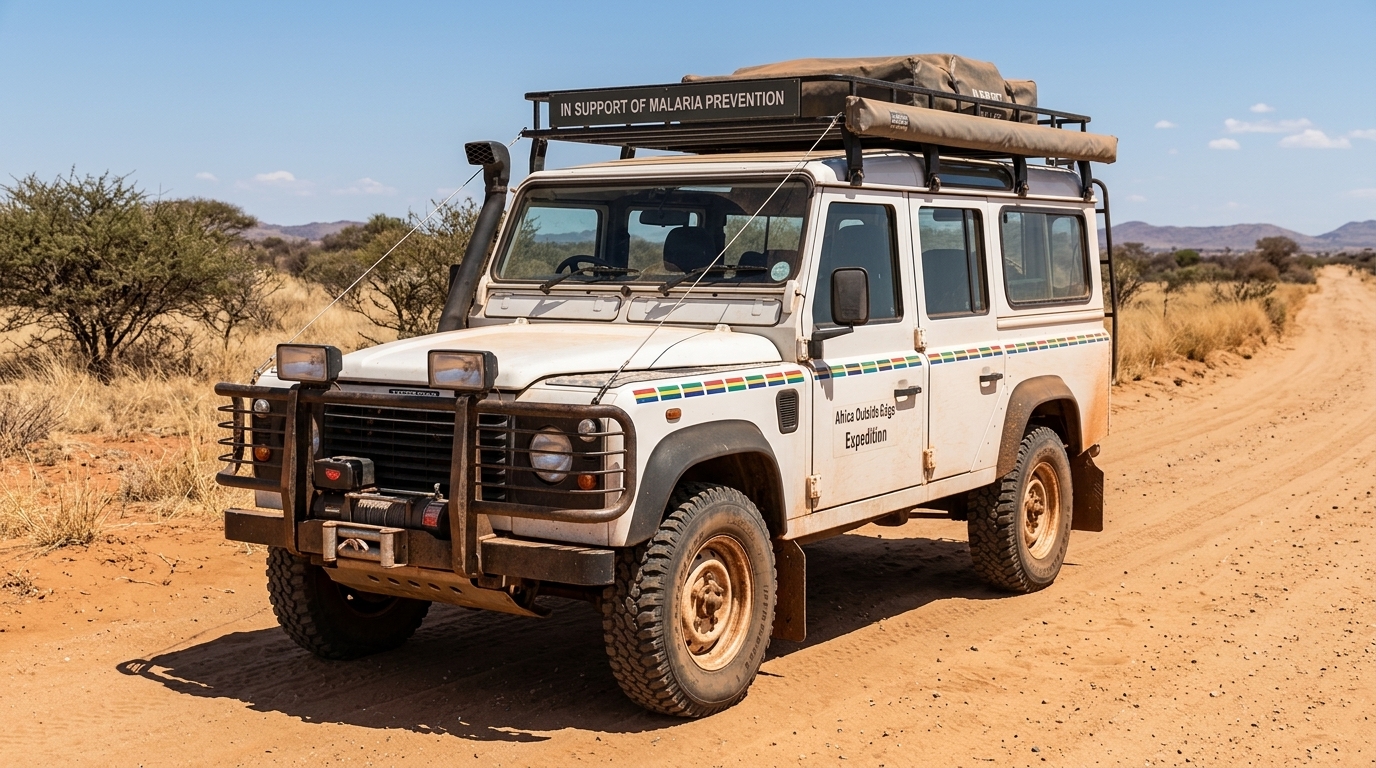 Land Rover Defender 130 TD5, Land Rover Defender station wagonROUTE2007–2008MAPPED ROUTE
Africa Outside Edge Expedition
Kingsley Holgate's family team left the Cape of Good Hope on 27 April 2007 behind a world-record convoy of 347 Land Rovers and drove clockwise round the whole outline of Africa — up the Atlantic coast, along the Mediterranean, down the Red Sea and Indian Ocean shores — in Defenders and inflatable boats, distributing mosquito nets as they went. They reached Cape Town again in mid-July 2008 after 448 days, 33 countries and well over 57,000 km, the first expedition to circumnavigate the continent hugging its edge.
Cape of Good Hope → Cape Town57,768 km8 countries3 in the team27 April 2007Cape of Good Hope4 May 2007Orange River — into NamibiaMay 2007Bogenfels, SperrgebietMay 2007Lüderitz18 July 2008Cape Town 2008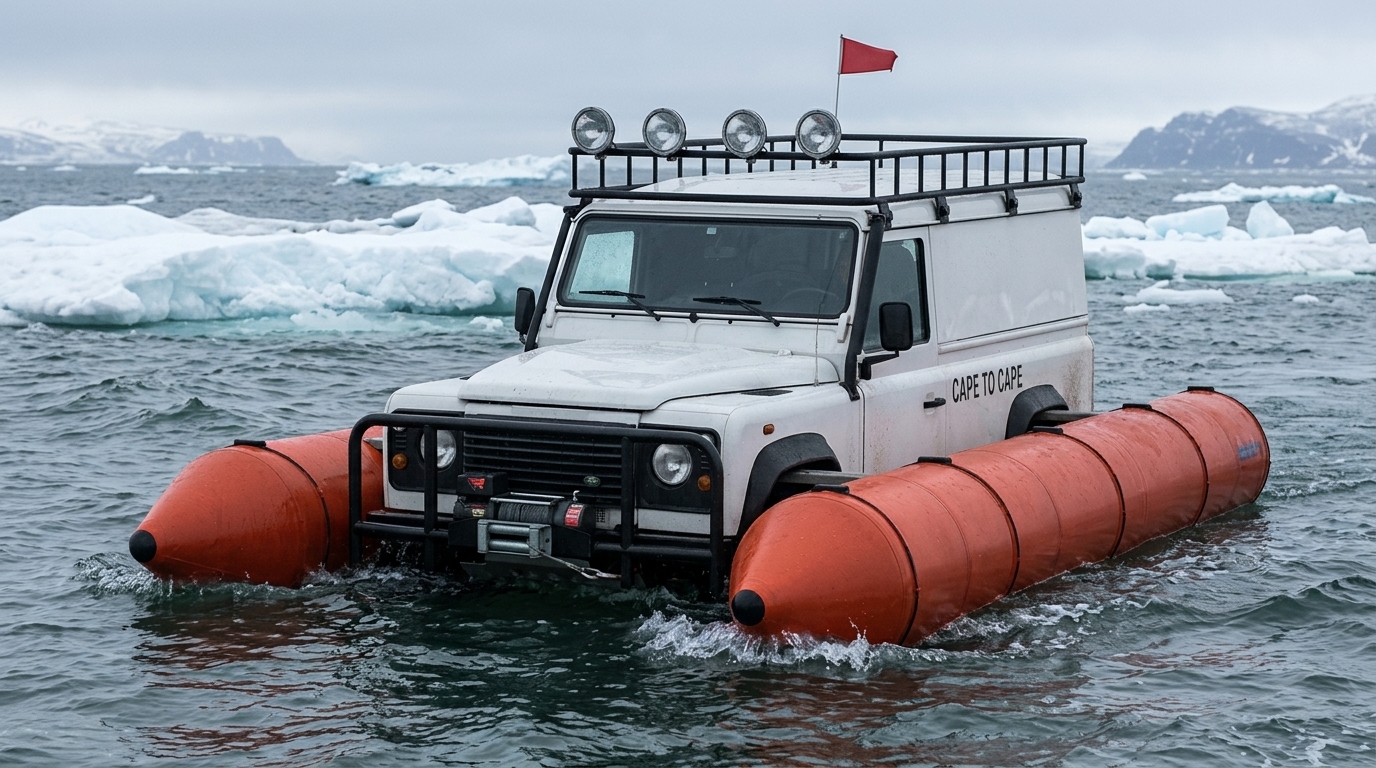 Land Rover Defender 110 Tdi Station Wagon (left-hand drive, Rest-of-World)RECORD2008MAPPED ROUTE
Cape to Cape Expedition — Siberia and the Bering Strait
The first road vehicle to cross the Bering Strait under its own power. Steve Burgess, a Yorkshire beef farmer, left Mirfield on 29 January 2008 in a new left-hand-drive Defender 110 Tdi that Dan Evans of Protection & Performance had made amphibious, drove with Simon Dedman across the whole of Russia in winter — Moscow, Omsk, Yakutsk, the Kolyma, Pevek and the Chukotka coast on frozen rivers and tundra at down to −50 °C — to Uelen on the Strait by 2 April, and after two months of weather sailed the Defender on its floats from Uelen to Little Diomede on 7–8 July and from Little Diomede to Wales, Alaska, on 7–8 August 2008: 18 hours 50 minutes in the water for the 56-mile crossing.
Liley Hall Farm → Nome8 countries7 in the team29 January 2008Liley Hall Farm, Mirfield, West Yorkshire30 January 2008Rotterdam30 January 2008Berlin31 January 2008Gdańsk9 August 2008Nome, Alaska 200822k km Land Rover Defender 110ROUTE2008MAPPED ROUTE
Latitude — around the world on 50° North
The first Land Rover 'Go Beyond' Bursary expedition with the Royal Geographical Society: Peter Lovell, Spike Reid and David Smith drove a Defender 110 they called Roxy around the world along the 50th parallel in 2008 — from Goonhilly on the Lizard through Belgium, Poland, Ukraine, Russia and Kazakhstan to Mongolia, across Siberia to Sakhalin and by ferry to Japan, then shipped to Canada and home — more than 22,000 km in seven months, interviewing farmers and communities about how they adapt to their environments and to a changing climate.
Goonhilly → The Lizard22,000 km11 countries3 in the team30 April 2008Goonhilly, the Lizard, Cornwall — on the 50th parallel3 May 2008Calais5 May 2008BastogneMay 2008PragueNovember 2008The Lizard, Cornwall 200945k km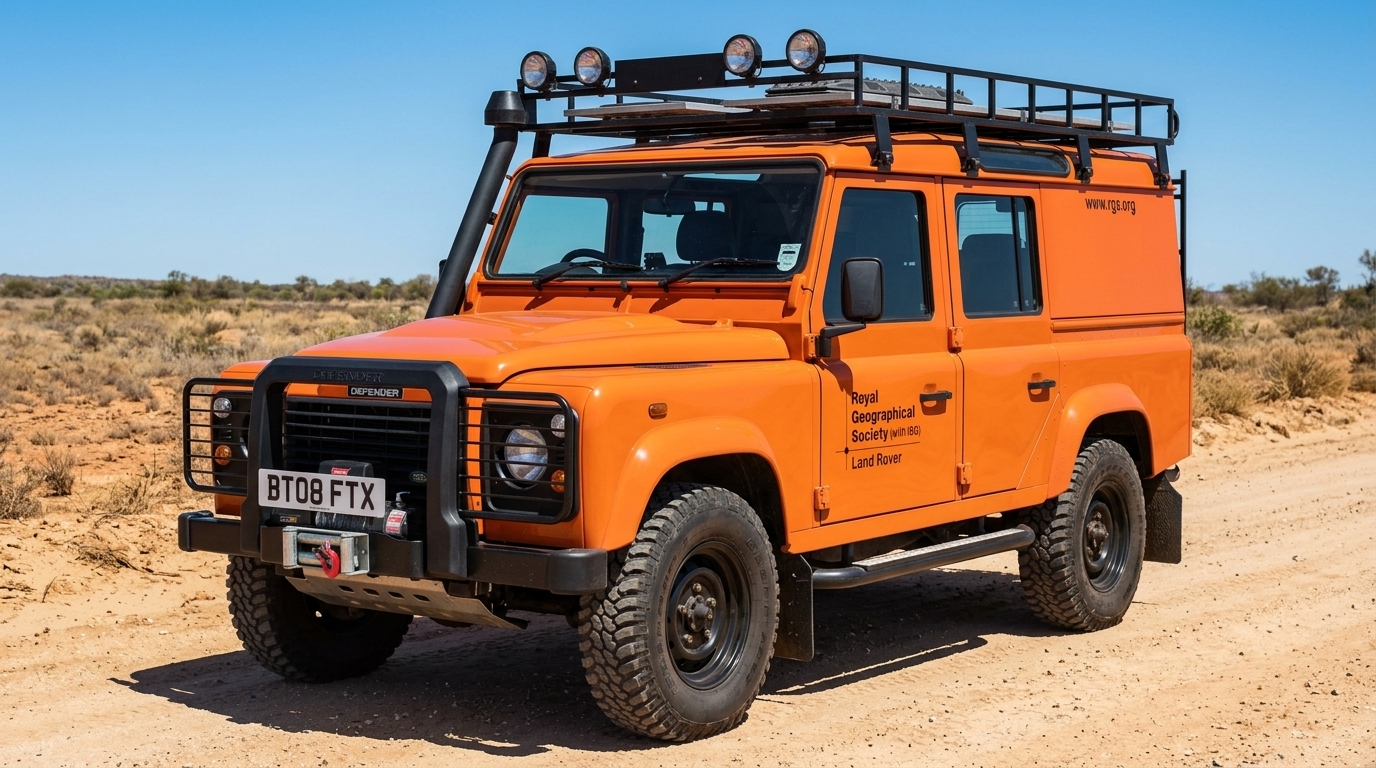 Land Rover Defender 110 XS Station WagonSCIENTIFIC2009–2010MAPPED ROUTE
Atlantic Rising
The 2009 Royal Geographical Society (with IBG) and Land Rover 'Go Beyond' bursary expedition: Tim Bromfield, Will Lorimer and Lynn Morris, three Cambridge graduates, left Britain on 1 September 2009 in a Defender 110 they named Beatrice to drive round the rim of the Atlantic Ocean along the one-metre contour — the coastline scientists predicted for 2100 — down West Africa from Morocco to Ghana, by container ship to South America, up through Brazil, Guyana and Venezuela to Mexico and the United States, and home by ship to Zeebrugge in December 2010: fifteen months, 21 countries and 28,000 miles, documenting communities threatened by sea-level rise and linking schools along the way.
Britain → Zeebrugge (by ship from the United States)45,000 km20 countries3 in the team1 September 2009BritainSeptember 2009Tarfaya beach campOctober 2009MauritaniaOctober 2009Senegal coast3 December 2010Zeebrugge (by ship from the United States), then London 201024k km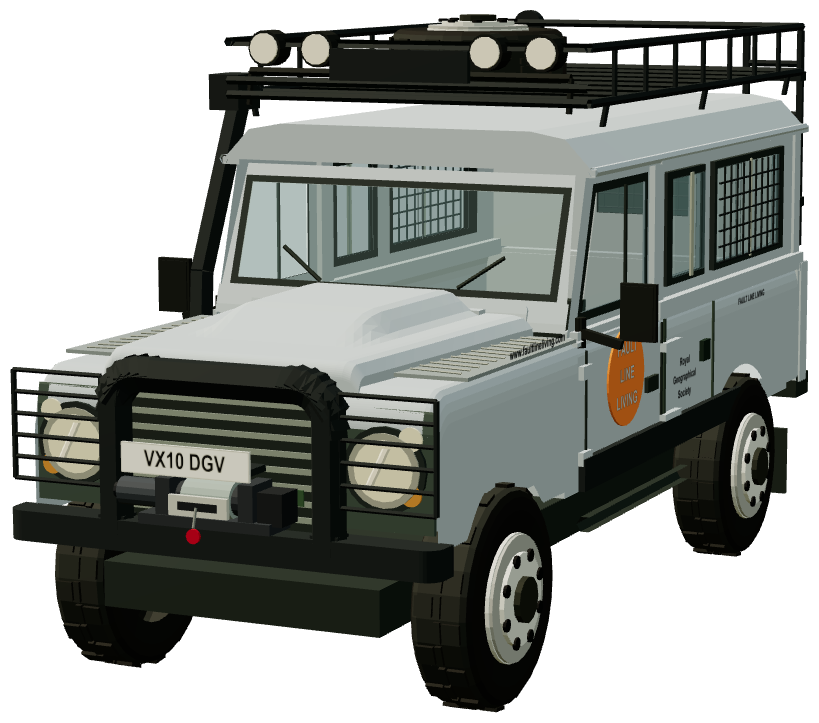 Land Rover Defender 110SCIENTIFIC2010MAPPED ROUTE
Fault Line Living
The 2010 Royal Geographical Society (with IBG) and Land Rover 'Go Beyond' bursary expedition: Serena Davies, Tamsin Davies and Adam Whitaker left Harwich on 1 August 2010 in a Defender 110 they called Lottie, carrying a British Geological Survey seismometer, for a twelve-week, 15,000-mile journey along the world's most active fault lines — Iceland, Italy's L'Aquila, Greece and Turkey's North Anatolian Fault — recording how people live with earthquakes, working with school students and seismologists. Iran, the planned end, was dropped for political reasons at Erzurum; the team turned home through the Kaçkar mountains and were back in England on 17 December 2010.
Harwich → England24,000 km6 countries3 in the team1 August 2010Harwich2 August 2010Denmark6 August 2010Iceland18 August 2010Eyjafjallajökull17 December 2010England 201336k km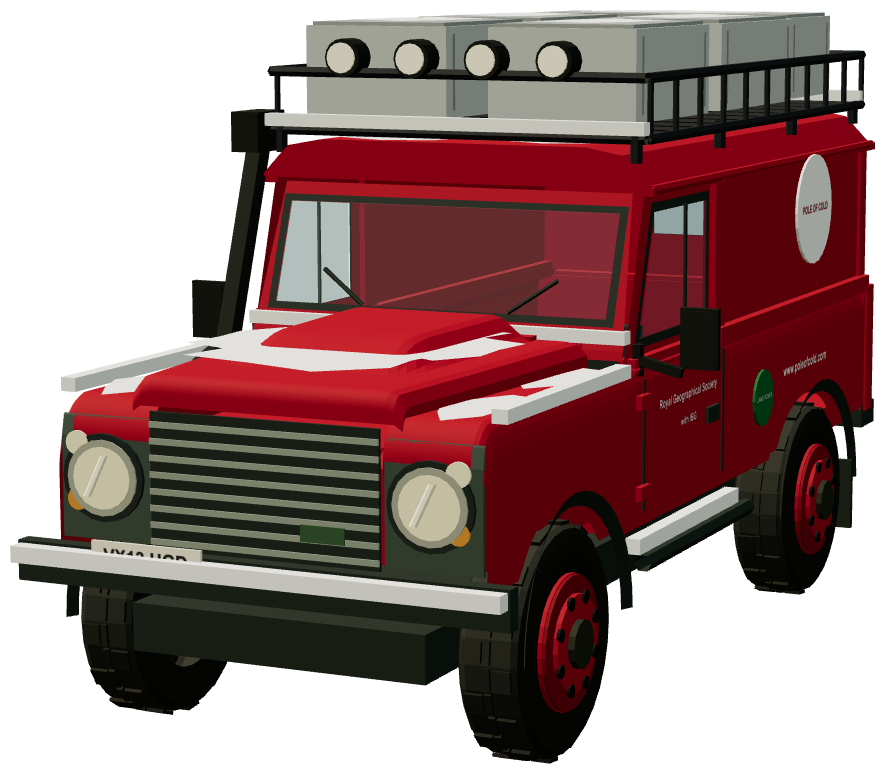 Land Rover Defender 110 Station WagonSCIENTIFIC2013–2014MAPPED ROUTE
Pole of Cold Expedition
Felicity Aston, Gisli Jonsson and Manu Palomeque, winners of the 2013 Land Rover and Royal Geographical Society (with IBG) Bursary, drove a winterised Defender 110 from the RGS in London in November 2013 up the length of Norway to Nordkapp, through Finnish Lapland into Russia and across Siberia to Oymyakon, the Pole of Cold and the coldest inhabited place on earth, where they met the Lord Keeper of the Cold at −54 °C and recorded −59 °C at Tomtor. They came home in March 2014 by the Lena ice road, the Altai, Sweden and Denmark: about 36,000 km, nearly a month of it below −50 °C, asking everyone they met what winter meant to them.
Royal Geographical Society → London36,000 km6 countries3 in the teamNovember 2013Royal Geographical Society, LondonDecember 2013Lofoten IslandsDecember 2013Nordkapp — the northernmost tip of EuropeDecember 2013PolmakMarch 2014London 20149.7k km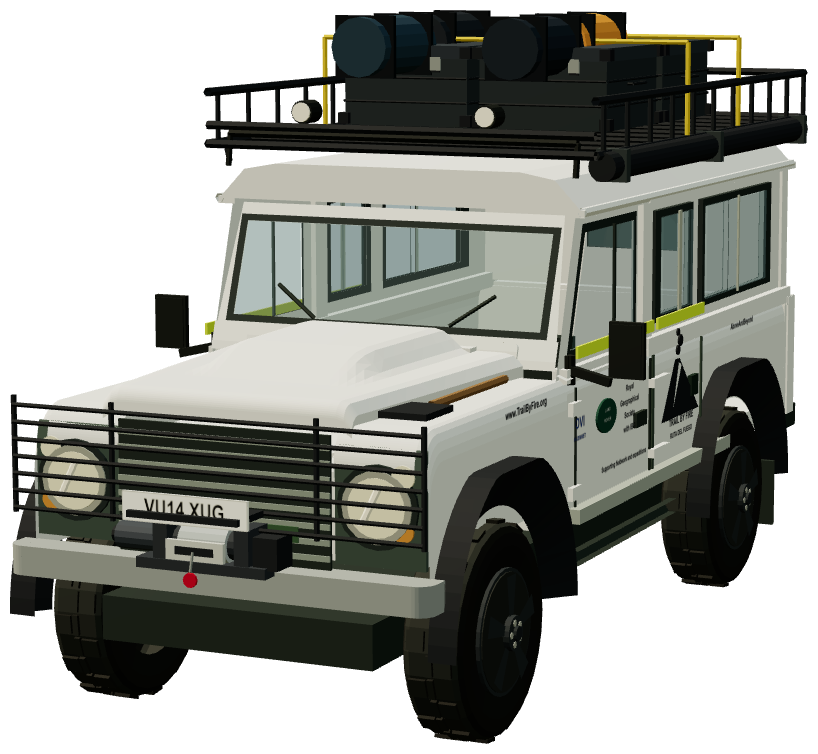 Land Rover Defender 110 XS Station Wagon (LHD)SCIENTIFIC2014MAPPED ROUTE
The Grand Alpine Tour
The 2014 Land Rover Bursary expedition with the Royal Geographical Society (with IBG): three Northumbria University geographers — Mark Allan, Dr Mike Lim and Thomas Shaw — drove a bursary Defender 110 some 6,000 miles from Britain along the length of the Alps through France, Switzerland, Italy, Austria and Slovenia in the summer of 2014, flying a hexacopter UAV over the slopes above seven retreating glaciers of the Mont Blanc massif and the Rhône to build 3D models of landslide activity, and comparing them with the Society's historic Alpine archive in the footsteps of the eighteenth-century Grand Tour.
United Kingdom → United Kingdom9,650 km6 countries3 in the team2014United Kingdom2014United Kingdom 201517k kmLand Rover Defender 110 XS Station Wagon (LHD)SCIENTIFIC2015–2016MAPPED ROUTETrail by Fire
The 2015 Land Rover Bursary expedition with the Royal Geographical Society (with IBG): six early-career volcanologists led by Dr Yves Moussallam drove a Defender 110 converted by Land Rover Special Vehicle Operations into the world's first 4x4 mobile volcano observatory down the Andes from Arica in northern Chile through southern Peru and back through the Chilean altiplano to Villarrica in the south, November 2015 to February 2016, measuring gas emissions at 15 active volcanoes along the Nazca plate subduction zone — 17,000 km, mostly on dirt roads and tracks, and the first gas composition and flux measurements ever made at seven of them.
Iquique → Villarrica volcano17,000 km2 countries6 in the teamNovember 2015Iquique9 November 2015Iquique — car prepared24 November 2015Guallatiri — 5,300 m2 December 2015Peru border crossingFebruary 2016Villarrica volcano 2016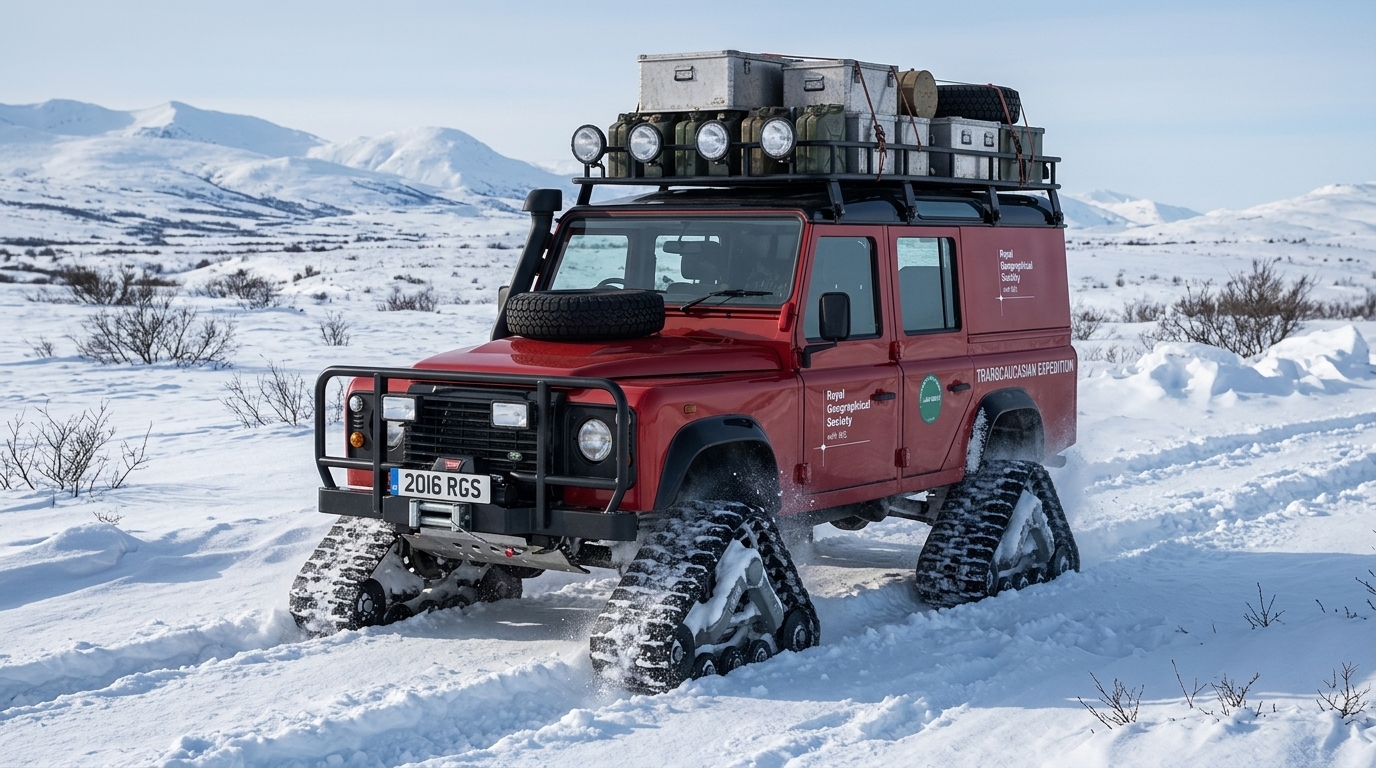 Land Rover Defender 110 Station WagonSCIENTIFIC2016MAPPED ROUTE
Transcaucasian Expedition
The 2016 Royal Geographical Society (with IBG) Land Rover Bursary expedition: Tom Allen and Alessandro Mambelli left the Society's headquarters in Kensington on 26 April 2016 in a Defender 110 Station Wagon converted by Jaguar Land Rover's Special Vehicle Operations into a mobile surveying and communications unit, drove twelve days to Yerevan and spent six months in Armenia and Georgia scouting and GPS-mapping off-road routes for the Transcaucasian Trail, the first long-distance hiking trail across the Lesser Caucasus, uploading the data to OpenStreetMap as they went.
Royal Geographical Society → Armenia — end of the six-month field season3 countries3 in the team26 April 2016Royal Geographical Society, Kensington, LondonMay 2016Yerevan — twelve days from LondonMay 2016Syunik province — GorisMay 2016Kapan, SyunikOctober 2016Armenia — end of the six-month field season 201919k kmLand Rover Series I 86-inch Station Wagon, Land Rover DefenderROUTE2019MAPPED ROUTEThe Last Overland
The First Overland driven in reverse: Oxford, the surviving 1955 Series I of the Oxford & Cambridge Far Eastern Expedition, restored after sixty years on St Helena, left Singapore on 25 August 2019 and reached Folkestone and London on 14 December 2019 — 111 days through Malaysia, Thailand, Myanmar, China, Central Asia, Iran, Turkey and Europe, led by Alex Bescoby with Tim Slessor's grandson Nat George in the seat Slessor's health kept him from taking.
Singapore → Folkestone and London19,000 km17 countries7 in the team25 August 2019Singapore14 December 2019Folkestone and London 202215k km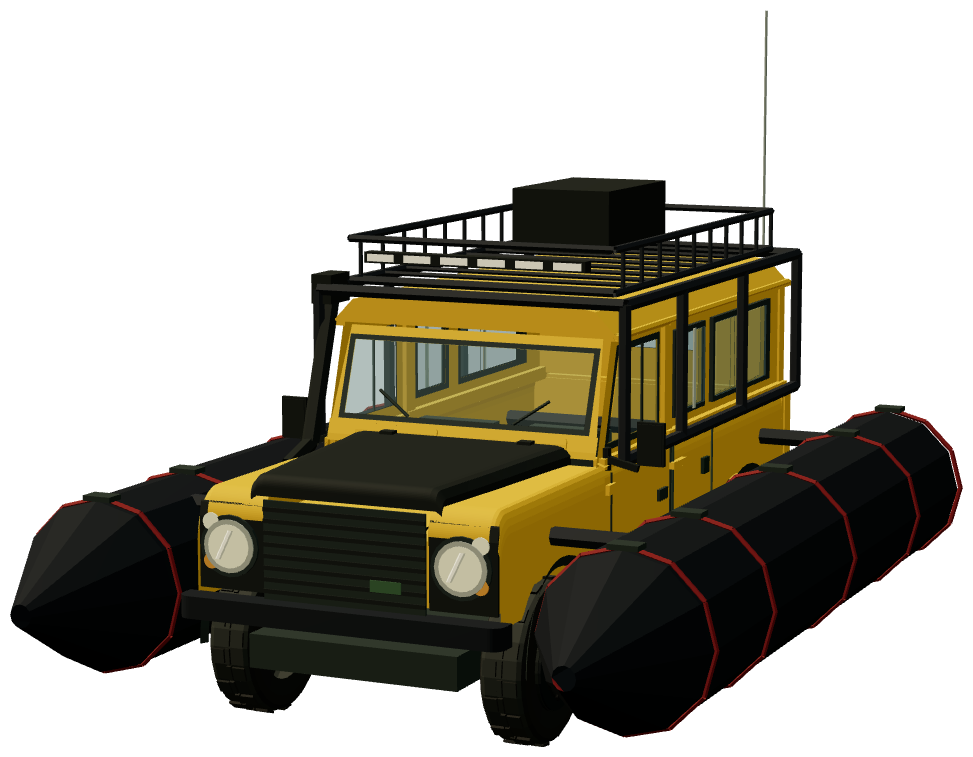 Land Rover Defender 110 Station Wagon TDCi, amphibious conversionROUTE2022–2024MAPPED ROUTE
DefenderX — London to New York
An attempt, still unfinished, to drive two amphibious Land Rover Defender 110s from London eastward around the world to New York — 18,000 miles of road, 3,400 miles of ice road and frozen tundra, and swims across the English Channel and the Bering Strait. Jeff Willner, Steve Brooks, Mikael Strandberg and filmmaker Sofie Rørdam left the Royal Geographical Society in January 2022 and reached Chita in eastern Siberia before Russia's invasion of Ukraine cancelled the Kolyma–Chukotka leg; the cars were extracted through Mongolia, shipped home, and in September 2023 swam the Thames, crossed the Channel from Dover to Sangatte in four hours and navigated the Seine to Paris. In March 2024 they drove 9,500 km from St John's, Newfoundland, to Fairbanks, and in June 2024 descended 1,200 km of the Yukon River from Fairbanks to St Mary's, the last village above the delta.
London — Royal Geographical Society → St Mary's15,000 km6 countries6 in the teamJanuary 2022London — Royal Geographical Society21 January 2022Russian border2 February 2022Chita — the Siberian leg haltedApril 2022Mongolia — cars extracted from RussiaJune 2024St Mary's, Yukon delta, Alaska