The expedition
The Land Rover Bursary, run with the Royal Geographical Society (with IBG) from 2008 to 2020, gave a team a prepared Defender and a grant each year for a journey that would widen understanding and enjoyment of geography. The sixth award, for 2013, went to the Pole of Cold: a plan by Felicity Aston — a physicist and meteorologist with three years of Antarctic research behind her — to chase the onset of winter north and east across Europe and Siberia to the Pole of Cold, and to ask the people living in the extremes of the season the one question, 'What does winter mean to you?'. With her went Manu Palomeque, a photographer and film-maker of thirty years' standing, and Gisli Jonsson, an off-road vehicle designer and winter-driving specialist who would keep the car alive. They trained in Iceland, where the Defender practised river crossings, and put it through the cold-climate chamber at Gaydon before leaving.
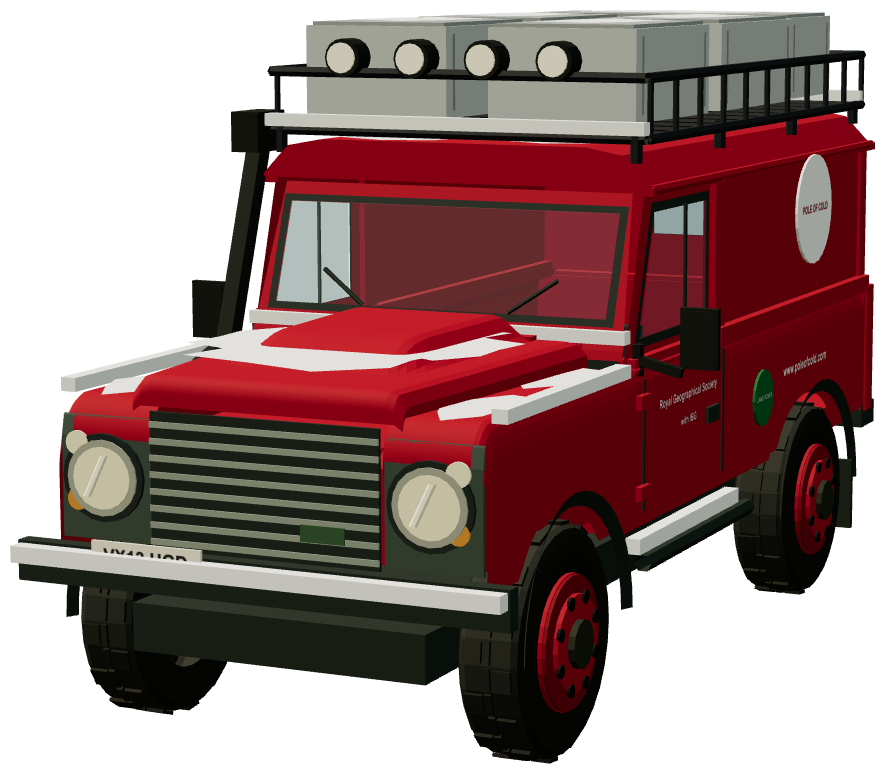
The Defender 110 was built for the job by Land Rover: uprated suspension, underbody and driveline protection, auxiliary heaters for the engine and the cabin, a long-range fuel tank, a winch, and storage for the kit of three people living in it through a Siberian winter. The team left the Royal Geographical Society in London in late November 2013 and drove north through Norway — Drammen, where Felicity filmed a walk-round of the car's winter adaptations, an exercise with the Royal Norwegian Air Force's 330 Squadron search-and-rescue, the Lofoten Islands in the last of the daylight, and, after much delay, Nordkapp, the northernmost tip of Europe. At Polmak on the Finnish border they met Ester, who does everything the old shamans did but will not use the name, and in Finnish Lapland they joined the winter roundup of the Skolt Sami reindeer herd, toured the Arctic Research Centre at Sodankylä and spent a triple Christmas on the road, crossing the Arctic Circle twice before turning south through the frozen lakes and castles of southern Finland — Olavinlinna at Savonlinna — into Russia.
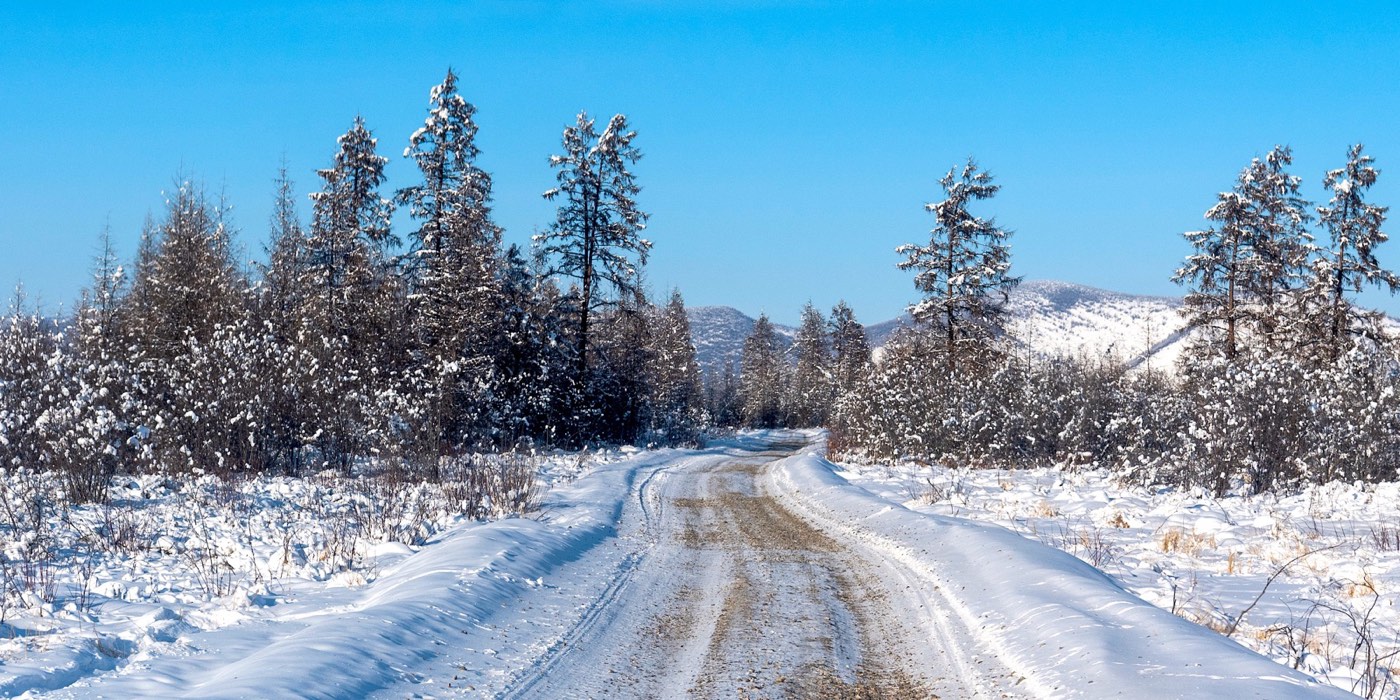
From St Petersburg the route ran east through Perm, where they visited the Perm-36 gulag, now a museum, to Novosibirsk, and on in a single thirteen-hour stint to Krasnoyarsk, stopping only to chip the ice from the wiper blades. They turned south to the Republic of Tuva on the Mongolian border and its shamans, then north-east into Yakutia, where the temperature fell steadily on the Kolyma Highway and the Road of Bones: potholed paving giving way to gravel, dirt and stretches of frozen river, a 20-km ice crossing of the Aldan among 60-tonne trucks bound for Magadan, −50 °C at the roadside cafés, and a fractured fuel-filter casing that Gisli mended while a passing driver diagnosed an evil spirit. At Oymyakon Chyskhan, the Lord Keeper of the Cold, met them at the Pole of Cold monument in a blue fur-trimmed robe and a crown of horns, spoke to them for long minutes at −54 °C about cold as the world's balance, and then asked for a lift home. The meteorological station at Tomtor gave them their lowest still-air reading, −59 °C; they filmed a carrot being used as a hammer at −54 °C, visited the village high school and the reindeer herders of the Even, and fished through two metres of Lena ice at Yakutsk, whose market sells its catch standing upright and frozen.
The way home was the ice road on the frozen Lena, more than 2,000 km from Yakutsk to Ust-Kut, then the Altai: the Chulyshman track from Aktash to the southern end of Lake Teletskoye, a flooded and refrozen river crossed after testing the ice, winter life at Artybash on the frozen northern shore, and the first use of the winch to pull the Defender out of deep snow. They returned through Sweden and Denmark and reached London in early March 2014 after some 36,000 km with nearly a month spent below −50 °C. The stories and photographs became the exhibition 'Pole of Cold: What does winter mean to you?' at the RGS in May 2014, at the Turner Contemporary in Margate over the winter of 2014–15 and at the Historic Dockyard in 2016, the book Chasing Winter, and teaching resources for the RGS's From the Field programme; Land Rover brought the expedition car to Margate for the opening.