DIFFLOCKEDTHE REGISTRY RESEARCHED · UPDATED 16 SEPTEMBER 2026

Harold Hall Australian Expeditions

ALSO KNOWN AS BRITISH MUSEUM (NATURAL HISTORY) HAROLD HALL EXPEDITIONS 1962–70 · HAROLD HALL BIRD-COLLECTING EXPEDITIONS

Five six-month ornithological collecting expeditions mounted by the Bird Room of the British Museum (Natural History) between November 1962 and November 1968, paid for by a £25,000 gift from the Australian-born philanthropist Major Harold Wesley Hall. Each party of about six travelled in the same three long-wheelbase Land Rovers, fitted out in London with two Dormobile roofs, which were landed at Perth in November 1962 and stored between expeditions; over six years they covered the south-east, tropical Queensland, the central deserts, the south-west and the Kimberley and Arnhem Land. The expeditions brought back 4,709 skins, discovered Hall's babbler, and were the last systematic collecting of Australian birds by an overseas museum.

2205DAYS OUTBOUNDDISTANCE1COUNTRIES47WAYPOINTS1VEHICLE17CREW
ONE LINE THROUGH THE MAIN CAMPS OF ALL FIVE EXPEDITIONS IN DATE ORDER, TAKEN FROM THE EXPEDITION NARRATIVES IN THE 1974 REPORT; THE VEHICLES WERE STORED BETWEEN EXPEDITIONS AT BRISBANE AND MELBOURNE (1963), MELBOURNE (1964) AND PERTH (1965–68), SO THE LINE BETWEEN THE LAST CAMP OF ONE EXPEDITION AND THE FIRST OF THE NEXT IS A STORAGE TRANSFER, NOT A COLLECTING ROUTE.
THE JOURNEY IN SEVEN MOMENTS
12 November 1962Land Rovers landed at PerthThree long-wheelbase Land Rovers fitted out in London, two with Dormobile roofs.8 May 1963Hall's babblerNew species collected at Tyrone homestead near Langlo Crossing, Queensland.21 February 19642nd Expedition, northern QueenslandGalbraith's party from Brisbane to the Gulf, Cape York's east coast and back to Melbourne.20 August 1965Giles and the Gunbarrel HighwayPat Hall's 3rd Expedition works the Gibson Desert along Beadell's road to Carnegie.5 February 19664th Expedition, Western AustraliaHarrison's loop from the south-west forests to the Pilbara and Carnarvon.18 April 19685th Expedition leaves Perth for the KimberleyMacDonald Booth's party; the vehicles overhauled at Derby.25 November 1968Back in PerthSeven months and 16,500 miles; the last of the five expeditions.
DEPARTED12 November 1962
Perth
ARRIVED25 November 1968
Perth
DISTANCETotal mileage over the five expeditions is not given in the report; the 5th Expedition alone covered 16,500 miles (26,550 km).
COUNTRIES CROSSED, IN ORDER
AUAustralia

The expedition

The British Museum (Natural History) had lost most of its Australian bird material when the Rothschild and Mathews collections were sold to the United States. J. D. Macdonald, head of the Bird Room, had led a museum expedition to South West Africa in 1949 and through his African connections learned of Harold Hall, an Australian who had made his money at the Mount Morgan goldfields and was interested in natural history. In the early 1960s Macdonald secured £25,000 from him, £5,000 a year for five years, enough to equip and mount five expeditions from London. The plan, set out by Pat Hall in the 1974 report, was that each would consist of about six people travelling in three Land Rovers, some from the museum and some from Australian museums, each lasting about six months, and each ending where the next could start: Perth to Brisbane, Brisbane to Melbourne, Melbourne to Perth through the deserts, then two loops out of Perth.

The expeditions were fitted out in London with three long-wheelbase Land Rovers, tents and camping equipment, nearly all of which lasted the whole six years. Help came from the War Office, the Rover Company and Martin Walter Ltd, who fitted two of the Land Rovers with Dormobile roofs; members slept in the camping tops of the vehicles. For the central-desert expedition a Traeger transceiver was added, with instruction from the Royal Flying Doctor Service at Port Augusta. The vehicles and equipment were unloaded at Perth on 12 November 1962 and camp made on Dom Serventy's property at Gooseberry Hill. The 1st Expedition (Macdonald, with G. S. Cowles, P. R. Colston, Dr Betty Macdonald as doctor and cook, and the Australians Allan McEvey and Bill Middleton) crossed the Eyre Highway to Adelaide, collected at Nelson on the Glenelg estuary, in western Victoria, at Albury, Dunedoo, Grafton and Tenterfield in New South Wales, then worked west from Brisbane through Roma, Langlo Crossing, Thylungra and Monkira on the Diamantina. At Tyrone homestead near Langlo Crossing in May 1963 the party collected the new species later named Hall's babbler. Late rain closed the Birdsville Track, so the party returned to Brisbane in June 1963, where two Land Rovers were stored; the third was driven to Melbourne.

The 2nd Expedition (I. C. J. Galbraith, February–August 1964) worked northern Queensland from Glendower station near Hughenden through Glenore, Moonlight Creek and Wernadinga on the Gulf, Inkerman, Ayton south of Cooktown, Tully and Mount Dryander, then drove to Melbourne. The 3rd (Pat Hall, March–September 1965, with Derek Goodwin, Cowles and, for the first month, General Sir Gerald Lathbury) was the desert crossing: Gawler Ranges, Aroona Valley in the Flinders, Innamincka, Cordillo Downs, the Birdsville Track, Oodnadatta, Kingoonya, the Nullarbor at Eucla and Cocklebiddy, then from Perth up the Warburton track to Warburton Mission, Giles weather station, and west along Len Beadell's Gunbarrel Highway through the Gibson Desert to Carnegie station and Perth, where Faull's Motors stored the Land Rovers. The 4th (Colin Harrison, February–June 1966) worked the south-west forests, Newdegate, the Chichester Range and Karratha in the Pilbara and Bush Bay south of Carnarvon. The 5th (Major B. D. MacDonald Booth, April–November 1968, with D. J. Freeman, Clifford Frith, R. A. Whistler, Harry Butler and A. Hiller) had the vehicles overhauled at Derby, worked the Kimberley from Mount Anderson to Mount Elizabeth, Lake Gladstone and Wyndham, then with four members in two Land Rovers went on to Pine Creek, Darwin, Oenpelli in Arnhem Land, the Roper and McArthur rivers and Borroloola, and drove home through Tennant Creek and Alice Springs across the Nullarbor to Perth on 25 November 1968 after 16,500 miles.

The fund also paid for two South Australian Museum expeditions in 1963 and 1964 and for Clifford Frith's collecting in northern Queensland in 1970. In all 4,709 study skins, 786 skeletons and 910 fluid specimens went to London. Results appeared in a numbered series of papers and in Birds of the Harold Hall Australian Expeditions 1962–70, edited by Pat Hall (1974). The expeditions were opposed by some in Australia on nationalistic and conservation grounds, and Macdonald, keeping a promise to Hall, retired to Brisbane in 1968 to write Birds of Australia. What became of the three Land Rovers after 1968 is not recorded in the report.
The vehicle

FATE AFTER 1968 NOT DOCUMENTEDBritish Museum (Natural History) Harold Hall expedition Land RoversThree long-wheelbase Land Rovers fitted out in London in 1962 with help from the War Office and the Rover Company; Martin Walter Ltd fitted two with Dormobile elevating roofs in which members slept. Landed at Perth in November 1962, they served all five expeditions to 1968, stored between them at Brisbane, Melbourne and Perth (Faull's Motors) and overhauled at Derby in 1968; the 3rd Expedition added a Traeger transceiver.

Imagery

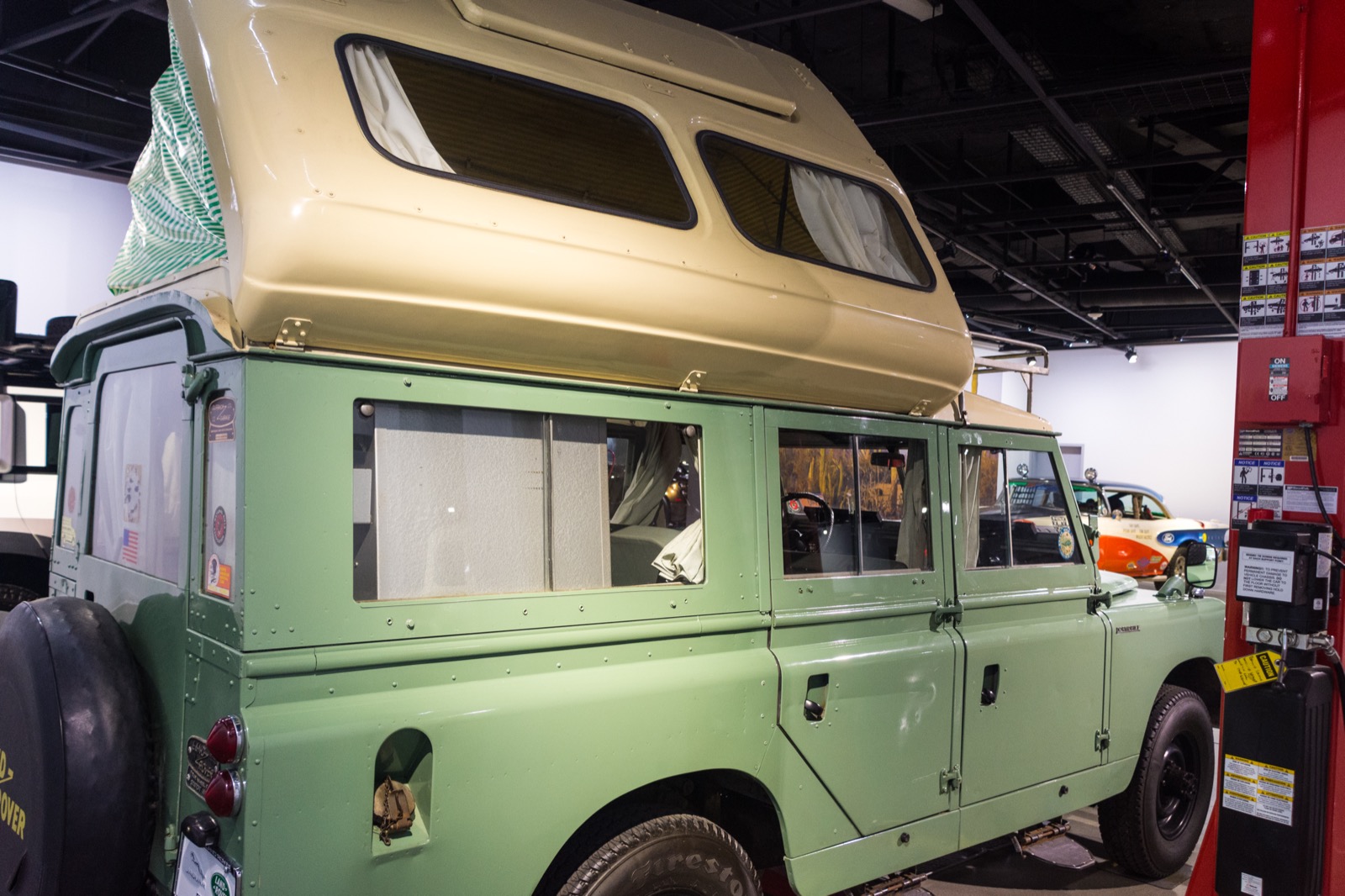
A 1966 Land Rover 109 Series IIA with a Martin Walter Dormobile elevating roof, the type of camping conversion fitted to two of the expedition's three long-wheelbase Land Rovers (museum example, not an expedition car).
ROBERT ROUSE, VIA WIKIMEDIA COMMONS · CC BY 2.0 ↗
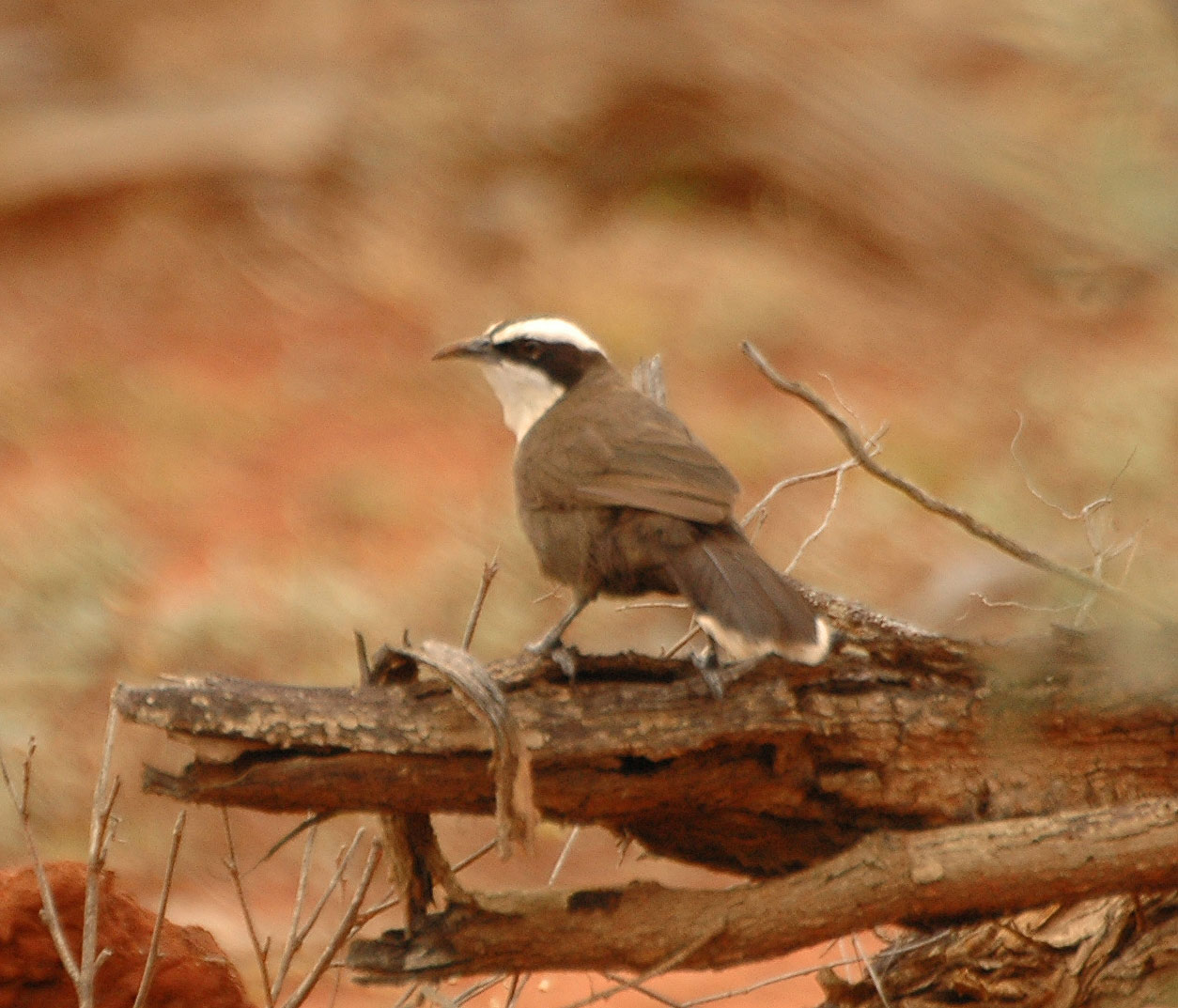
Hall's babbler (Pomatostomus halli) at Bowra, south-west Queensland: the new species the 1st Expedition collected near Langlo Crossing in May 1963, named for the sponsor.
AVICEDA, WIKIMEDIA COMMONS · CC BY-SA 3.0 ↗
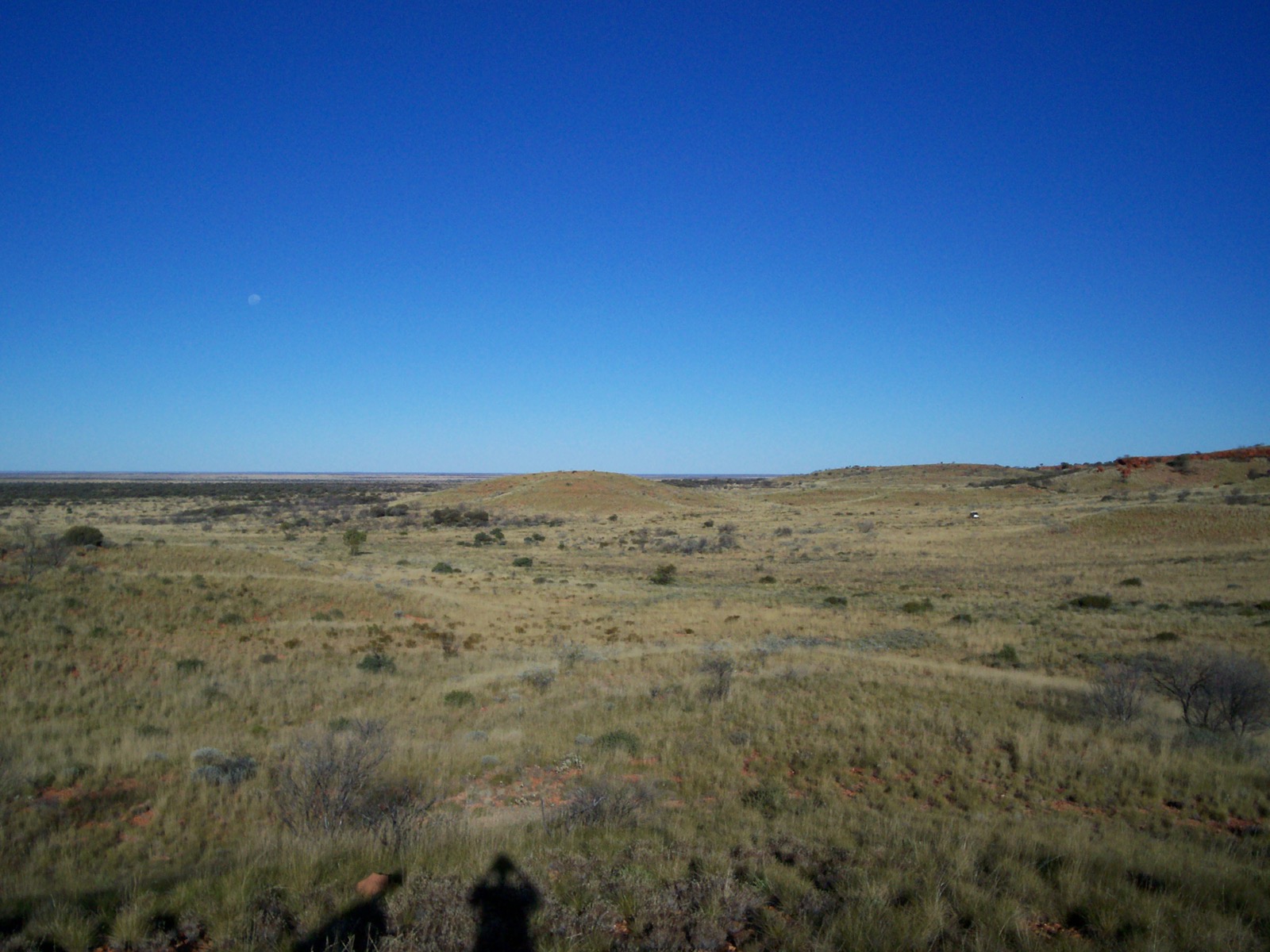
Spinifex country of the Gibson Desert from the Alfred and Marie Range, the country the 3rd Expedition worked along the Gunbarrel Highway in September 1965.
GAZJO, WIKIMEDIA COMMONS · PUBLIC DOMAIN ↗

The team

J. D. MacdonaldHead of the Bird Room; leader of the 1st Expedition 1962–63 and organiser of the seriesDr E. C. (Betty) MacdonaldDoctor, caterer and cook, 1st ExpeditionG. S. CowlesBritish Museum; 1st and 3rd Expeditions; described Hall's babblerP. R. ColstonBritish Museum; 1st and 4th ExpeditionsAllan McEveyCurator of Birds, National Museum of Victoria; 1st ExpeditionBill MiddletonForests Commission of Victoria; 1st ExpeditionI. C. J. GalbraithLeader, 2nd Expedition 1964Shane ParkerBritish Museum; 2nd ExpeditionB. P. (Pat) HallLeader, 3rd Expedition 1965; editor of the 1974 reportDerek GoodwinBritish Museum; 3rd ExpeditionGeneral Sir Gerald LathburyBird Exploration Fund Committee; 3rd Expedition, first monthDom ServentyCSIRO Perth; supporter of all five expeditions, member of the 3rdC. J. O. HarrisonLeader, 4th Expedition 1966Major B. D. MacDonald BoothLeader, 5th Expedition 1968D. J. FreemanBritish Museum; 5th ExpeditionClifford FrithBritish Museum; 5th ExpeditionHarry ButlerWestern Australian Museum naturalist; 5th Expedition, Kimberley phase

Organised by British Museum (Natural History), Bird Room. Supported by Major Harold Wesley Hall (£25,000 gift) and The Rover Company and Martin Walter Ltd (Dormobile roofs) and War Office.

Books & films

Birds of the Harold Hall Australian Expeditions 1962–70: a report on the collections made for the British Museum (Natural History)
B. P. Hall (ed.) · 1974 · Results of the Harold Hall Australian Expeditions, No. 33; the expedition narratives and the systematic list

Birds of Australia: A Summary of Information
J. D. Macdonald · 1973 · Dedicated to Harold Hall

Sources

1Birds of the Harold Hall Australian Expeditions, 1962-1970: a report on the collections made for the British Museum (Natural History) (full text) ↗ (accessed 2026-09-16)BRITISH MUSEUM (NATURAL HISTORY), 1974, VIA INTERNET ARCHIVE / BIODIVERSITY HERITAGE LIBRARY2Harold Hall Australian expeditions ↗ (accessed 2026-09-16)WIKIPEDIA3Macdonald, James David ↗ (accessed 2026-09-16)ENCYCLOPEDIA OF AUSTRALIAN SCIENCE AND INNOVATION
RELATEDExpedition record updated 16 September 2026 · status: researched