DIFFLOCKEDTHE REGISTRY RESEARCHED · UPDATED 16 SEPTEMBER 2026

The Rudolphs' Land Rover to India

ALSO KNOWN AS DESTINATION INDIA: FROM LONDON OVERLAND TO INDIA, 1956 · LLOYD AND SUSANNE RUDOLPH'S 1956 DRIVE TO JAIPUR

In the summer of 1956 two newly minted Harvard PhDs, Lloyd and Susanne Hoeber Rudolph, drove a new blue-grey Land Rover 107-inch five-door station wagon from London through Europe, Turkey, Iran and Afghanistan to Peshawar — Salzburg to Peshawar in 25 days and 5,114 miles for about $300 — and on by the Khyber Pass to Lahore, Delhi and Jaipur, to begin the fieldwork that made them the leading American political scientists of India. They slept in the car, cooked on a two-burner stove at its tailgate, were arrested in Greece for a horse a Volkswagen had killed, and camped outside a NATO radar station above Trabzon during the Suez mobilisation. Their diary appeared in the University of Chicago Magazine in 2013 and as the book Destination India (2014).

25DAYS OUTBOUND8,230 kmDISTANCE12COUNTRIES29WAYPOINTS1VEHICLE2CREW
NIGHTLY STOPS FROM THE RUDOLPHS' DATED DIARY AS PUBLISHED IN THE UNIVERSITY OF CHICAGO MAGAZINE; THE SERBIAN MARKET TOWN IS NOT NAMED AND IS PLACED AT NIŠ ON THE MAIN ROAD. LONDON–SALZBURG AND PESHAWAR–JAIPUR ARE MENTIONED BUT NOT DESCRIBED DAY BY DAY.
THE JOURNEY IN SIX MOMENTS
26 July 1956SalzburgOfficial start of the drive in the new 107 station wagon.30 July 1956Greek border at nightHalted by troops mobilising as the Suez crisis breaks.5 August 1956TrabzonA night outside the wire of the American radar station.11 August 1956TehranThe embassy man who was in the car robbed on the Kabul road.16 August 1956Farah desert roadDriven at night, as nobody drives it by day.20 August 1956Khyber Pass and Peshawar25 days, 5,114 miles, about $300.
DEPARTED26 July 1956
Salzburg
ARRIVEDSeptember 1956
Jaipur
DISTANCE5,114 miles Salzburg to Peshawar in 25 days as recorded by the Rudolphs; the book describes the whole London–Jaipur journey as about 5,000 miles. Duration is the Salzburg–Peshawar leg.
COUNTRIES CROSSED, IN ORDER
GBUnited KingdomDEGermanyATAustriaHRCroatiaRSSerbiaMKNorth MacedoniaGRGreeceTRTurkeyIRIranAFAfghanistanPKPakistanINIndia

The expedition

Lloyd Rudolph, just out of two years as a US Army lieutenant and with a Harvard doctorate on eighteenth-century party politics, and Susanne Hoeber Rudolph, also a new Harvard PhD, wanted to study Indian politics less than a decade after independence, and decided the best way to get there was to buy a Land Rover in England and drive. The vehicle was a new model, the 107-inch wheelbase five-door station wagon that seated ten and, Susanne wrote, 'looked like an armored car meant for a battalion': blue-grey, with a white tropical roof set over the ordinary roof. The second seat flattened and the front seat-back laid across the rear benches made a bed each night, after the luggage had been shifted from the back to the front; a Higgins two-burner gas stove sat inside the rear door, and breakfast and supper were laid on folding tables with paper napkins and plastic plates to keep 'a gently civilized routine'. Lloyd shaved each morning in a mirror propped on the spare wheel bolted to the bonnet.

They delayed in England and Germany — the Land Rover was photographed being washed in Germany in July 1956 — and counted Salzburg, which they left on 26 July, as the official start. The road ran by Graz into Yugoslavia on the eve of a Croatian national holiday, down through Serbia and the sheep country of Macedonia to the Greek border, where they drove at night into camouflaged troop columns: Yugoslavia and Greece were mobilising against each other as the Suez crisis broke, and an armed sentry parked them for the night behind his bivouac. Outside Kavala they were arrested for killing a cow that was in fact a horse killed by an Iranian's Volkswagen they had met at the customs; the charge dissolved when the bashed VW drove up. From Alexandroupoli they reached Istanbul on 2 August and Ankara on the 4th, camped by a threshing floor near Sungurlu with twenty farmers watching them brush their teeth by tractor headlight, and went up to the Black Sea at Samsun and along the coast to Trabzon, where American servicemen sent them to sleep beside the barbed wire of a radar station on the mountain above the town. Over the mountains to Erzurum on 6 August, a soldier escorted them forty miles through the training areas towards the Soviet frontier, and on the 7th they crossed into Iran at Maku.

Iran was grueling: dry hills and plains, camels, and on the last sixty miles into Tehran overloaded trucks whose diesel smoke and dust made passing 'disaster' and following 'death'; they gave up in the dark and slept in the desert. In Tehran on 11 August the embassy secretary Hugh Carless told them, laughing, that he had been in the diplomatic car robbed by tribesmen on the Kabul–Peshawar road. By Sabzevar and Mashhad on the 13th they went to Herat, where the consul Robert Schott received them the day before Ashura and a boy from the local Land Rover agent guided them to the road; the Persian mile markers ended and the Afghan desert road from Farah, which nobody drives by day, was taken at night on the 16th. Kandahar on the 17th, Kabul after dark on the 18th, and on 20 August down the Kabul River gorge to the Pakistani border at seven in the evening, where officials gave them green tea, a Pashtun constable with a fixed bayonet, and the blacktop of the Khyber, crossed in half an hour with the guard's heavy boot on Susanne's sandal. At Dean's Hotel in Peshawar, with fans and a six-course dinner, they drank to England and Pakistan. The trip from Salzburg had taken 25 days and 5,114 miles and cost about $300, with another $384 in pre-trip expenses for doing it by car.

They went on to Lahore, New Delhi and Jaipur, where the Land Rover was photographed resting at the Jai Mahal Palace Hotel, and where the Rudolphs made a second home for the rest of their lives. The research begun on that journey produced The Modernity of Tradition (1967) and five decades of work on Indian politics for which the couple received the Padma Bhushan. Their diary, with Lloyd's later annotations, was published in the University of Chicago Magazine in 2013 and, expanded, as Destination India: From London Overland to India and What We Learned There (Oxford University Press, 2014). The Land Rover's registration and eventual fate are not recorded in the diary.
The vehicle

Imagery

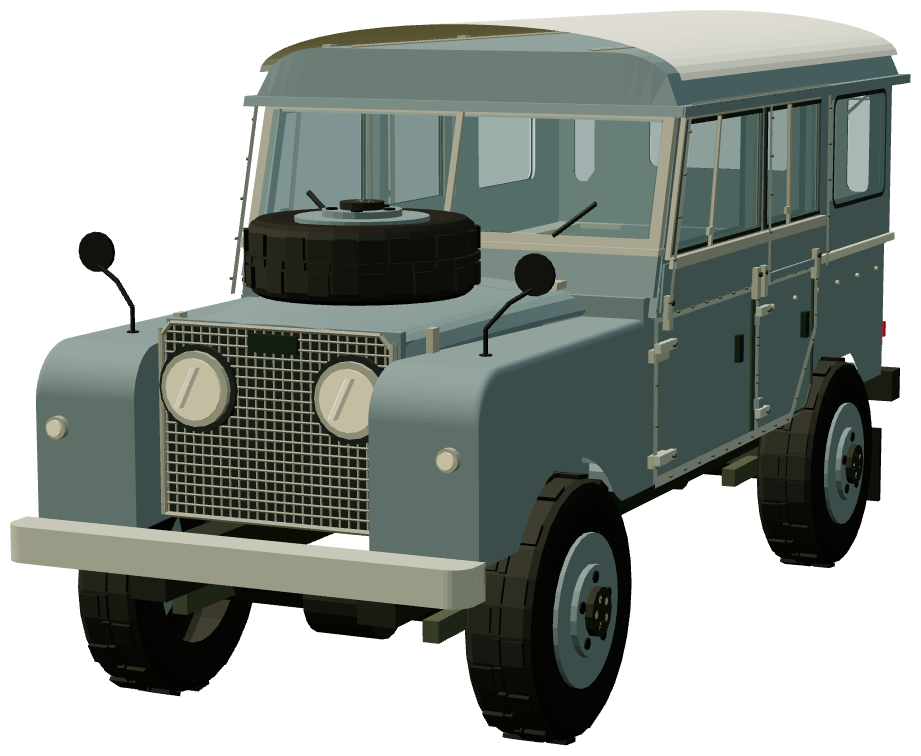
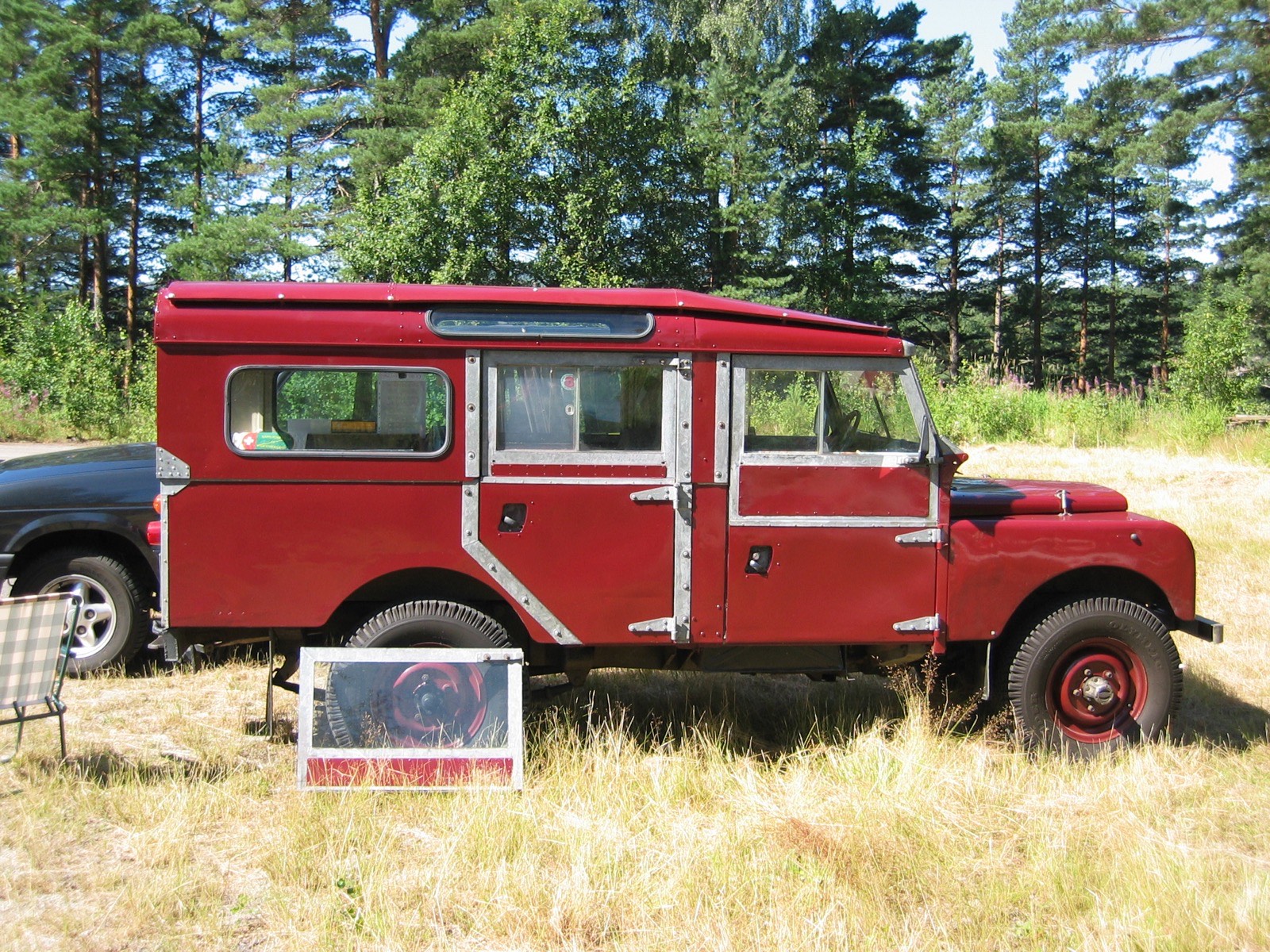
A 1957 Land Rover Series I 107-inch station wagon with the tropical roof, the ten-seat five-door model the Rudolphs bought new in 1956 (Norwegian club example, not the Rudolphs' blue-grey car).
HARALD HANSEN, WIKIMEDIA COMMONS · PUBLIC DOMAIN ↗
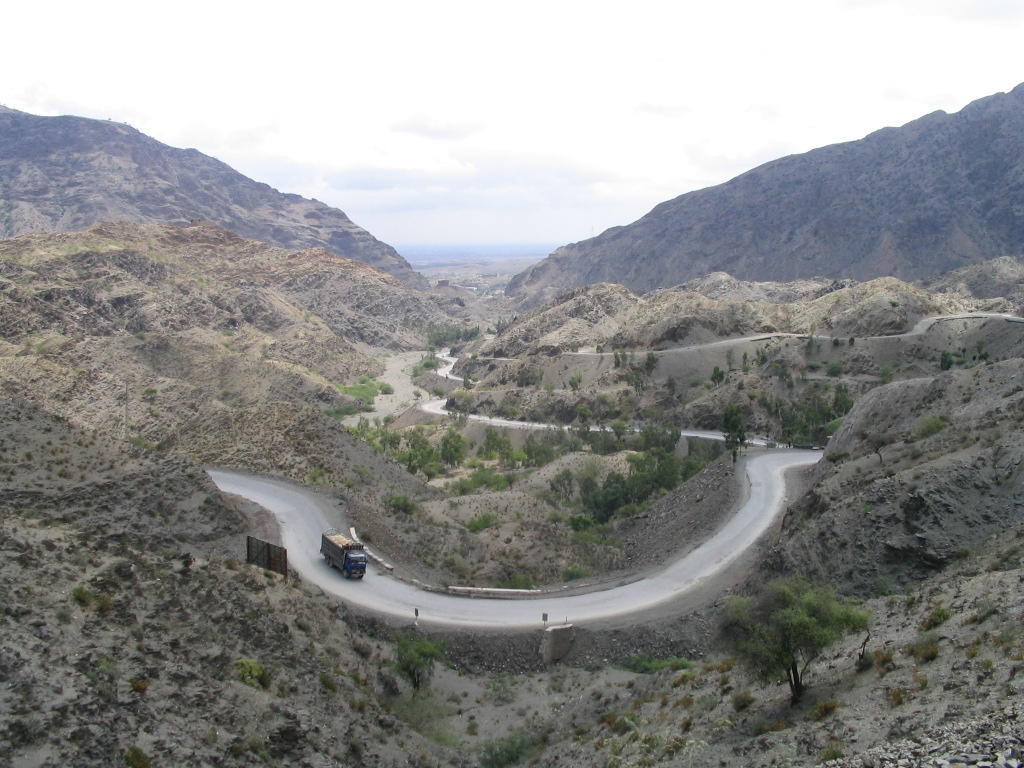
The Khyber Pass road on the Pakistan side, where the Rudolphs' journey officially ended on 20 August 1956 with a constabulary guard's boot on Susanne's sandal.
JAMES MOLLISON, WIKIMEDIA COMMONS · CC BY-SA 2.5 ↗

The team

Lloyd I. RudolphDriver; political scientist, later University of ChicagoSusanne Hoeber RudolphDiarist and cook; political scientist, later University of Chicago

Organised by Lloyd and Susanne Rudolph (private).

Books & films

Destination India: From London Overland to India and What We Learned There
Lloyd I. Rudolph and Susanne Hoeber Rudolph · 2014 · Oxford University Press, New Delhi

A passage to India
Lloyd and Susanne Rudolph · 2013 · The University of Chicago Magazine, Jan–Feb 2013: the 1956 trip diary with later annotations

The Modernity of Tradition: Political Development in India
Lloyd I. Rudolph and Susanne Hoeber Rudolph · 1967 · The first fruit of the research the journey began

Sources

1A passage to India: In 1956, two new PhDs drove a Land Rover from Austria to India ↗ (accessed 2026-09-16)THE UNIVERSITY OF CHICAGO MAGAZINE, JAN–FEB 20132Lloyd Rudolph ↗ (accessed 2026-09-16)WIKIPEDIA3Lessons learned: Susanne and Lloyd Rudolph, in memoriam ↗ (accessed 2026-09-16)SCROLL.IN4Destination India: From London Overland to India ↗ (accessed 2026-09-16)OXFORD UNIVERSITY PRESS
RELATEDExpedition record updated 16 September 2026 · status: researched
EXPEDITION · 1955Oxford & Cambridge Far Eastern ExpeditionThe first overland drive from London to Singapore: six Oxford and Cambridge students in two new Series I 86-inch Station Wagons, 'Oxford' and 'Cambridge', who left Hyde Park on 1 September 1955 and reached Singapore on 6 March 1956 after more than 18,000 miles through Europe, the Middle East, Afghanistan, India, Nepal, Burma and Malaya — the Stilwell Road through northern Burma being the passage nobody thought possible.EXPEDITION · 1958Women's Overland Himalayan ExpeditionIn 1958 three service wives — Antonia Deacock, Anne Davies and Eve Sims — refused to be left 'chained to the kitchen sink' while their husbands went climbing, and drove a long-wheelbase Land Rover pick-up sold to them at half price by the Rover Company from Ullswater to Delhi in 42 days, then on to Manali, from where they trekked 300 miles over the Rohtang, Bara Lacha and Shingo passes into Zanskar, becoming the first European women to reach Padam and making the first ascent of an 18,700 ft peak they named Biwi Giri, 'Wives' Peak'.EXPEDITION · 1964First Encounter Overland Expedition, London to KathmanduOn 5 October 1964 Tony Jones and Harry Marsh left England with six paying passengers — three Australians and three English girls recruited through an advertisement in The Times — packed into one long-wheelbase Land Rover painted Oxford and Cambridge blue, registration 2191 NX, and drove it through Europe, Turkey, the Levant, Iraq, Iran, Afghanistan and the Khyber Pass to Delhi and on to Kathmandu, which they reached on 24 January 1965 after 16 weeks.INDEXAll expeditions57 expeditions, mapped and dated.ATLASOn the atlasThis route among the registry's vehicles, makers and service.