DIFFLOCKEDTHE REGISTRY RESEARCHED · UPDATED 16 SEPTEMBER 2026

Trail by Fire

ALSO KNOWN AS LAND ROVER BURSARY 2015 · MOBILE VOLCANO OBSERVATORY · NAZCA SUBDUCTION ZONE VOLCANIC GAS SURVEY 2015–16

The 2015 Land Rover Bursary expedition with the Royal Geographical Society (with IBG): six early-career volcanologists led by Dr Yves Moussallam drove a Defender 110 converted by Land Rover Special Vehicle Operations into the world's first 4x4 mobile volcano observatory down the Andes from Arica in northern Chile through southern Peru and back through the Chilean altiplano to Villarrica in the south, November 2015 to February 2016, measuring gas emissions at 15 active volcanoes along the Nazca plate subduction zone — 17,000 km, mostly on dirt roads and tracks, and the first gas composition and flux measurements ever made at seven of them.

120DAYS OUTBOUND17k kmDISTANCE2COUNTRIES15WAYPOINTS1VEHICLE6CREW
WAYPOINTS ARE THE VOLCANOES AND TOWNS NAMED IN THE TEAM'S FIELD BLOG AND ITS DEEP CARBON OBSERVATORY SUMMARY, IN THE ORDER THE BLOG POSTS APPEARED; THE TEAM WORKED THE PERUVIAN ARC FROM THE CHILEAN SIDE AND SOME VISITS (ISLUGA AT CHRISTMAS) WERE MADE OUT OF THE POSTED ORDER. THE LINE BETWEEN POINTS IS THE GENERAL COURSE DOWN THE ANDES, NOT A GPS TRACK.
THE JOURNEY IN SIX MOMENTS
7 October 2015LaunchLand Rover and the RGS announce the bursary; the SVO-built observatory Defender is shown.24 November 2015GuallatiriThe Defender reaches 5,300 m on the Bolivian border.12 December 2015SabancayaFirst comprehensive gas measurements at a 5,976 m volcano.25 December 2015IslugaSampling drone flies on Christmas Day.21 January 2016LascarFour climbs for gas samples.February 2016VillarricaFifteenth and last target volcano; 17,000 km driven.
DEPARTEDNovember 2015
Iquique
ARRIVEDFebruary 2016
Villarrica volcano
DISTANCE17,000 km as stated by the team in the Deep Carbon Observatory summary, 'mostly on dirt roads and tracks', for the four-month campaign
COUNTRIES CROSSED, IN ORDER
CLChilePEPeru

The expedition

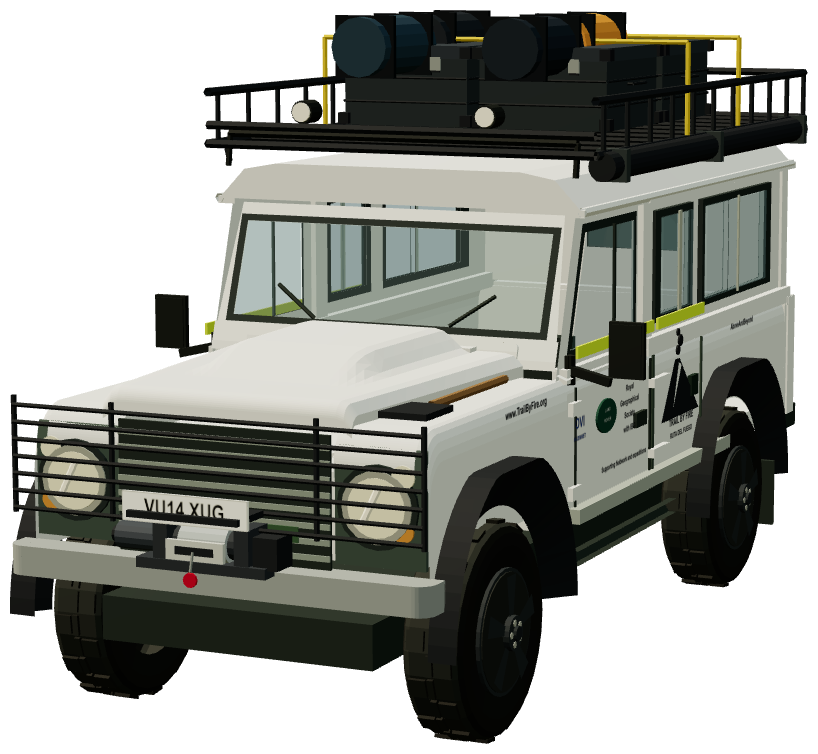
The South American Andes hold nearly 200 active volcanoes, but their remoteness, their height — up to 6,893 m — and the absence of trails to most summits had left the whole arc almost blank in the global database of volcanic gas emissions. Trail by Fire set out to correct that in a single campaign: to take a snapshot of what the volcanoes of the Nazca subduction zone release, and so to answer how efficiently subduction recycles water and carbon dioxide back to the surface. The team was six young volcanologists — Dr Yves Moussallam of the Scripps Institution of Oceanography, who led it, Dr Nial Peters of the University of Cambridge, Dr Aaron Curtis of New Mexico Tech, Dr Ian Schipper of Victoria University of Wellington, Dr Talfan Barnie of the Open University and Dr Philipson Bani of the Institut de Recherche pour le Développement. They won the 2015 Land Rover Bursary, administered by the Royal Geographical Society (with IBG), which brought £30,000 and the loan of a Defender 110 — the white left-hand-drive 110 XS station wagon VU14 XUG that the Grand Alpine Tour had used in the Alps the summer before.

Land Rover's Special Vehicle Operations at its Oxford Road facility built the car with the scientists into what they called the world's first all-terrain mobile volcano observatory. It carried an extra-large independent battery system to run the instruments in the deep field, an aircraft-grade anti-vibration housing for a Delta Ray isotope-ratio infrared spectrometer, compressed reference gases, a fridge, a synthetic-rope winch, LED lighting and a large side-deployable tent that served as living quarters and office; it was fitted with spectrometers so that the vehicle itself could traverse volcanic plumes. The expedition was launched in October 2015 and the car was shipped to Chile, where the team readied it and sourced local parts at Iquique in early November.

From Arica the Defender climbed to 5,300 m at Guallatiri on the Bolivian border in late November — above its design ceiling of 4,500 m — for remote SO2 flux measurements of the 6,100 m volcano. Getting into Peru cost six hours at the border and the help of diplomats. In southern Peru, working with the Observatorio Vulcanológico del INGEMMET and with colleagues from the University of Palermo and INGV who joined for that leg, the team climbed Ubinas and Sabancaya, both near 6,000 m; the first full gas composition and flux measurements at Sabancaya showed intense, periodic degassing, and the two volcanoes turned out to release two-thirds of all the gas from the central section of the arc. Fumaroles on the lower slopes of Hualca Hualca near Chivay filled a rest day; El Misti above Arequipa, climbed on 1 December, surprised them with vents at nearly 300°C emitting magmatic rather than hydrothermal gas; Ticsani, Tutupaca and Yucamane were the 'three lightly sleeping giants' of the south.

Back in Chile the Trail ran down the altiplano: Tacora, the northernmost Chilean volcano with its old sulphur mines and railway; Isluga, where the gas-sampling quadcopter flew on Christmas Day; Lascar, climbed four times, with what the team claimed as the highest quadcopter flight and the longest improvised gas-collecting pole; and Lastarria, the last volcano of the Central Volcanic Zone before the 600 km Pampean Gap, where the arc goes quiet. In the Southern Volcanic Zone, working with OVDAS, they were belayed down the newly formed eruptive vent at Nevados de Chillán and ended at Villarrica, whose lava lake they watched through storms and ice for a month, timing their ground measurements with acquisitions by NASA's EO-1 and Terra satellites. Three types of UAV flew instruments through the plumes.

All 15 target volcanoes were visited, nearly a terabit of data was collected and, after 17,000 km, the four-month campaign closed in February 2016. Papers followed on the Peruvian arc, on El Misti's permeable conduit and on Villarrica's steady degassing; isotopes showed most of the CO2 came from the subducting slab. The team returned in 2017 for Ecuador — Tungurahua, Cotopaxi, Reventador and Guagua Pichincha — bringing the total to more than 20,000 km and more than 20 volcanoes. The car was recorded as exported after its last British MOT in November 2019.
The vehicle

Imagery

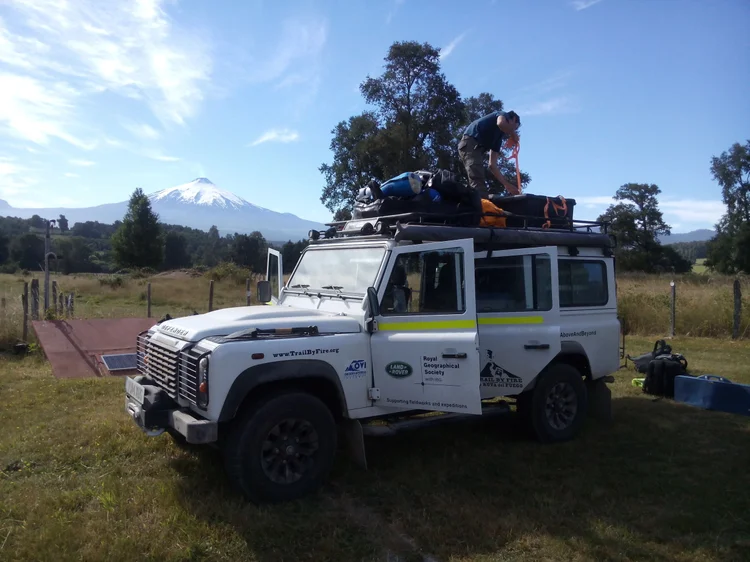
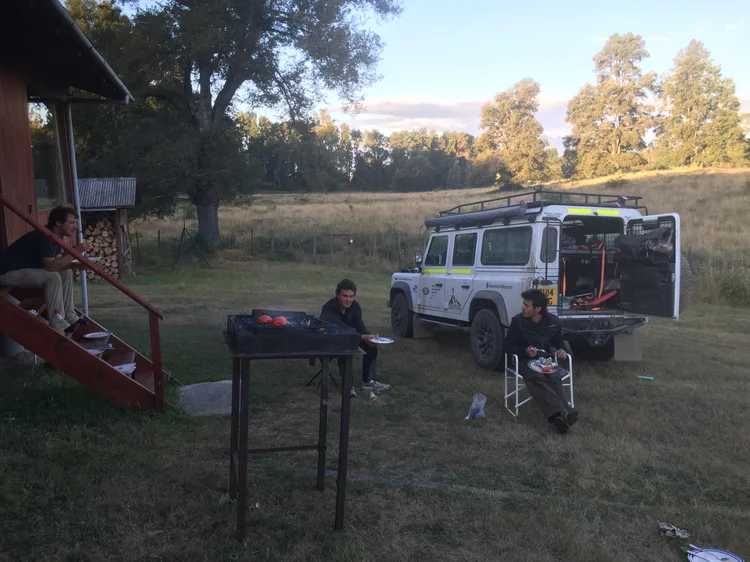
White VU14 XUG at camp near Villarrica, showing rear side glazing and expedition equipment.
TRAIL BY FIRE EXPEDITION TEAM; RIGHTS RETAINED BY OWNER · COPYRIGHT RETAINED BY SOURCE; EXTERNALLY HOSTED REFERENCE ↗
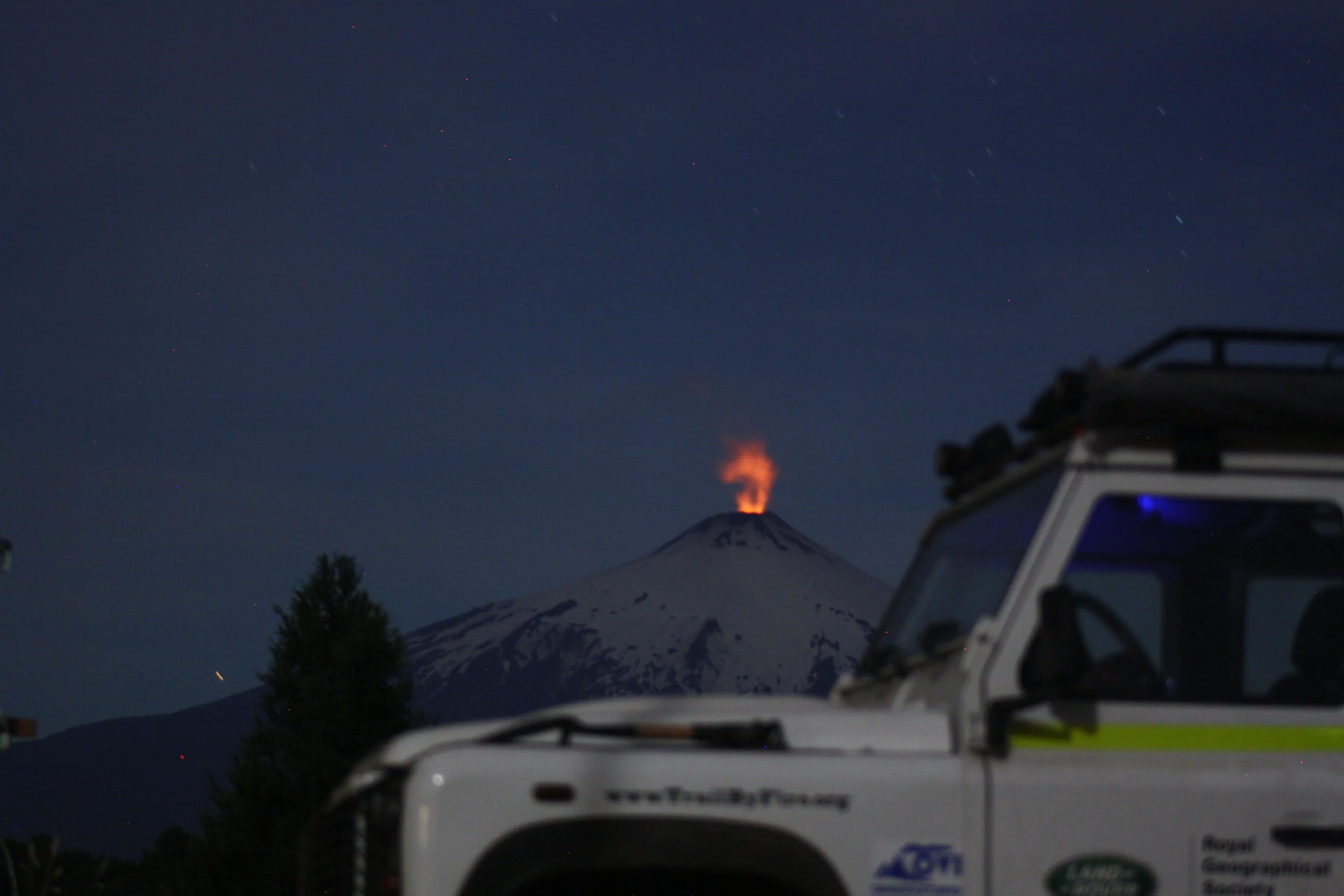
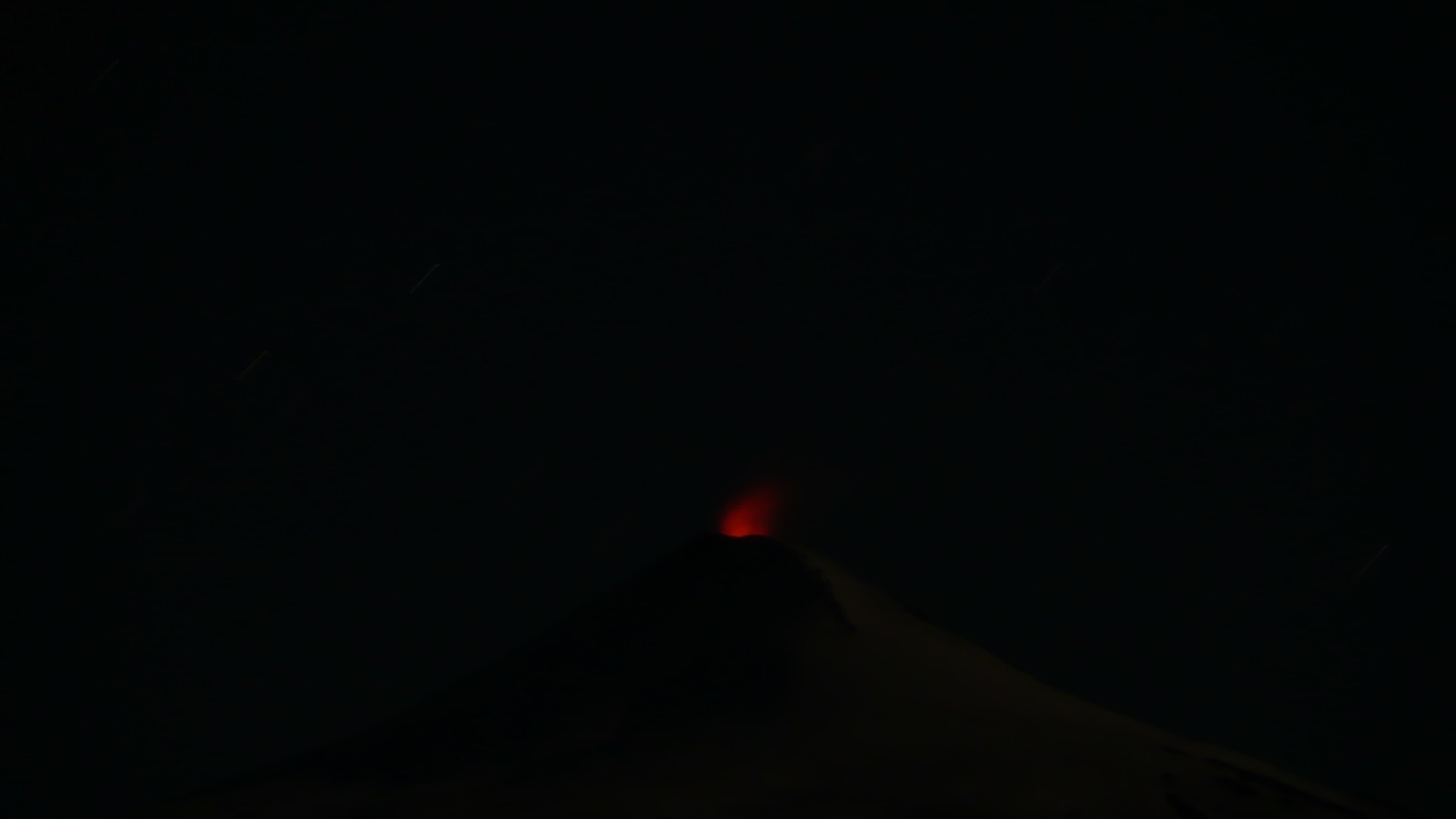
Trail by Fire Defender beside Villarrica at night.
TRAIL BY FIRE EXPEDITION TEAM; RIGHTS RETAINED BY OWNER · COPYRIGHT RETAINED BY SOURCE; EXTERNALLY HOSTED REFERENCE ↗
Loading the white Trail by Fire Defender: two small roof lamps, packed awning, equipment and side livery.
TRAIL BY FIRE EXPEDITION TEAM; RIGHTS RETAINED BY OWNER · COPYRIGHT RETAINED BY SOURCE; EXTERNALLY HOSTED REFERENCE ↗
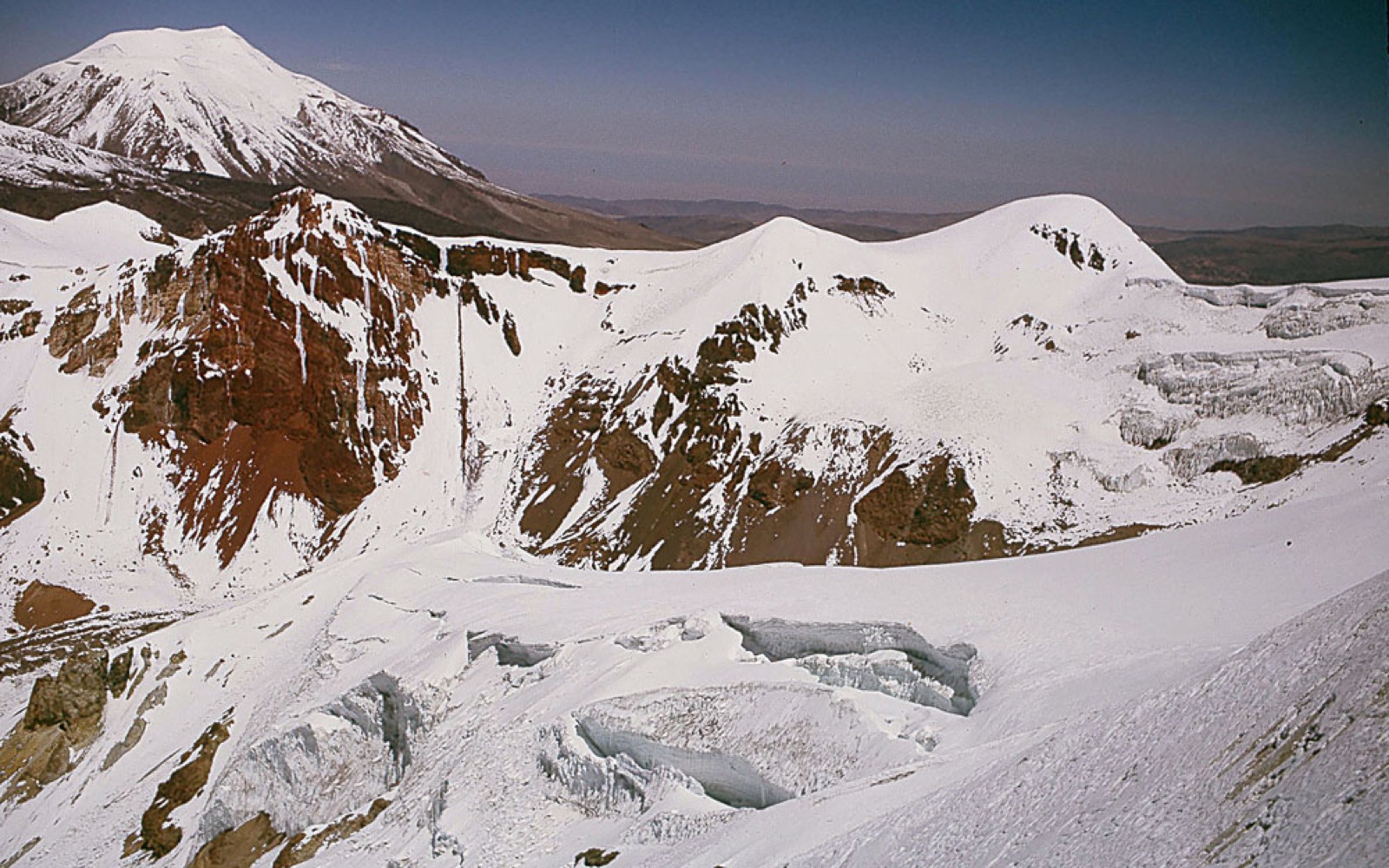
The summit area of Sabancaya, Peru, with Ampato behind — the 5,976 m volcano where the team made the first full gas measurements in December 2015. Photograph from a 1966 ascent.
DICK CULBERT FROM GIBSONS, B.C., CANADA · CC BY 2.0 ↗
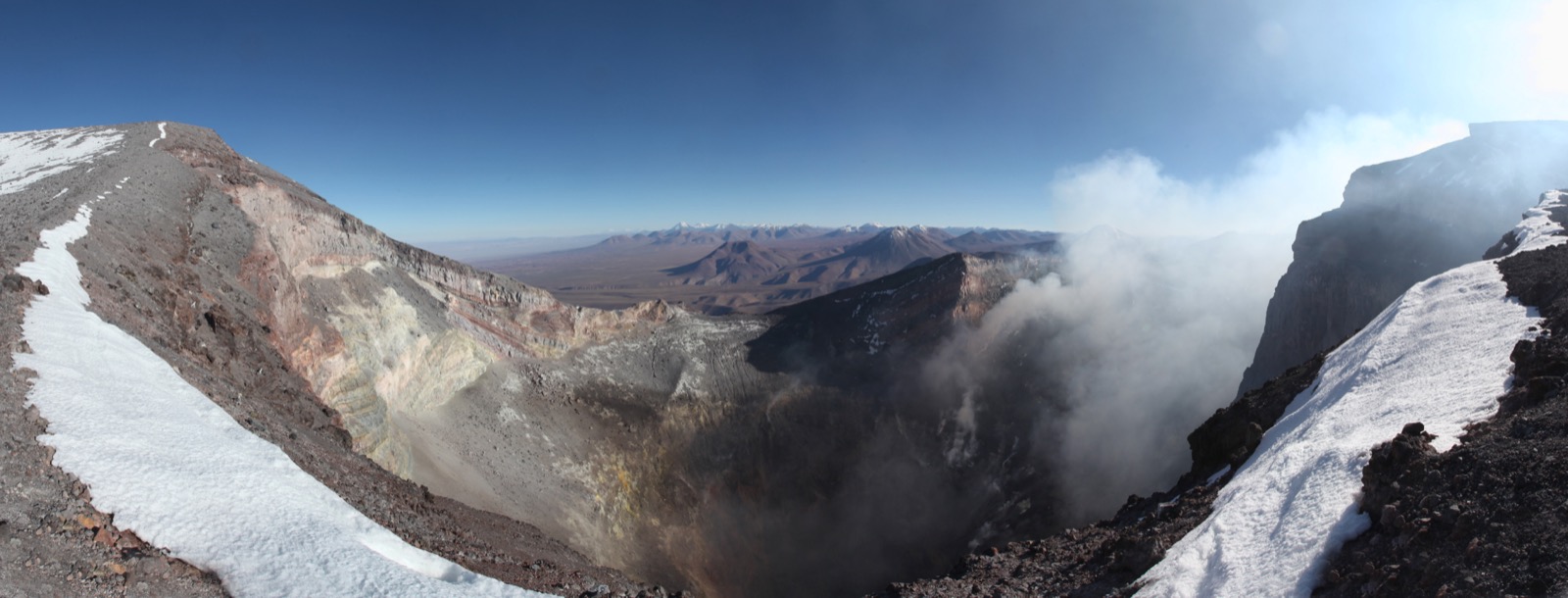
The steaming summit crater of Lascar in northern Chile, climbed four times by the team in January 2016 to collect gas samples.
BAS WALLET FROM RHENEN, NETHERLANDS · CC BY 2.0 ↗
Villarrica glowing at night; the southern end of the Trail, where the team spent a month at the lava lake.
ALONSO INOSTROSA PSIJAS FROM SANTIAGO, CHILE · CC BY-SA 2.0 ↗

The team

Dr Yves MoussallamLeader; Scripps Institution of OceanographyDr Nial PetersUniversity of CambridgeDr Aaron CurtisNew Mexico Tech; UAVsDr Ian SchipperVictoria University of WellingtonDr Talfan BarnieThe Open University; satellite coordinationDr Philipson BaniInstitut de Recherche pour le Développement

Organised by Trail by Fire expedition team and Royal Geographical Society (with IBG). Supported by Land Rover Bursary with the Royal Geographical Society (with IBG), 2015 (£30,000 and the Defender 110) and Deep Carbon Observatory and Thermo Fisher Scientific and Turbo Ace and Ocean Optics and Crowon and Air Liquide and Team Black Sheep and Cactus Outdoor and NASA / JPL (satellite acquisitions).

Online

The expedition's own presence on the web, checked when the record was last updated.

Books & films

Trail by Fire field blog
Trail by Fire team · 2016 · trailbyfire.org/news

The Trail by Fire Expedition Comes to an End
Deep Carbon Observatory · 2016

Sources

1Trail by Fire — Home sweet Villarrica! ↗ (accessed 2026-09-16)2The Trail by Fire Expedition Comes to an End ↗ (accessed 2026-09-16)DEEP CARBON OBSERVATORY (VIA WAYBACK MACHINE)3News — Trail By Fire (field blog, October 2015 – August 2017) ↗ (accessed 2026-09-16)TRAIL BY FIRE4Mission — Trail By Fire ↗ (accessed 2026-09-16)TRAIL BY FIRE5Land Rover Bursary ↗ (accessed 2026-09-16)ROYAL GEOGRAPHICAL SOCIETY (WITH IBG)6From the Field: 'Trail by Fire' Takes Geoscientists on a Rugged Tour of South American Volcanoes ↗ (accessed 2026-09-16)SCRIPPS INSTITUTION OF OCEANOGRAPHY7Modified Defender for the Trail By Fire expedition ↗ (accessed 2026-09-16)ADVENTURE 528RGS Bursary — Defender collection (DVLA build and registration data) ↗ (accessed 2026-09-16)LR WORKSHOP
RELATEDExpedition record updated 16 September 2026 · status: researched
EXPEDITION · 2013Pole of Cold ExpeditionFelicity Aston, Gisli Jonsson and Manu Palomeque, winners of the 2013 Land Rover and Royal Geographical Society (with IBG) Bursary, drove a winterised Defender 110 from the RGS in London in November 2013 up the length of Norway to Nordkapp, through Finnish Lapland into Russia and across Siberia to Oymyakon, the Pole of Cold and the coldest inhabited place on earth, where they met the Lord Keeper of the Cold at −54 °C and recorded −59 °C at Tomtor.EXPEDITION · 2016Transcaucasian ExpeditionThe 2016 Royal Geographical Society (with IBG) Land Rover Bursary expedition: Tom Allen and Alessandro Mambelli left the Society's headquarters in Kensington on 26 April 2016 in a Defender 110 Station Wagon converted by Jaguar Land Rover's Special Vehicle Operations into a mobile surveying and communications unit, drove twelve days to Yerevan and spent six months in Armenia and Georgia scouting and GPS-mapping off-road routes for the Transcaucasian Trail, the first long-distance hiking trail across the Lesser Caucasus, uploading the data to OpenStreetMap as they went.EXPEDITION · 2010Fault Line LivingThe 2010 Royal Geographical Society (with IBG) and Land Rover 'Go Beyond' bursary expedition: Serena Davies, Tamsin Davies and Adam Whitaker left Harwich on 1 August 2010 in a Defender 110 they called Lottie, carrying a British Geological Survey seismometer, for a twelve-week, 15,000-mile journey along the world's most active fault lines — Iceland, Italy's L'Aquila, Greece and Turkey's North Anatolian Fault — recording how people live with earthquakes, working with school students and seismologists.EXPEDITION · 2014The Grand Alpine TourThe 2014 Land Rover Bursary expedition with the Royal Geographical Society (with IBG): three Northumbria University geographers — Mark Allan, Dr Mike Lim and Thomas Shaw — drove a bursary Defender 110 some 6,000 miles from Britain along the length of the Alps through France, Switzerland, Italy, Austria and Slovenia in the summer of 2014, flying a hexacopter UAV over the slopes above seven retreating glaciers of the Mont Blanc massif and the Rhône to build 3D models of landslide activity, and comparing them with the Society's historic Alpine archive in the footsteps of the eighteenth-century Grand Tour.INDEXAll expeditions57 expeditions, mapped and dated.ATLASOn the atlasThis route among the registry's vehicles, makers and service.