The expedition
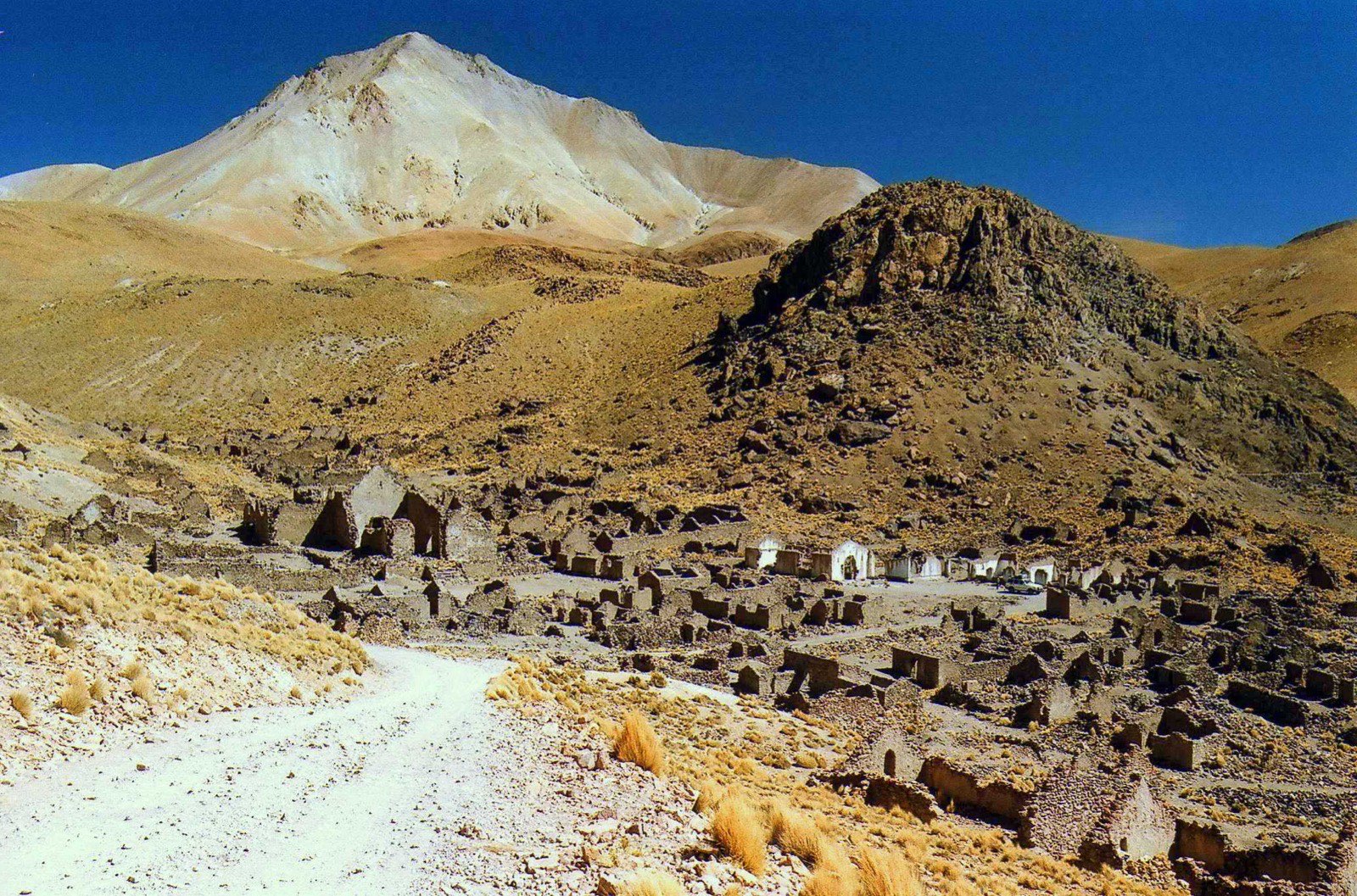
The expedition began one evening in 1965 when the explorer and film-maker Tony Morrison spoke to the Imperial College Exploration Board about the Sud Lípez province of Bolivia. Two hundred years earlier it had been one of the richest silver districts of the New World; now its mining towns stood empty, and one of them, San Antonio de Lípez, remained almost exactly as the Spanish had left it, its cathedral intact and its altar-screen still carved and gilded. Tony Read and Alan Cope decided that the collapse of the mining industry there would make a suitable student project, recruited Jeffrey O'Leary and Peter Francis in the summer of 1965, and won the Board's approval that October. Lobitos Oilfields Ltd offered free passages out and home on one of its tankers, arranged through Professor W. D. Gill of the Oil Technology Department, and the Bolivian Minister for Mines and the Servicio Geológico de Bolivia (Geobol) offered help. The seamen's strike of May and June 1966 nearly ended the expedition before it began, since everything rested on the free passages; the Board stepped in with money for air fares home.
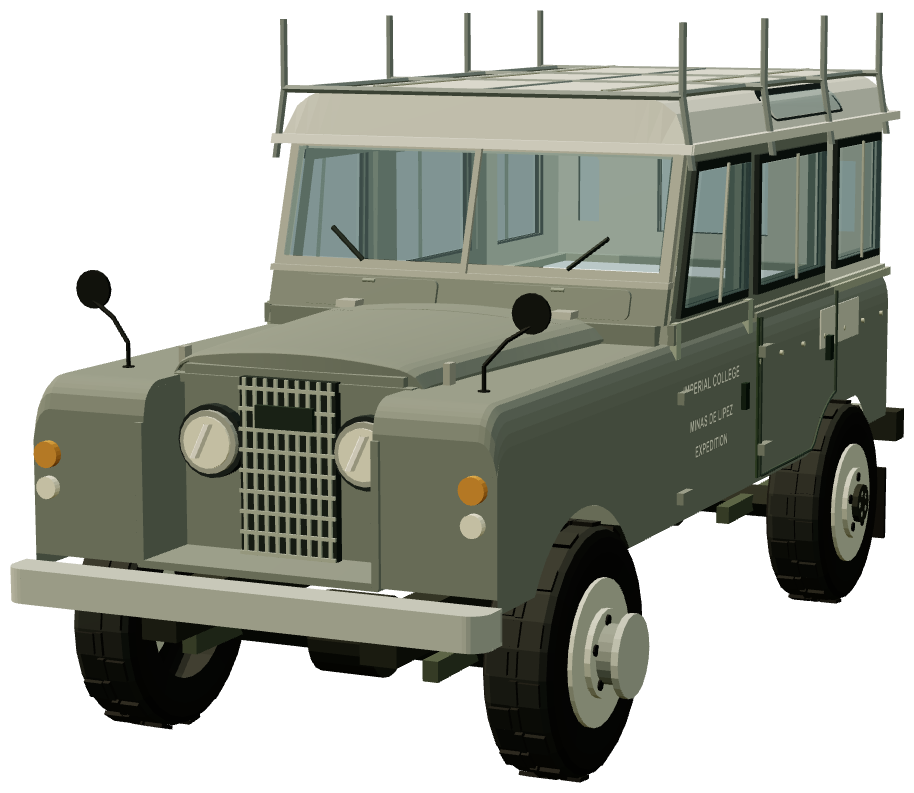
The vehicle question was settled in favour of a four-wheel drive after motorcycles and a hired lorry were rejected and no vehicle could be hired in Peru or Bolivia. A 1961 long-wheelbase twelve-seater petrol Land Rover with 35,000 miles was bought for £550 from Ickenham Motors, Middlesex, checked by the AA, by an instructor at the Rover Company school at Solihull and by the Rover repair depot at Fulham, and fitted with heavy-duty rear springs and dampers, Michelin XY tyres, a heavy-duty Exide battery for cold starting, a home-made roof rack, water-can racks and winch drums on the front wheels; carburettor jets were changed on the way up for altitude and low-octane petrol, and the party was prepared to walk out if it broke down 120 miles from a tow.
The four sailed from Cammell Laird's yard at Birkenhead in the M.V. El Lobo at 04.30 on 12 July 1966, sighted Sombrero Island in the Virgin Islands on the 22nd, loaded oil off La Libertad in Ecuador, took a bus to Guayaquil, and docked at Talara in northern Peru on 3 August. The Land Rover arrived separately on the S.S. Kenuta, cleared customs on 5 August, and on the 6th Tony Read and Peter Francis drove south through Piura and Sullana — lost at once in a maze of unsigned one-way streets — while Cope and O'Leary went ahead by bus to La Paz to clear the way. Sleeping in the open desert, they passed Chiclayo and Trujillo, reached Lima on 8 August, looked at the Nazca lines on the 10th and turned inland at Camaná to climb to Arequipa at 8,000 ft, where a day was spent servicing the car. On 12 August they left the asphalt for the dirt track over the backbone of the Andes: a tortuous climb to about 15,000 ft, a dazzling white salt lake, miles of undulating alturas, and down to Puno on Lake Titicaca at 12,250 ft. Along the lake shore they crossed into Bolivia at Desaguadero on 13 August, were sent back from Guaqui for the right rubber stamps, passed Tiwanaku at dusk and reached La Paz that night. Geobol attached a Chevrolet, a driver and its senior geologist Ismael Montes de Oca to the party, and on 16 August the crammed Land Rover set off south through Oruro to Challapata and, over appalling corrugations, to the rail junction of Uyuni, where petrol was taken on in 44-gallon drums. On 18 August, with Tony Morrison's route notes, they crossed 120 miles of desolate altiplano without a slip and at 16.30, 39 days after leaving London, drove into San Antonio de Lípez, an abandoned town straggling down a valley at 15,200 ft, and made camp in a thatched stone hut.
The work occupied the following weeks: reconnaissance of the adits and the Mesa de Plata mine complex, the mines of the San Pablo valley and outlying workings at Bolívar, Escala, Mestizo and Santa Isabel; the archaeology of the eighteenth-century smelters, crushers and church; meteorological readings; and a collection of 39 plant species. The geologists found the high-grade silver ores largely worked out, though deeper primary ores and by-product antimony and cadmium remained. In late September the party drove out by Potosí and Sucre, on 23 September to Cochabamba on the first asphalt since Arequipa, down to the booming lowland town of Santa Cruz and as far as the Yapacaní river, a tributary of the Amazon, and back to La Paz on the 28th. A week of negotiations with Geobol and would-be purchasers brought 'an avalanche of bureaucracy' and absurd taxes, and on 6 October they gave up and decided to ship the Land Rover home. They left La Paz on 7 October, dropped from 15,500 ft at the top of the pass to sea level at Camaná in a few hours — the Land Rover 'not keen on the change in altitude' — reached Lima at midnight on the 9th and handed the car to the Peruvian AA for shipment to England. The four flew home by Bogotá, Panama, Miami, Washington, New York and Reykjavík, landing in London on 17 October 1966, exactly 100 days after leaving. The report, Minas de Lípez Expedition, Bolivia, 1966, was published by the Imperial College Exploration Board in March 1968.

.jpg)